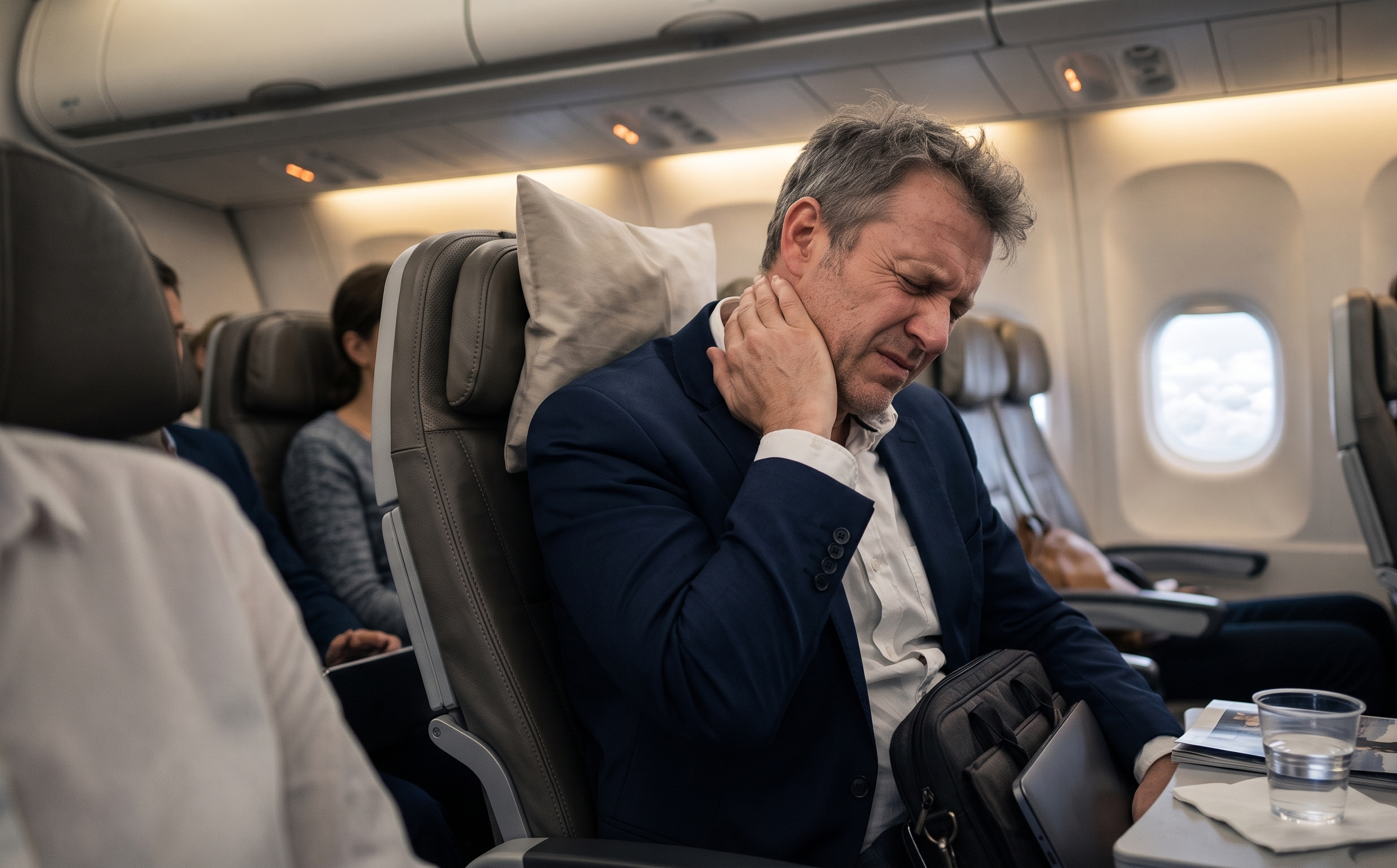
Why Your Neck Hurts After a Long Flight to Barcelona (And How Massage Can Help)
Travel Recovery Series
Looking to relieve yout neck pain after flight in Barcelona? Helping travellers recover faster so they can experience Barcelona feeling their very best.
You’ve finally landed in Barcelona.
After months of planning, your adventure is about to begin. The Mediterranean sunshine welcomes you as you leave the airport, excitement replaces the fatigue of travel, and the city’s iconic streets are waiting to be explored.
Then you turn your head.
A sharp stiffness shoots through your neck.
Perhaps it’s only a slight discomfort. Perhaps it’s a persistent ache spreading into your shoulders. Either way, something feels wrong—and suddenly the excitement of arriving is overshadowed by the simple act of trying to look around comfortably.
It happens to thousands of travellers every day.
Long flights place the neck and upper back under continuous stress, often leaving muscles tight, joints stiff and movement restricted before your holiday has even begun.
The good news?
In most cases, this discomfort is temporary—and with the right recovery strategies, including therapeutic massage, you can often feel significantly better within a short time.
In This Guide
- Why flying commonly causes neck pain.
- What happens to your muscles during a long flight.
- Why symptoms often appear after landing—not during the journey.
- Simple recovery techniques you can start immediately.
- How therapeutic massage helps restore comfort and mobility.
- Which massage is best after travelling.
- When neck pain should be assessed by a healthcare professional.
- How to enjoy Barcelona without letting neck stiffness ruin your trip.
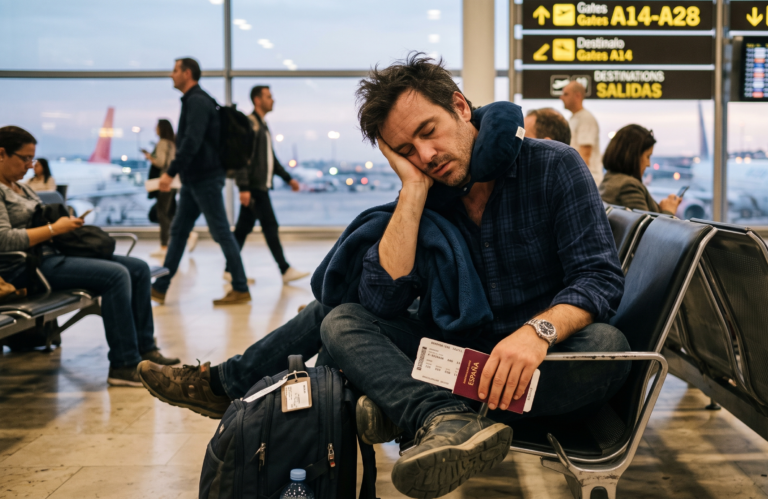
There is a unique kind of fatigue that comes with air travel.
Unlike the satisfying tiredness you feel after a day spent exploring a beautiful city, post-flight fatigue often feels stiff, compressed and surprisingly persistent. You leave the aircraft expecting to stretch your legs and begin your holiday, only to discover that turning your head has become uncomfortable, your shoulders feel unusually tense and your upper back seems unwilling to relax.
For many visitors arriving in Barcelona, this is one of the first physical reminders that travel—however exciting—places real demands on the body.
Hours spent sitting in the same position, limited opportunities to move, carrying cabin luggage, sleeping in awkward postures and even the subtle effects of dehydration can all contribute to muscular tension before you set foot outside the airport.
Ironically, the discomfort often doesn’t begin while you’re in the air.
It appears later.
You check into your hotel, unpack your suitcase or head out to explore the city, and suddenly your neck feels tight, your shoulders seem heavier than usual and looking over one shoulder becomes an effort rather than an automatic movement.
This reaction is remarkably common, especially after medium and long-haul flights.
The muscles supporting your head have spent hours working in less-than-ideal conditions. When movement finally returns, accumulated tension becomes much more noticeable.
Fortunately, there are effective ways to recover.
Gentle mobility exercises, hydration and proper rest all play an important role, but many experienced travellers also discover that professional massage can dramatically improve comfort, reduce muscular tension and help them enjoy Barcelona from the very beginning of their stay.
Whether you’re visiting for business, a romantic getaway or a few unforgettable days of sightseeing, feeling physically comfortable makes every experience more enjoyable.
In this guide, we’ll explore the science behind post-flight neck pain, explain why it happens even to healthy travellers and show how targeted treatments—such as a therapeutic massage in Barcelona, a deep tissue massage in Barcelona, or a private massage in Eixample—can help your body recover naturally, allowing you to focus on discovering everything this extraordinary city has to offer.
Why Does Flying Cause Neck Pain?
Few people think of flying as a physical activity.
After all, you’re sitting down for most of the journey.
Yet from your body’s perspective, a long-haul flight is surprisingly demanding. Remaining in the same position for several hours places continuous stress on muscles, joints and connective tissues that were never designed to stay still for so long.
Unlike walking, where your body constantly changes posture, activates different muscle groups and promotes healthy circulation, sitting on an aircraft significantly limits natural movement.
Your neck is one of the first areas to pay the price.
Throughout the flight, the muscles supporting your head work continuously to stabilise it. Every time you fall asleep, lean against the window, watch a film or look down at your phone, those muscles are asked to maintain positions that place them under low but constant tension.
It may not feel uncomfortable at the time.
But after six, eight or even twelve hours, that tension begins to accumulate.
The result is often a stiff neck, aching shoulders and reduced mobility just when you’re ready to start enjoying Barcelona.
Your Head Is Heavier Than You Think
One of the most fascinating facts about the human body is the weight your neck supports every single day.
The average adult head weighs between 4.5 and 5.5 kilograms (10–12 pounds).
When your posture is upright, the cervical spine is designed to distribute that weight efficiently.
However, even a slight forward tilt changes everything.
Looking down to read, scrolling through your phone or sleeping with your chin resting on your chest increases the mechanical load placed on the muscles, ligaments and joints of the neck.
During a long flight, travellers often maintain these positions for extended periods without realising it.
Your muscles compensate.
They tighten to keep your head stable.
Hour after hour, that constant effort leads to fatigue, reduced flexibility and the familiar sensation of stiffness many people notice after landing.
The Cabin Environment Also Plays a Role
Posture isn’t the only factor affecting how your body feels after flying.
Aircraft cabins create a unique environment that can influence your muscles in several ways.
Reduced Movement
On a plane, opportunities to move are limited.
Even travellers who regularly exercise may spend several hours sitting almost completely still.
Without normal movement:
- Muscles receive less stimulation.
- Joint mobility gradually decreases.
- Connective tissues become less elastic.
- Circulation slows compared with normal daily activity.
By the time you arrive in Barcelona, your neck and shoulders may simply need movement again.
Dehydration
Aircraft cabins are significantly drier than most indoor environments.
This low humidity contributes to fluid loss throughout the flight, even if you don’t feel particularly thirsty.
While dehydration alone doesn’t directly cause neck pain, it can increase muscle fatigue and delay recovery, making existing tension feel more noticeable after landing.
This is one reason why travellers who drink very little water during a flight often report feeling generally stiff the following day.
Stress You Don’t Even Notice
Travelling is exciting—but it also places your nervous system under constant stimulation.
Airport queues.
Security checks.
Carrying luggage.
Flight delays.
Sleeping in unfamiliar positions.
Navigating a new city.
Even positive excitement increases muscular tension.
Many people unconsciously elevate their shoulders throughout the journey, creating additional strain across the neck and upper back.
By the time they reach their hotel, those muscles have often been contracting for far longer than they realise.
Why Neck Pain Often Appears After Landing
One of the questions massage therapists hear most frequently is:
“If my posture was poor throughout the flight, why didn’t my neck hurt until I reached the hotel?”
The answer lies in how the body responds to prolonged stress.
During the flight, your muscles remain active, working continuously to support your head and stabilise your posture.
Once you finally stand up, collect your luggage and begin moving normally again, those fatigued muscles are suddenly asked to perform a completely different task.
This transition often reveals tension that had been building quietly for hours.
It’s similar to finishing a long workout.
Many people don’t feel sore immediately.
Instead, discomfort develops gradually over the following several hours.
Carrying Your Luggage Can Make Things Worse
Your flight may be over, but the physical demands often continue.
Lifting a suitcase from the overhead compartment.
Pulling heavy luggage through the airport.
Carrying a backpack on one shoulder.
Waiting in queues.
Checking into your accommodation.
These seemingly ordinary activities place additional stress on muscles that are already fatigued.
It’s particularly common for travellers to notice discomfort spreading from the neck into the shoulders, between the shoulder blades or even toward the upper back after arriving at their hotel.
Why Barcelona’s First Day Can Feel Surprisingly Exhausting
Many visitors land in Barcelona early in the morning, eager to make the most of every hour.
Instead of resting, they head straight to Passeig de Gràcia, explore the Gothic Quarter, stroll through El Born, or spend the afternoon around Plaça de Catalunya before finally checking into their accommodation.
It’s understandable.
The city is incredibly walkable and every street seems to lead to another beautiful discovery.
However, combining the physical stress of a long flight with several hours of sightseeing often overloads muscles that haven’t yet recovered from travelling.
By evening, what began as a slight stiffness can become a noticeably restricted range of motion, making simple movements—such as looking over your shoulder while crossing the street or turning your head during dinner—unexpectedly uncomfortable.
This is why travel recovery shouldn’t begin on the second or third day of your holiday.
Ideally, it starts as soon as you arrive.
Whether that means taking time to stretch, hydrating properly or scheduling a private massage in Eixample before your sightseeing begins, giving your body the opportunity to recover early can make the rest of your stay considerably more comfortable.
How to Relieve Neck Pain After a Long Flight
The encouraging news is that most post-flight neck pain improves within a few days.
However, waiting passively for the discomfort to disappear isn’t always the best approach—especially if you’ve travelled all the way to Barcelona and want to make the most of every moment.
Early recovery can make a remarkable difference.
By reducing muscular tension soon after arriving, you may improve mobility, feel more comfortable during sightseeing and reduce the likelihood of compensatory pain spreading into your shoulders or upper back.
The following strategies are simple, evidence-informed and easy to incorporate into your first day in Barcelona.
Keep Your Neck Moving—Gently
One of the most common mistakes travellers make is avoiding movement because their neck feels stiff.
While it’s sensible to avoid sudden or forceful movements, gentle mobility is often beneficial.
Simple exercises such as slowly turning your head from side to side, looking up and down within a comfortable range or gently rolling your shoulders can help reduce the feeling of stiffness after a long flight.
The goal isn’t to stretch aggressively.
Instead, you’re encouraging your joints and muscles to begin moving naturally again after many hours of inactivity.
Think of it as reminding your body that the journey is over.
Rehydrate Your Body
Many travellers focus on coffee after landing.
Few think about water.
Yet hydration is one of the simplest ways to support your body’s recovery after flying.
Water helps maintain normal muscle function, supports healthy circulation and contributes to the natural recovery processes that take place after prolonged periods of inactivity.
If you’ve travelled overnight or consumed alcohol during your flight, paying extra attention to hydration becomes even more important.
Your neck may not feel instantly better after drinking water—but your body will certainly thank you over the following hours.
Don’t Carry More Than You Need
It’s surprisingly common for neck pain to worsen after leaving the airport rather than during the flight itself.
Why?
Because tired muscles are suddenly asked to lift, carry and stabilise heavy luggage.
If possible:
- Alternate shoulders when carrying a bag.
- Wear backpacks using both straps.
- Avoid lifting unnecessarily heavy suitcases.
- Ask for assistance if something feels too heavy.
Protecting already fatigued muscles gives them the best opportunity to recover before discomfort becomes more persistent.
Prioritise Sleep on Your First Night
Sleep is where much of your body’s repair work takes place.
During deep sleep, muscles relax, tissues recover and the nervous system shifts into a restorative state.
Travellers often try to maximise every hour of their holiday, but sacrificing sleep on the first evening can prolong fatigue and muscular tension.
A restful night is often one of the most effective recovery tools available—particularly when combined with hydration, gentle movement and, if needed, therapeutic massage.
Why Massage Can Make a Noticeable Difference
Massage isn’t simply about relaxation.
For travellers arriving after long flights, it can be a practical way to ease muscular tension and help the body transition from hours of immobility back into comfortable movement.
The neck, shoulders and upper back work together as a functional unit.
When one area becomes tight, neighbouring muscles often compensate, creating a chain of tension that can extend well beyond the original source of discomfort.
A carefully tailored massage addresses these interconnected muscles rather than focusing on a single painful spot.
Many visitors notice that as tension in the shoulders decreases, turning the head becomes easier and overall posture feels more natural.
The result isn’t just reduced discomfort.
It’s the freedom to enjoy your holiday without constantly being reminded of the journey that brought you here.
Which Massage Is Best After a Flight?
Not every traveller arrives in Barcelona feeling the same.
Some experience deep muscular tightness.
Others simply feel stiff and fatigued.
Choosing the right treatment depends on how your body responds to travel.
Therapeutic Massage Barcelona
If your discomfort is localised around the neck, shoulders and upper back, a therapeutic massage in Barcelona is often an excellent place to start.
Rather than following a fixed routine, the treatment is adapted to your individual needs.
Areas of muscular tension are assessed and addressed using techniques designed to improve mobility, reduce tightness and encourage your body to return to comfortable movement.
For travellers who have combined a long flight with several days of meetings or sightseeing, this personalised approach can be especially valuable.
Deep Tissue Massage in Barcelona
When muscles feel particularly tight or you’ve experienced similar neck tension before, a deep tissue massage in Barcelona may be more appropriate.
Using slower, more focused techniques, this treatment works on deeper layers of muscle and connective tissue where chronic tightness often develops.
Many business travellers and frequent flyers choose this option because repeated flights can gradually create recurring patterns of tension in the neck and shoulders.
Following treatment, many clients describe their posture as feeling lighter and more natural, with noticeably greater freedom of movement.
Relaxing Massage in Barcelona
Not every traveller needs intensive work.
Sometimes the greatest challenge isn’t muscular tightness—it’s nervous system overload.
Long flights, airport crowds, changing time zones and busy travel schedules can leave the body in a constant state of alertness.
A Relaxing Massage Barcelona encourages the body to slow down, helping reduce overall stress while gently easing muscular tension.
Many visitors book this treatment on their first evening in Barcelona, allowing them to begin their holiday feeling rested rather than exhausted.
The Advantage of Booking Early in Your Stay
One mistake many travellers make is waiting until the final day of their holiday to think about recovery.
While ending your trip with a massage is certainly enjoyable, addressing muscular tension early often provides greater overall benefits.
Imagine arriving in Barcelona after a nine-hour flight.
Your neck already feels stiff.
Your shoulders are tight.
You still have four days of walking, museums, restaurants and unforgettable experiences ahead of you.
Recovering on the first or second day means you can enjoy the rest of your stay with greater comfort instead of carrying that tension from one attraction to the next.
For visitors staying in the city centre, choosing a private massage in Eixample can be particularly convenient. This central neighbourhood is close to many of Barcelona’s most popular hotels, making it easy to fit a professional massage into your itinerary without losing valuable sightseeing time.
Rather than interrupting your holiday, recovery becomes part of the experience—helping you feel refreshed, move more freely and continue exploring Barcelona at your best.
When Is Neck Pain After Flying More Than Just Travel Fatigue?
For most travellers, neck stiffness after a flight is temporary.
As your muscles begin moving normally again, circulation improves and your body settles into its usual routine, discomfort gradually fades over the next day or two.
However, it’s important to remember that not every episode of neck pain is caused solely by travel.
Occasionally, flying may aggravate an existing condition that was already developing before your journey, or symptoms may be unrelated to the flight altogether.
Knowing when to seek professional medical advice is part of travelling responsibly.
Consider consulting a healthcare professional if you experience:
- Severe neck pain that continues to worsen over several days.
- Pain following a fall or sudden injury.
- Numbness, tingling or weakness travelling into the arm or hand.
- Persistent headaches accompanied by neck stiffness.
- Fever, unexplained illness or other concerning symptoms.
- Difficulty controlling your balance or coordination.
Fortunately, these situations are relatively uncommon.
Most travellers are simply experiencing muscular tension caused by prolonged sitting, reduced movement and the physical demands of travelling.
With appropriate self-care and, when needed, professional manual therapy, they are able to continue enjoying Barcelona comfortably.
Make Recovery Part of Your Barcelona Experience
When people imagine Barcelona, they think of breathtaking architecture, lively terraces, Mediterranean sunsets and vibrant neighbourhoods filled with life.
They rarely think about recovery.
Yet your ability to enjoy every one of those experiences depends, in part, on how your body feels.
A comfortable neck makes it easier to admire the soaring towers of Basílica de la Sagrada Família, look up at the colourful mosaics of Park Güell, wander through the elegant avenues of Passeig de Gràcia or simply enjoy dinner without constantly shifting position to ease discomfort.
Travel should leave you with unforgettable memories—not lingering muscle tension.
Taking time to recover isn’t about slowing down.
It’s about giving yourself the freedom to experience more.
Discover Personalised Massage in the Heart of Eixample
Whether you’ve arrived after a long international flight, several hours on a train or a demanding business trip, professional massage can help your body recover naturally and comfortably.
At Barcelona Massage by Lina, every session is tailored to the individual rather than following a standard routine. Your treatment is adapted to your areas of tension, your comfort level and your travel schedule, ensuring that each massage supports the way your body feels on that particular day.
Located in the heart of Eixample, our private massage studio offers a calm, discreet and welcoming environment just minutes from many of Barcelona’s most popular hotels, business districts and cultural landmarks. It’s an ideal location for travellers who want to recover without losing valuable time exploring the city.
Whether you’re looking for a Therapeutic Massage Barcelona to improve mobility, a Deep Tissue Massage Barcelona to release persistent muscular tension or a Relaxing Massage Barcelona to unwind after a demanding journey, we’ll help you choose the treatment that best suits your needs.
If you’re staying at a nearby hotel, planning a busy itinerary or simply searching for a private massage in Eixample, we’re here to help you feel refreshed, comfortable and ready to continue your Barcelona experience.
Ready to Enjoy Barcelona Without Neck Pain?
The first days of your trip should be filled with curiosity, excitement and unforgettable moments—not limited by stiffness or discomfort.
A professional massage can help you recover from the physical demands of travel, restore comfortable movement and prepare your body for everything Barcelona has to offer.
Explore our Therapeutic Massage Barcelona, Deep Tissue Massage Barcelona, Relaxing Massage Barcelona, or discover all available treatments on our Massage Services page.
If you’re unsure which option is right for you, simply contact me via WhatsApp. I’ll be happy to recommend the treatment that best matches your symptoms, your schedule and your goals for the rest of your stay.
Because the best memories are made when your body feels as free as your spirit.
Frequently Asked Questions
Why does my neck hurt after flying?
Remaining seated for long periods, limited movement, poor sleeping posture and carrying luggage can all contribute to muscular tension in the neck and shoulders after a flight.
How long does neck pain after a flight usually last?
For most healthy travellers, mild stiffness improves within one to three days, especially when combined with gentle movement, hydration and adequate rest.
Can massage help relieve neck pain after travelling?
Yes. Professional massage may help reduce muscular tension, improve comfort and restore mobility following prolonged periods of sitting during travel.
Which massage is best after a long flight?
This depends on your symptoms. A Therapeutic Massage Barcelona is ideal for personalised treatment, while a Deep Tissue Massage Barcelona may be better suited for deeper muscular tightness. If your main goal is to relax after travelling, a Relaxing Massage Barcelona can be an excellent choice.
Is it better to get a massage at the beginning or end of my holiday?
Many travellers find that booking a massage early in their stay helps them recover more quickly, allowing them to enjoy the rest of their trip with greater comfort and mobility.
Where can I book a private massage in Eixample?
If you’re staying in central Barcelona, booking a private massage in Eixample offers a convenient way to recover after travelling while remaining close to many of the city’s hotels, restaurants and major attractions.
Can business travellers benefit from massage after flying?
Absolutely. Long flights followed by meetings, conferences or presentations often increase muscular tension. Massage can help relieve stiffness, reduce stress and improve overall comfort during your business trip.
Continue Your Recovery Journey
Your body experiences Barcelona just as much as your eyes do.
Every flight, every walk through the city’s historic streets and every hour spent discovering its neighbourhoods leaves an impression—not only in your memories, but also in your muscles.
Recovering well means enjoying more.
If you found this guide useful, continue exploring my Travel Recovery Series, where I share practical advice to help you stay comfortable throughout your visit.
You may also enjoy:
- Why Your Legs Feel Heavy After Exploring Barcelona (And How Massage Can Help)
- Best Massage for Business Travelers in Barcelona
- Massage for Tourists in Barcelona
- How to Sleep Better While Travelling
Together, these guides provide everything you need to recover faster, move comfortably and make the most of your time in Barcelona.
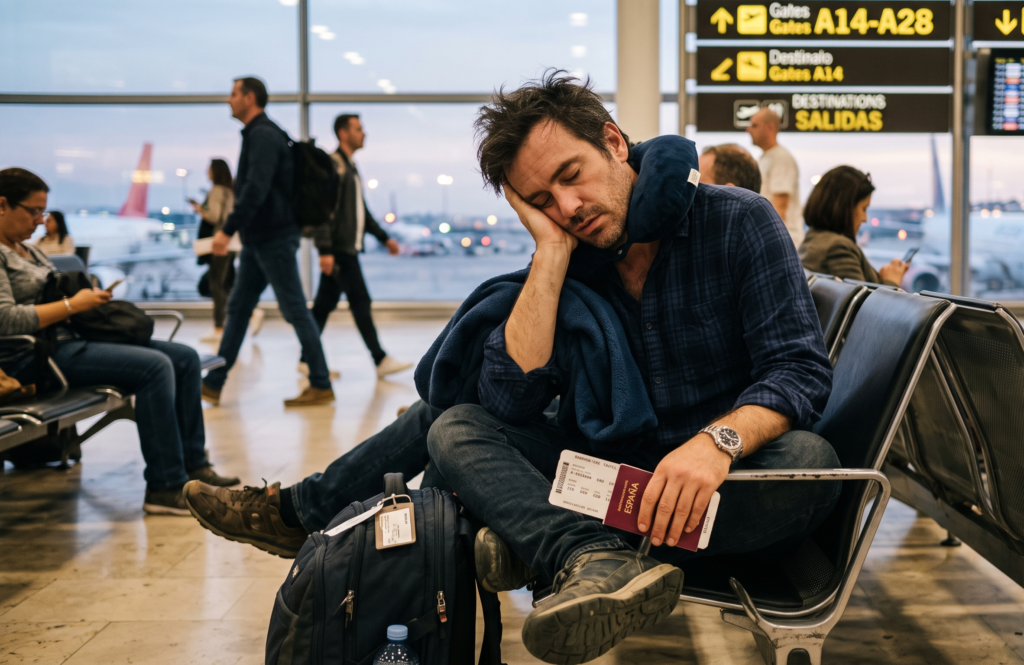
The Science of Travel Fatigue

Why Yacht Crew Often Experience Back Pain & Muscle Fatigue
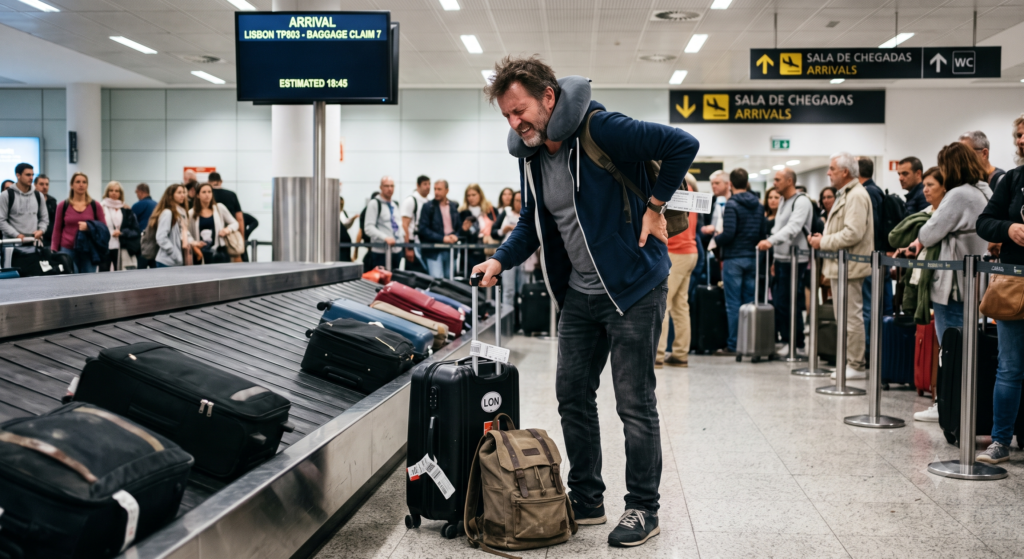
Why Your Lower Back Hurts After Flying to Barcelona (And How Massage Can Help)
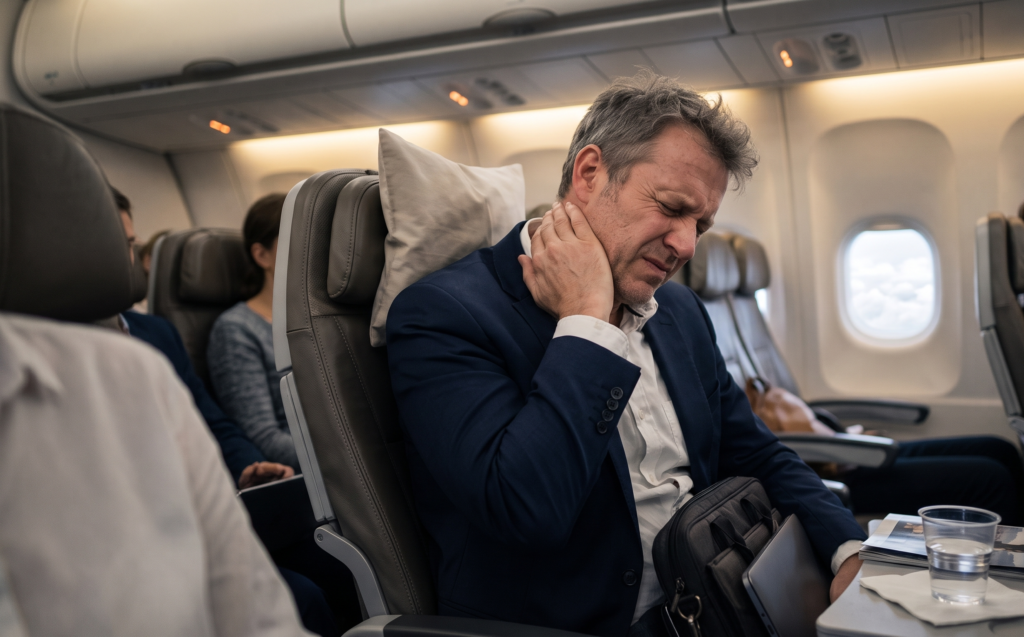
Why Your Neck Hurts After a Long Flight to Barcelona (And How Massage Can Help)