Why Do you Have Heavy Legs After Walking and Exploring Barcelona? (And How Massage Can Help)
– Travel Recovery Series
Helping travellers feel their best while discovering Barcelona, even those with heavy legs after walking Barcelona all day long!
Barcelona is a city designed to be explored on foot. From wandering through the Gothic Quarter’s medieval streets to climbing the colourful stairways of Park Güell or strolling the lively Passeig de Gràcia, it’s easy to cover more than 20 kilometres in a single day without even noticing.
The reward is unforgettable memories.
The consequence is often something much less enjoyable: legs that feel heavy, stiff and surprisingly exhausted.
Many visitors assume this discomfort is simply part of travelling. In reality, it’s your body’s natural response to hours of continuous walking, standing, climbing stairs and carrying backpacks or shopping bags.
Fortunately, there are simple ways to recover—and one of the most effective is therapeutic massage.
In this guide you will find:
- Why sightseeing affects your legs more than you expect
- The science behind heavy, tired legs after walking
- Common symptoms travellers experience
- Practical ways to recover naturally
- Why massage speeds up recovery
- Which massage works best after exploring Barcelona
- When you should seek professional treatment
- How to enjoy the rest of your trip without discomfort
There is a particular kind of tiredness that only travel can create.
It begins subtly. During breakfast, your legs feel perfectly normal. By midday, after wandering through the colourful markets, discovering hidden plazas and climbing endless streets that seem to reveal another spectacular viewpoint around every corner, your calves begin to tighten. Your feet feel warmer. Your steps become slightly shorter.
You ignore it.
After all, you’re in Barcelona—a city that constantly invites you to keep exploring.
Perhaps you’ve spent the morning admiring the intricate façades of Basílica de la Sagrada Família, wandered through the charming alleys of Barri Gòtic, or watched the sunset from Park Güell after climbing its winding paths.
By evening, however, your body finally asks for attention.
Your legs feel unusually heavy. Your calves may ache with every step. Your feet seem swollen inside your shoes. Even relaxing at dinner doesn’t completely relieve the sensation, and climbing the stairs back to your hotel suddenly feels much harder than it should.
If this sounds familiar, you’re far from alone.
Every day, thousands of visitors experience the same discomfort after spending long hours discovering one of Europe’s most walkable cities. Surprisingly, it isn’t simply about walking long distances. It’s a combination of muscular fatigue, reduced circulation, dehydration, unfamiliar terrain, heat, and the physical stress that travel places on your body.
Understanding why this happens is the first step toward preventing it—and recovering much faster.
In this guide, we’ll explore the science behind heavy legs after sightseeing, explain why Barcelona presents unique physical challenges for travellers, and show how targeted massage therapy can help restore comfort, improve circulation and allow you to enjoy the rest of your trip feeling light, energised and ready for your next adventure.
As part of the Travel Recovery Series, you’ll also discover practical recovery strategies that many experienced travellers use to stay active throughout their visit—including when it may be worth booking a professional massage to give your body the recovery it deserves.
Why Does Barcelona Leave Your Legs Feeling So Tired?
Most travellers expect to feel a little tired after a busy day of sightseeing. What surprises many people is how quickly that mild fatigue can turn into aching calves, swollen ankles, stiff feet and legs that seem unusually heavy.
The reason isn’t simply that you’ve been walking.
It’s that Barcelona encourages a very particular type of movement—one that places continuous demands on muscles, joints and circulation for hours at a time.
Unlike a gym workout, sightseeing rarely includes proper warm-ups, rest periods or stretching. Instead, your body performs thousands of repetitive movements without realizing it.
A typical visitor may easily:
- Walk 15,000–30,000 steps in a single day.
- Climb hundreds of stairs at metro stations and viewpoints.
- Stand for long periods while visiting museums or waiting in queues.
- Carry a backpack, shopping bags or camera equipment.
- Walk on uneven stone streets that constantly challenge balance and posture.
- Spend several hours exposed to Barcelona’s warm Mediterranean climate.
Individually, none of these activities is particularly demanding.
Combined over eight or ten hours, however, they create significant muscular fatigue.
Your calves act as a second heart, helping pump blood back toward your upper body with every step. After thousands of contractions, these muscles begin to tire, circulation becomes less efficient and fluid may temporarily accumulate in the lower legs.
This is one of the main reasons your legs feel heavier as the day goes on.
The Science Behind Heavy Legs
Heavy legs are not usually caused by a single problem.
Instead, several natural physiological responses happen at the same time.
Muscle Fatigue
Every step requires dozens of muscles to work together.
Your calves absorb impact.
Your quadriceps stabilize your knees.
Your hamstrings help control movement.
Your glutes support balance and posture.
Meanwhile, the small muscles in your feet are constantly adapting to different surfaces.
After thousands of repetitions, microscopic muscle fibres become stressed. This isn’t necessarily an injury—it’s the same natural process that occurs after a long hike or an intense workout.
As fatigue builds, muscles lose efficiency and begin to feel stiff, tight and heavy.
Reduced Circulation
Walking normally improves circulation.
However, walking continuously for many hours without adequate recovery can temporarily overwhelm the body’s ability to clear metabolic waste products efficiently.
Standing for long periods has a similar effect.
Blood and other fluids tend to pool slightly in the lower limbs due to gravity, particularly around the ankles and calves.
Many travellers notice that:
- Their socks leave deeper marks than usual.
- Their shoes feel tighter by the evening.
- Ankles appear slightly swollen.
- Legs feel full or unusually heavy.
These are common temporary responses after a long day of exploration.
Dehydration Makes Everything Worse
Barcelona enjoys sunshine for much of the year.
Even during spring and autumn, visitors often underestimate how much water they lose simply by walking outdoors.
Mild dehydration reduces physical performance far earlier than most people realise.
Muscles become more prone to cramping.
Recovery slows.
Fatigue increases.
Even circulation becomes slightly less efficient.
Many travellers blame walking alone, when dehydration has actually amplified the discomfort throughout the day.
Why Barcelona Is More Demanding Than Many Other Cities
Every destination challenges the body differently.
Barcelona happens to combine several factors that increase physical fatigue without visitors noticing until later.
Historic Streets
Neighbourhoods such as the Gothic Quarter are beautiful precisely because they have preserved their centuries-old character.
Those charming cobblestones and uneven pathways constantly force your feet and ankles to make tiny adjustments with every step.
While this improves balance, it also requires many stabilising muscles to work far harder than they would on smooth pavement.
Unexpected Hills
Although Barcelona is often considered a relatively flat city, many of its most famous attractions involve climbing.
Think about visiting Montjuïc, wandering through Park Güell, or exploring the neighbourhoods that stretch above Passeig de Gràcia.
Those gradual inclines may not feel difficult at first.
After several hours, however, they significantly increase the workload placed on your calves, hamstrings and glutes.
Long Days Without Realising It
One of Barcelona’s greatest attractions is how enjoyable it is simply to keep walking.
A quick coffee stop becomes a visit to another neighbourhood.
One museum leads naturally to another.
A short stroll to dinner turns into an evening walk along the waterfront.
Because the city feels so accessible, many visitors end up walking far more than they ever would at home—often without planning breaks.
That combination of continuous movement, warm weather and prolonged standing explains why heavy legs are one of the most common complaints among travellers before the end of their stay.
As the body becomes increasingly fatigued, simple recovery strategies can make a remarkable difference. In the next section, we’ll explore what you can do immediately after a day of sightseeing—and why a professional therapeutic massage or deep tissue massage can help you feel refreshed and ready to enjoy Barcelona again the very next morning.
How to Recover Faster After a Long Day of Sightseeing
The good news is that heavy legs after exploring Barcelona are usually temporary. In most cases, your body simply needs the right conditions to recover.
The mistake many travellers make is assuming that sleeping alone will solve everything.
While a good night’s rest certainly helps, recovery begins long before your head touches the pillow. The hours immediately after returning to your hotel can significantly influence how your body feels the following morning.
If you’ve spent the day walking across the city, these evidence-based strategies can help reduce discomfort and speed up recovery.
Rehydrate Before You Feel Thirsty
After several hours outdoors, your body has likely lost more fluids than you realise.
Even mild dehydration affects muscle performance and delays recovery.
Rather than drinking a large amount of water all at once, sip water steadily throughout the evening. If you’ve been sweating heavily or walking in the summer heat, consider pairing water with foods naturally rich in electrolytes, such as fruit, leafy greens or yoghurt.
Hydration supports healthy circulation, helps transport nutrients to tired muscles and assists your body in clearing the by-products produced during prolonged physical activity.
Elevate Your Legs
One of the simplest recovery techniques is also one of the most effective.
Lie comfortably on your bed and elevate your legs above the level of your heart using pillows or by resting them against the wall for 10–20 minutes.
This gentle position encourages venous return—the flow of blood back toward the heart—and can help reduce the sensation of heaviness that develops after many hours on your feet.
Many travellers notice that their ankles feel lighter and less swollen after just a short period of elevation.
Gentle Movement Is Better Than Complete Rest
It may seem logical to collapse on the sofa and avoid moving altogether.
In reality, completely stopping after an active day can sometimes make stiffness feel worse the following morning.
A short walk around your hotel, gentle ankle circles, slow calf stretches or light mobility exercises can keep circulation moving without placing additional stress on already tired muscles.
The goal isn’t more exercise.
It’s helping your body transition from activity into recovery.
Don’t Ignore Your Feet
Your feet absorb thousands of impacts throughout the day.
Every step transfers force through the arches, heels, ankles, calves and knees.
Taking just five minutes to massage the soles of your feet with your hands—or gently rolling them over a small ball—can help release tension that travels upward through the entire kinetic chain.
When your feet relax, the muscles higher in your legs often begin to relax as well.
When Self-Care Isn’t Enough
Sometimes recovery takes longer than expected.
Perhaps tomorrow’s itinerary includes another full day of sightseeing.
Maybe you’re visiting Barcelona for only a few days and don’t want muscle soreness limiting your experience.
Or perhaps your legs already felt tired before arriving because of a long flight.
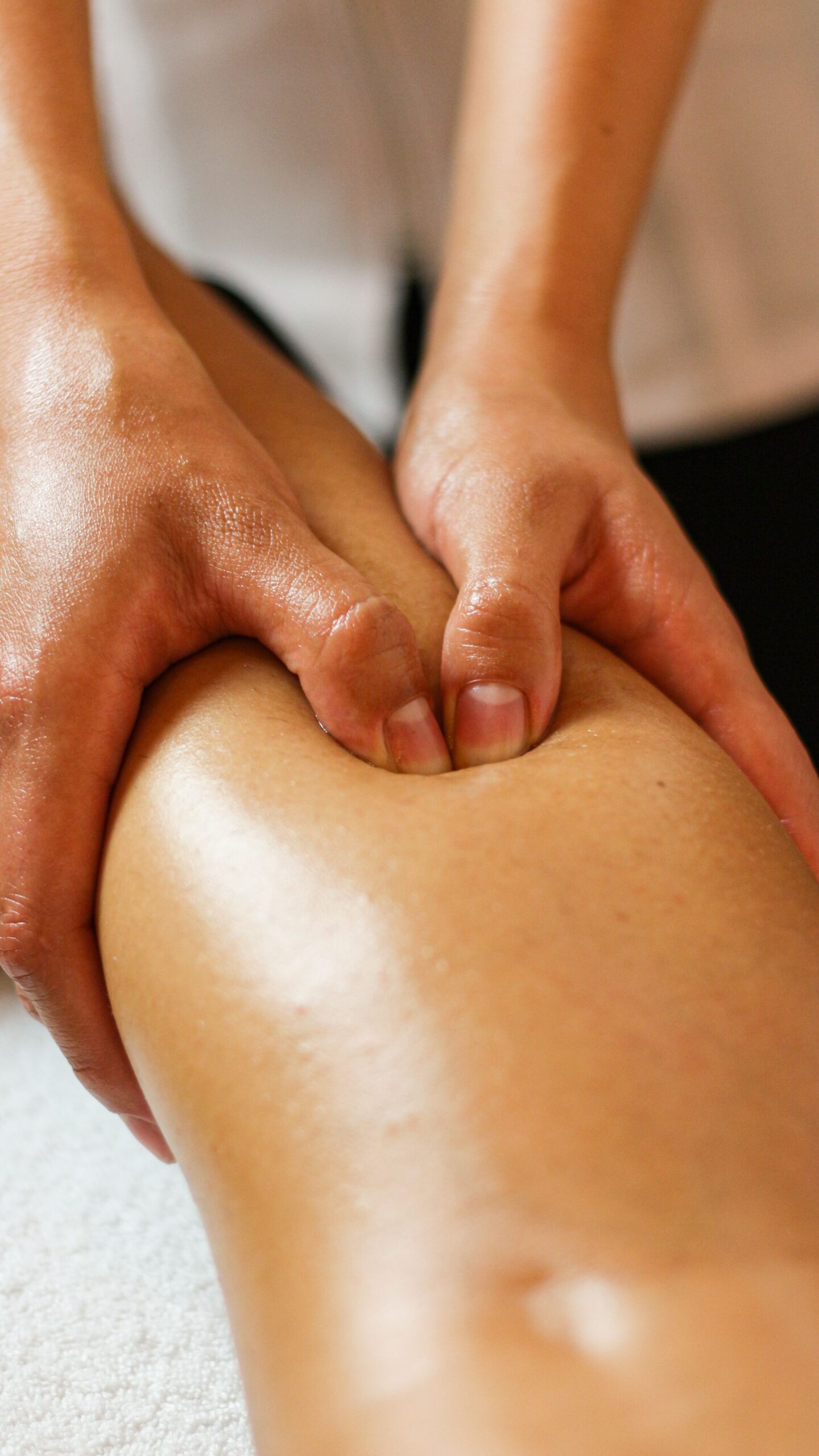
This is where professional massage can make a noticeable difference.
Rather than simply masking discomfort, targeted manual therapy addresses many of the underlying causes of heavy legs.
Why Massage Helps Tired Legs Recover
Massage has been used for centuries to help reduce muscular tension and promote relaxation.
Today, research also suggests that appropriate massage techniques may support circulation, reduce the perception of muscle soreness and encourage recovery following prolonged physical activity.
For travellers, these benefits are especially valuable.
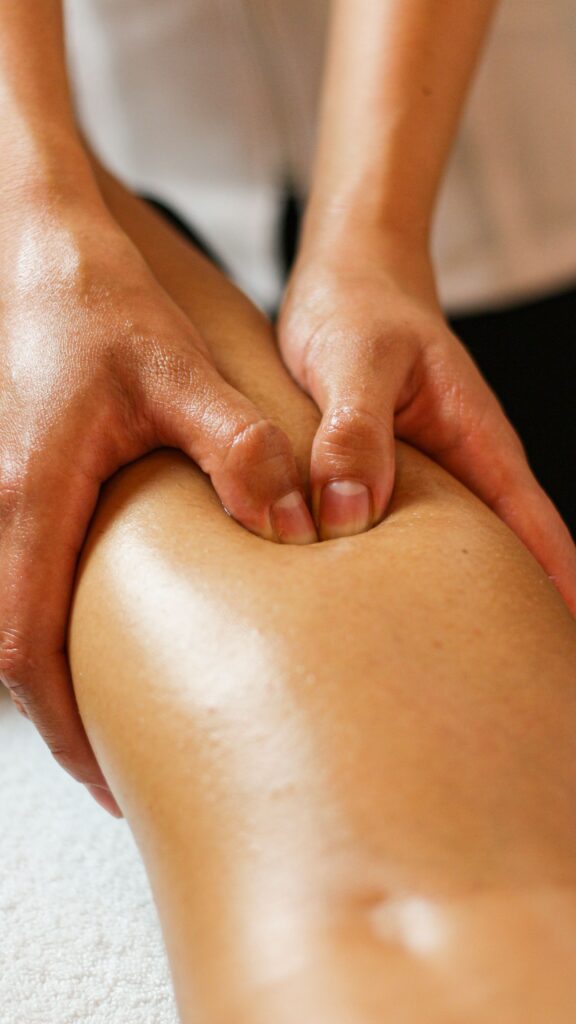
A professional massage may help:
- Reduce muscle tightness in the calves, thighs and feet.
- Encourage healthy circulation.
- Ease the feeling of heaviness after long periods of walking.
- Improve flexibility and joint mobility.
- Reduce stress accumulated throughout the day.
- Promote deeper, more restorative sleep.
- Help you wake up feeling refreshed rather than stiff.
Many visitors describe the sensation as feeling “lighter” immediately afterwards—not because the muscles have magically healed, but because accumulated tension has been released and the body can move more efficiently again.
Choosing the Right Massage After Exploring Barcelona
Not every massage serves the same purpose.
The best treatment depends on how your body feels and what you hope to achieve during the rest of your trip.
If Your Legs Feel Tight and Sore
A Deep Tissue Massage in Eixample, Barcelona can help target areas of persistent muscular tension, particularly in the calves, hamstrings and gluteal muscles.
Using slower, more focused techniques, this treatment aims to release tight tissues that often develop after long days of walking.
It can be particularly beneficial if you’ve been carrying luggage, climbing hills or already suffer from occasional muscle stiffness.
If You Simply Want to Feel Relaxed Again
Sometimes your muscles don’t need intensive work.
They simply need permission to switch off.
A Relaxing Massage in Barcelona focuses on calming the nervous system, encouraging circulation and helping the body transition from physical activity into genuine recovery.
Many travellers choose this option during the middle of their holiday to recharge before continuing their adventure.
If You Have Persistent Discomfort
If fatigue is accompanied by ongoing muscular tightness, previous injuries or discomfort in the lower back and hips, a therapeutic massage in Barcelona offers a more personalised approach.
Rather than following a standard routine, the session is adapted to your individual needs, focusing on the muscles that have been working hardest throughout your stay.
For many visitors, this combination of assessment and targeted treatment provides the greatest sense of relief.
By the end of the session, the difference is often noticeable.
Walking feels smoother.
Your stride becomes more natural.
Climbing stairs requires less effort.
Perhaps most importantly, you’re able to enjoy Barcelona with your attention focused once again on its architecture, food and vibrant atmosphere—not on the discomfort in your legs.
When Should You Be Concerned About Heavy Legs?
For most visitors, heavy legs after exploring Barcelona are simply a normal response to prolonged physical activity. The discomfort usually improves after rest, hydration and gentle movement, and disappears within a day or two.
However, it’s important to recognise that not every case of leg discomfort is related to sightseeing.
If your symptoms are unusually intense, persist for several days or are accompanied by other warning signs, it’s advisable to seek medical evaluation rather than assuming it’s just travel fatigue.
Consider medical advice if you experience:
- Significant swelling in only one leg.
- Severe pain that doesn’t improve with rest.
- Redness or unusual warmth in the calf.
- Numbness or loss of strength.
- Chest pain or shortness of breath (which requires immediate emergency attention).
Fortunately, these situations are uncommon.
Most travellers simply need recovery—not treatment for a serious medical condition.
Listening to your body is one of the best ways to ensure you continue enjoying your holiday safely and comfortably.
Recovery Is Part of the Journey
Many people spend weeks planning what they will see in Barcelona.
Few spend even five minutes thinking about how they’ll recover after exploring it.
Yet recovery isn’t a luxury reserved for athletes.
It’s an essential part of staying comfortable while travelling.
When your muscles recover efficiently, every experience becomes more enjoyable. Walking through vibrant neighbourhoods feels effortless again. Stairs become easier. Even sitting down for dinner is more relaxing when your body isn’t distracted by aching calves or tired feet.
Taking care of yourself during your trip isn’t about slowing down.
It’s about making sure your body can keep up with everything Barcelona has to offer.
A Professional Massage Can Help You Enjoy More of Barcelona
If your legs feel heavy after a day of sightseeing, a professional massage can be one of the most rewarding ways to recover.
At Barcelona Massage by Lina, every session is tailored to your body’s needs. Whether you’ve spent the day climbing hills, wandering through historic streets or simply walking much farther than usual, your treatment is designed to help relieve muscular tension, improve comfort and leave you feeling refreshed for the days ahead.
Many of our clients are travellers who want to make the most of their stay without being limited by fatigue or sore muscles. Others choose a massage at the end of their holiday as the perfect way to relax before a flight home.
Wherever you are in your journey, giving your body time to recover is one of the best investments you can make in your travel experience.
Ready to Feel Light on Your Feet Again?
If you’re experiencing tired, heavy or aching legs after exploring Barcelona, we’d be delighted to help.
Explore our Deep Tissue Massage Barcelona, Therapeutic Massage Barcelona, and Relaxing Massage Barcelona services to find the treatment that best suits your needs.
You can also browse our complete range of treatments on our Massage Services page or contact us directly via WhatsApp if you’re unsure which massage is right for you.
Your Barcelona adventure deserves a body that feels as good as the memories you’re creating.
Frequently Asked Questions
Why do my legs feel so heavy after walking around Barcelona?
Long periods of walking, standing, climbing stairs and exposure to warm weather can temporarily fatigue your muscles and slow circulation, making your legs feel heavy or tired.
Is it normal for my feet to swell after sightseeing?
Yes. Mild swelling in the feet or ankles is common after spending many hours on your feet, particularly during warm weather or after a long flight.
Can massage help tired legs after travelling?
Massage may help reduce muscle tension, encourage circulation, promote relaxation and improve your overall sense of recovery after long days of sightseeing.
Which massage is best for tired legs?
It depends on your symptoms. Deep tissue massage is ideal for significant muscle tightness, while therapeutic massage offers a more personalised approach. Relaxing massage is an excellent option if your goal is overall recovery and stress relief.
Should I get a massage during my holiday or before flying home?
Both can be beneficial. Many travellers book a massage halfway through their trip to recover before continuing their sightseeing, while others prefer one shortly before returning home to finish their holiday feeling refreshed.
How can I prevent heavy legs while travelling?
Stay hydrated, wear comfortable footwear, take regular breaks, stretch your calves throughout the day and avoid walking continuously for many hours without resting. Scheduling a recovery massage can also help if you’re planning several active days in Barcelona.
Continue Your Recovery Journey
If you found this guide helpful, you may also enjoy these articles from our Travel Recovery Series:
- Best Massage for Business Travelers in Barcelona
- How to Recover from Jet Lag Faster While Visiting Barcelona
- Why a Deep Tissue Massage in Eixample is the Ultimate Reset for Your Body
- Massage for Stress Relief in Barcelona
These guides are designed to help you enjoy Barcelona feeling your best—before, during and after every adventure.
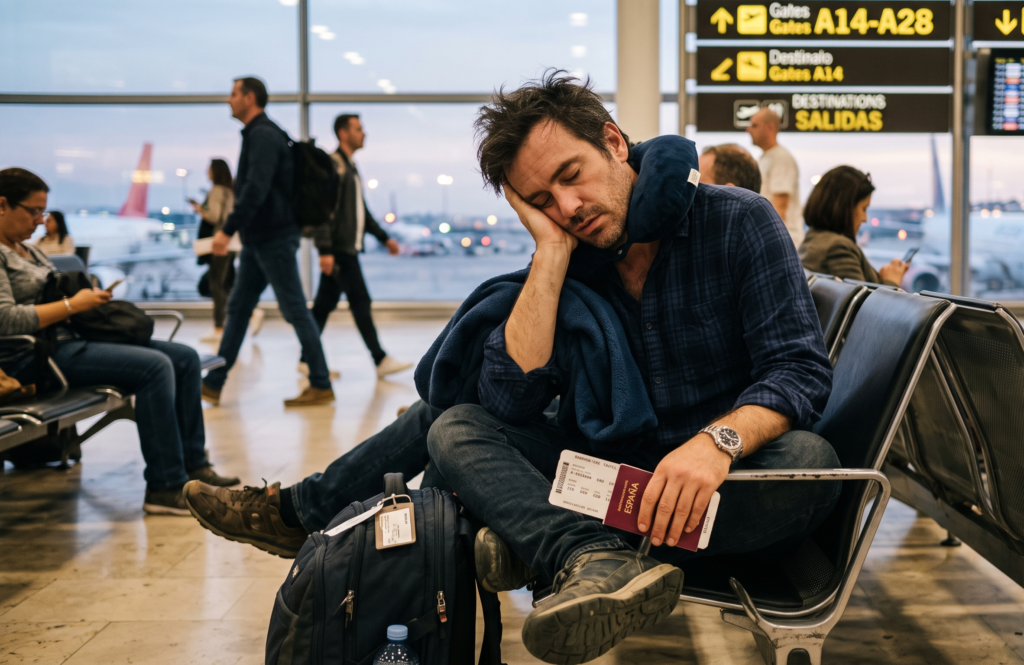
The Science of Travel Fatigue
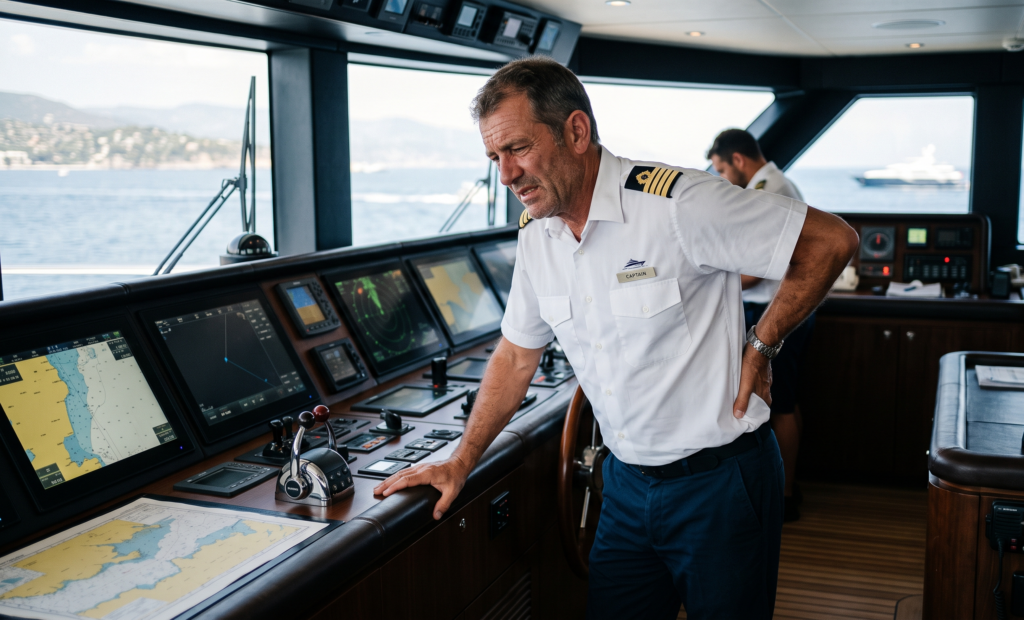
Why Yacht Crew Often Experience Back Pain & Muscle Fatigue
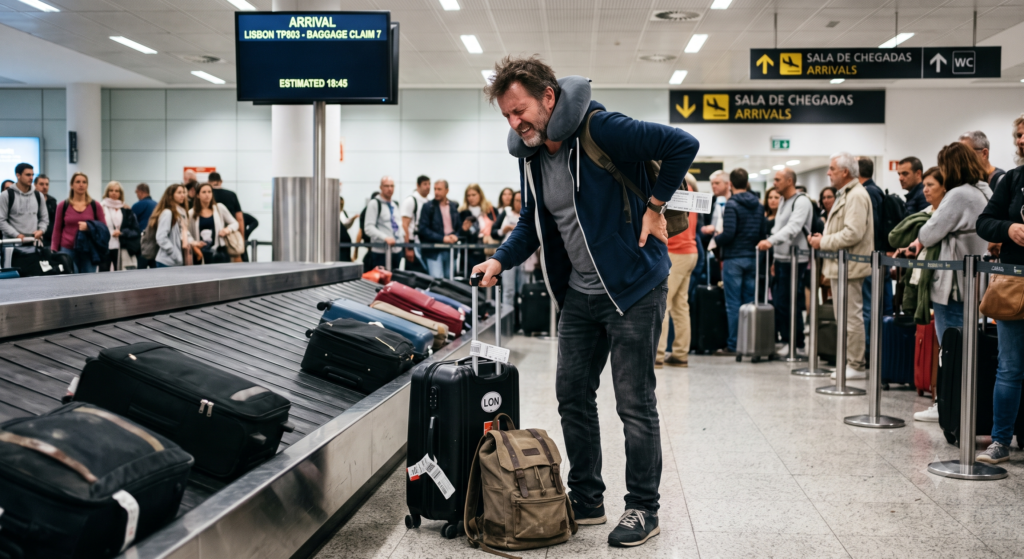
Why Your Lower Back Hurts After Flying to Barcelona (And How Massage Can Help)
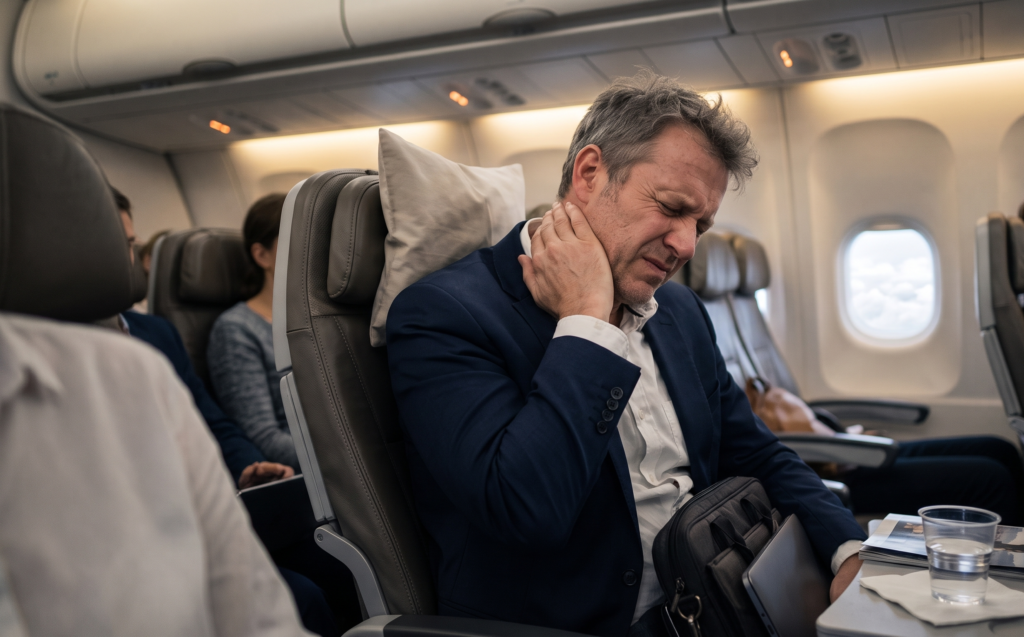
Why Your Neck Hurts After a Long Flight to Barcelona (And How Massage Can Help)
Why Do you Have Heavy Legs After Walking and Exploring Barcelona? (And How Massage Can Help)