
Massage for Back Pain in Barcelona: Which Treatment Should You Choose?
A Practical Guide to Therapeutic, Deep Tissue and Personalised Massage for Back Pain
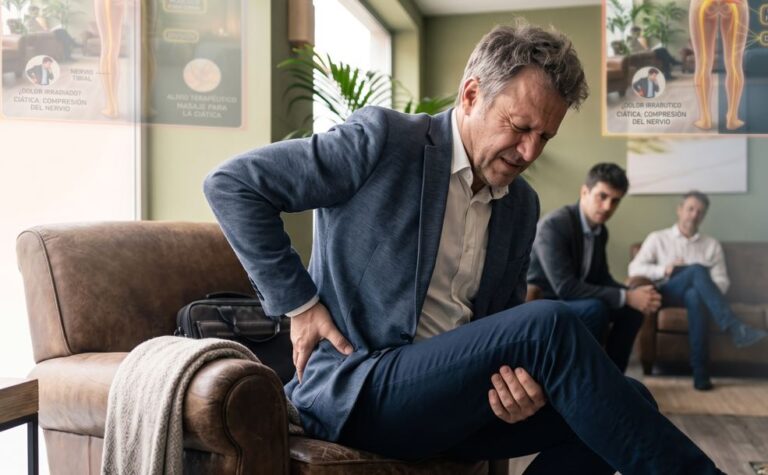
Your back hurts.
So you open Google and search for a massage in Barcelona.
Simple enough.
Until suddenly you have:
Therapeutic Massage.
Deep Tissue Massage.
Thai Massage.
Relaxing Massage.
Sports Massage.
Back Pain Massage.
And something involving hot stones that looks lovely but doesn’t answer your question.
Five minutes later, choosing a massage requires more research than choosing your hotel.
So…
Which massage should you actually book for back pain?
The answer depends less on the name of the massage and much more on why your back hurts, what your symptoms feel like and what you want from the session.
Someone whose lower back feels tired after walking 25,000 steps around Barcelona may need a very different approach from someone who has been dealing with recurring back discomfort for six months.
And neither necessarily needs the deepest massage available.
Let’s figure out what might make sense for you.
First: What Kind of Back Pain Do You Have?
Before choosing a massage, this is a much better question than:
“Which massage is strongest?”
Back pain isn’t one single thing.
Your back might feel:
Tight.
Tired.
Stiff.
Sensitive.
Heavy.
Achy.
Restricted.
Or perhaps there’s one extremely specific point that has been annoying you for weeks.
Different people also experience discomfort in different places.
Lower back.
Upper back.
Between the shoulder blades.
Around the neck and shoulders.
Symptoms appear after work.
Sometimes after travelling.
Maybe after training.
During stressful periods.
And occasionally someone walks into my studio and gives me the highly technical description:
“Lina… everything.”
Fair enough.
That’s useful information too.
The important point is that the location of your pain doesn’t automatically tell us which massage you need.
We need context.
The Best Massage for Back Pain Depends on the Person
Imagine two people searching:
“massage for back pain in Barcelona.”
The first has just arrived from New York.
Nine-hour flight.
Poor sleep.
Heavy suitcase.
Long taxi ride.
Then somehow decided that walking from Sagrada Família to Barceloneta on the first day was an excellent idea.
Their lower back feels exhausted.
The second person lives in Barcelona.
Works eight hours behind a computer.
Trains three times per week.
Has experienced recurring discomfort around the upper back for months.
Same Google search.
Very different situation.
That’s why I don’t believe there’s one universally “best massage for back pain.”
There may, however, be a massage approach that makes more sense for you.
Start With the Question: Why Does My Back Hurt?
You don’t need to diagnose yourself.
In fact, please don’t spend three hours on Google doing that.
We both know how that story ends.
You start with:
“Why does my lower back feel tight?”
And somehow, fourteen tabs later, you’re emotionally preparing your family for the worst.
Instead, think about the circumstances surrounding your symptoms.
Did they begin after a long flight?
After several intense workouts?
During an unusually stressful period?
After weeks of long working days?
Do they appear after sitting?
After standing?
After walking?
Do they improve when you move?
Have you experienced them before?
Those clues don’t necessarily give us a diagnosis.
But they give us context.
And context helps determine whether massage is appropriate and what kind of session may be most useful.
When Massage May Be Useful for Back Pain
Massage can be particularly appealing when back discomfort feels related to muscular fatigue, stiffness or tension.
For example, you may notice:
- Your back feels tired after prolonged sitting.
- Your shoulders feel tense after computer work.
- Your lower back feels stiff after travelling.
- Your muscles feel overloaded after training.
- Your upper back feels uncomfortable after long working days.
- Familiar muscular tension becomes more noticeable during stressful periods.
In situations like these, massage may help some people temporarily reduce muscular discomfort, feel less tense and move more comfortably.
But there’s an important distinction.
Massage doesn’t need to “fix” the underlying cause of every type of back pain to be useful.
Sometimes improving comfort is already a worthwhile outcome.
But Massage Isn’t Automatically the Answer
This matters.
Back pain has many possible causes and contributors.
Some are relatively ordinary.
Others require proper medical assessment.
Massage should never become the default response to every painful sensation simply because the pain happens to be located in your back.
New or severe symptoms, significant trauma, progressive weakness, unusual numbness, changes in bladder or bowel function, fever or other concerning neurological or systemic symptoms require appropriate medical evaluation.
That’s not the moment to search:
“strongest Deep Tissue massage near me.”
That’s the moment to get properly assessed.
Knowing when not to massage is part of responsible massage practice.
So Which Massage Is Best for Back Pain?
Now we’re getting somewhere.
For most people searching for back pain massage in Barcelona, the options they’ll encounter include:
Thai Massage
Sports-style massage
Or some combination of them.
Here’s the important part:
These aren’t competing teams.
You don’t need to declare lifelong loyalty to Deep Tissue.
Different techniques can be useful in different circumstances.
And sometimes combining them makes considerably more sense than forcing your body into one predefined massage category.
Let’s start with the one I most frequently recommend when the situation isn’t completely straightforward.
Therapeutic Massage for Back Pain
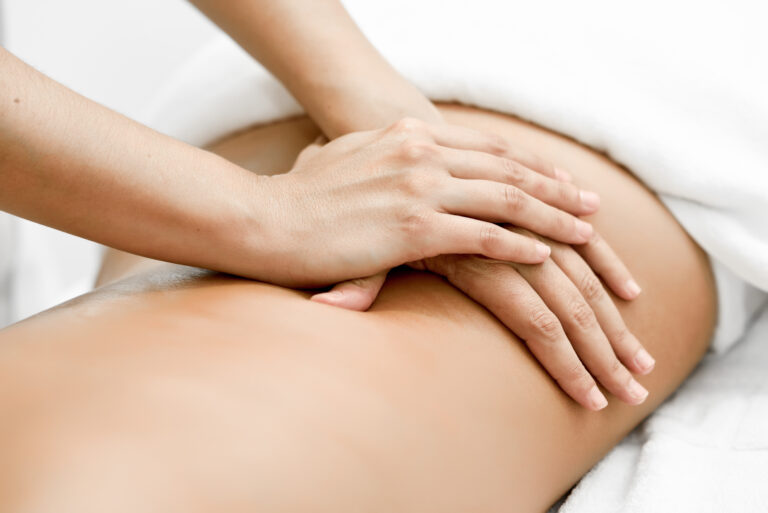
A Therapeutic Massage in Barcelona isn’t simply about applying strong pressure to the painful area.
The advantage is adaptability.
Instead of following exactly the same massage routine for every person, the session can change according to:
Symptoms.
Your sensitivity.
Activity.
Mobility.
Your preferences.
And how your body responds during the treatment.
Maybe your lower back feels uncomfortable, but your hips and surrounding muscles also feel heavily loaded.
Perhaps the main complaint is between your shoulder blades, but you spend ten hours every day behind a laptop.
Perhaps your back feels tense, but what you actually need that day isn’t an aggressive treatment.
That’s why therapeutic massage gives us options.
The massage adapts to you—not the other way around.
When I Might Choose a Therapeutic Approach
Therapeutic Massage may make sense when:
Your symptoms are recurring.
Several areas feel involved.
You’re not sure exactly what type of massage you need.
You want focused work without necessarily wanting maximum pressure.
Your discomfort changes according to work, training or travel.
You want the session adapted according to how your body feels that day.
This is particularly useful because backs don’t always read the service menu before deciding to hurt.
The lower back might need focused work.
Your upper back may respond better to slower techniques.
Your shoulders might benefit from movement.
And by the end of the session, relaxation may be just as valuable as pressure.
There is no rule saying every minute of a therapeutic massage has to feel “therapeutic.”
Sometimes the best treatment includes moments where your nervous system simply gets to calm down.
What About Deep Tissue Massage for Back Pain?
This is probably the massage people associate most strongly with muscular back tension.
And yes:
Deep Tissue Massage can be an excellent option for some people.
Especially when someone enjoys deeper pressure and experiences persistent muscular tightness or a feeling of heavy, overloaded muscles.
But there’s a misconception we need to remove immediately:
Deep Tissue doesn’t mean “as hard as physically possible.”
If you’re holding your breath…
Gripping the massage table…
And silently reconsidering every decision that led you into the room…
We may have gone too far.
Effective pressure should be purposeful.
Not performative.
Deep Doesn’t Automatically Mean Better
This is especially important for people searching for the “strongest massage in Barcelona.”
I understand why.
If something feels extremely tight, the instinct is:
Push harder.
But more pressure doesn’t automatically produce a better outcome.
Some people respond beautifully to deep, slow work.
Others become more sensitive when pressure becomes excessive.
And sometimes an area already feels irritated enough without turning the massage into a wrestling match.
The goal isn’t:
How much pressure can you survive?
It’s:
What pressure helps your body respond well?
That’s a very different question.
Therapeutic Massage vs Deep Tissue for Back Pain
Here’s the simplest distinction.
Think of Deep Tissue primarily as a technique or style of working.
Think of Therapeutic Massage as the broader strategy.
Deep Tissue techniques can actually be incorporated into a therapeutic session when appropriate.
That means the choice doesn’t always have to be:
Therapeutic OR Deep Tissue.
Sometimes it’s:
Therapeutic Massage including Deep Tissue where it makes sense.
That’s often how I prefer to work.
Because your body isn’t required to need exactly the same pressure everywhere.
What If I Don’t Know Which One to Choose?
Perfect.
You don’t need to.
This is one of the most common situations.
You know your back hurts.
You know you’d like a massage.
But you don’t know whether your trapezius wants Deep Tissue, Therapeutic Massage, Thai techniques…
or a strongly worded letter of complaint.
That’s okay.
You don’t need to diagnose yourself before booking a massage.
Tell me:
Where does it hurt?
How long has it been happening?
What seems to make it worse?
What kind of pressure do you normally enjoy?
What are you hoping to feel after the session?
From there, we can decide what makes sense.
And This Is Where Personalised Massage Becomes Important
A massage menu is useful for understanding the different options available.
But your body doesn’t exist in categories.
You might arrive expecting Deep Tissue and discover that a combination of focused therapeutic work, slower pressure and movement feels considerably better.
Or perhaps you genuinely love strong massage and deeper techniques are exactly what you want.
The treatment can evolve according to your response.
That’s one reason personalised massage is central to how I work in Barcelona.
I don’t want to give you the massage you selected from a menu three days ago.
I want to give you the massage that makes sense for the body that arrives today.
But There’s Another Question We Need to Answer
We’ve compare Therapeutic and Deep Tissue Massage.
But back pain doesn’t only happen to people sitting behind desks.
Barcelona gives us several very different versions of the same problem.
The traveller who just spent nine hours on a plane.
The tourist who walked 24,000 steps yesterday.
The person whose lower back hurts after training.
The office worker whose upper back feels permanently exhausted.
The person whose back becomes noticeably worse during stressful weeks.
And the client dealing with pain that travels toward the leg.
Those situations shouldn’t automatically receive the same massage.
So next, we’re going to make this much more practical:
What Massage Should You Choose for Your Type of Back Pain?
Because “my back hurts” is only the beginning of the conversation.
How to Choose a Massage Therapist for Back Pain in Barcelona
Barcelona isn’t exactly short of massage options.
Search online and within seconds you’ll find:
Spas.
Wellness centres.
Hotel treatments.
Independent therapists.
Deep Tissue Massage.
Thai Massage.
Therapeutic Massage.
Sports Massage.
And approximately seventeen different interpretations of the word:
“Strong.”
So if your back actually hurts—not just “I’d quite like a massage today”—how do you decide where to go?
For me, the answer isn’t simply:
Find the therapist who promises the deepest pressure.
A good massage for back pain should begin before the first massage stroke.
It begins with understanding what’s happening.
1. They Should Ask Questions
This sounds incredibly basic.
But it’s important.
If you tell a therapist:
“My lower back hurts.”
I would expect some curiosity.
When did it begin?
Has it happened before?
What does it feel like?
What makes it better or worse?
Have you recently travelled?
Do you train?
What does your work involve?
Are there symptoms travelling into your leg?
Have you experienced numbness or weakness?
Has the problem already been assessed?
Not every massage requires a twenty-minute interrogation.
You came for a massage, not immigration control.
But when pain is the reason you’re booking, some context matters.
Otherwise we’re treating a location rather than understanding the person attached to it.
2. The Massage Should Be Adapted to You
Two clients can book exactly the same service and need completely different sessions.
Imagine:
Client A loves strong pressure.
Exercises regularly.
Has familiar muscular tension around the upper back.
Client B has been sleeping badly.
Feels unusually sensitive.
Has never received Deep Tissue Massage.
Both selected:
Deep Tissue Massage — 60 minutes.
Should they receive exactly the same treatment?
I don’t think so.
Pressure.
Pace.
Areas treated.
Techniques.
Positioning.
Movement.
Even how much time we spend on one area.
All of those can change.
A service name should give the session direction.
It shouldn’t become a contract your body is forced to obey.
3. “Strong Massage” Shouldn’t Mean Ignoring Your Body
I know.
Some of you love pressure.
I do too.
There is something incredibly satisfying about finding exactly the right amount of pressure in an area that has felt tense for days.
But there’s a difference between:
Deep pressure
and
surviving an event.
During a good deeper massage, you should still be able to communicate.
Breathe.
Relax reasonably.
And tell the therapist if something doesn’t feel right.
If the massage becomes so intense that your entire body is bracing against it, more pressure isn’t necessarily giving us more benefit.
Your therapist shouldn’t treat:
“I can tolerate it.”
as the treatment goal.
4. Communication During the Massage Matters
One of the simplest questions a therapist can ask is:
“How is the pressure?”
And your answer is allowed to be:
“More.”
“Less.”
“Perfect.”
“Not there.”
“That feels different.”
Or:
“Absolutely not.”
You aren’t offending me.
Pressure isn’t a review of my professional abilities.
It’s information.
Your response helps me adjust the session.
And because sensitivity can change between areas, pressure that feels wonderful around your upper back may feel completely different around your lower back or legs.
A personalised massage should remain a conversation—even when nobody is talking much.
5. You Shouldn’t Need to Prove That You’re Tough
This deserves its own section.
Massage isn’t a pain-tolerance competition.
There’s no leaderboard.
No medal.
And unfortunately no small trophy at reception saying:
“Congratulations. You survived level 9 pressure.”
If you enjoy very strong massage, fantastic.
But don’t choose extreme pressure because you believe the treatment only “works” if it hurts.
Pain during massage isn’t proof that a knot is being removed.
Soreness afterwards isn’t proof that toxins were released.
And bruising isn’t a certificate of therapeutic success.
More intense doesn’t automatically mean more effective.
6. Look for Someone Who Knows Their Limits
This might be one of the most important things when choosing massage for back pain.
A responsible therapist should be comfortable saying:
“I don’t think massage is the right first option here.”
Massage has limits.
If your symptoms suggest that medical or physiotherapy assessment would be more appropriate, a therapist shouldn’t attempt to massage their way through uncertainty.
I don’t consider referring someone elsewhere a failed massage.
Quite the opposite.
Knowing when not to treat is part of taking someone’s symptoms seriously.
7. Be Careful With Miracle Claims
If you’re searching online for back pain treatment, you’ll eventually find promises like:
“Fix your back pain permanently.”
“Correct your spine.”
“Eliminate sciatica in one session.”
“Release all your toxins.”
Those claims should make you curious.
Back pain is complex.
Sciatica can involve nerve-root irritation.
Persistent pain can have multiple contributors.
Human bodies aren’t broken IKEA furniture.
Massage can be extremely valuable without pretending it can solve every musculoskeletal problem.
Personally, I’d rather promise less and have you leave pleasantly surprised than sell you certainty that nobody can reasonably guarantee.
8. Ask What “Therapeutic” Actually Means
The word therapeutic is used very broadly.
For me, it doesn’t mean:
Painful massage.
And it doesn’t mean:
Medical treatment disguised as massage.
It means the session has a purpose and is adapted around what you’re experiencing.
Perhaps we focus on your back.
Perhaps your shoulders also need attention.
Maybe we incorporate deeper techniques.
Maybe we include movement.
Perhaps slower work feels better that day.
The treatment should have reasoning behind it.
Not simply:
Back hurts means: elbow.
9. Private Studio, Spa or Hotel Massage?
There’s no universally correct answer.
It depends on what kind of experience you’re looking for.
A Spa
A spa can be wonderful if you want a broader wellness experience.
Beautiful facilities.
Sauna.
Pool.
Multiple treatments.
A full afternoon dedicated to relaxing.
If that’s what you want, fantastic.
A Private Massage Studio
A private massage studio can suit someone looking for a quieter, more personal experience.
You’re booking directly with the therapist.
There’s more continuity.
The environment may feel less like a large wellness operation and more like an individual session built around you.
That’s the model I prefer for my own work.
Hotel Massage
If you’re visiting Barcelona, convenience may matter more than anything.
After a long flight or a full day exploring the city, the idea of travelling again for a massage may sound deeply offensive.
In that situation, a hotel massage can be useful.
I also offer hotel sessions in Barcelona when arranged in advance.
The best environment depends on what you value:
Facilities?
Privacy?
Convenience?
Personalisation?
There isn’t one correct answer.
10. Location Matters More Than You Think
Let’s be practical.
You found the perfect massage.
Excellent reviews.
Exactly the treatment you want.
One small problem:
It’s 55 minutes away.
Now your recovery plan includes:
Metro.
Transfer.
Walking.
Google Maps.
Wrong exit.
Another eight-minute walk.
If you’re already dealing with back discomfort, convenience has value.
For people staying or living around central Barcelona, Eixample can be particularly practical because of its connections with areas such as Passeig de Gràcia, Plaça Catalunya, Sagrada Família and the surrounding city centre.
This is one reason I chose to work from a private massage studio in Eixample.
A good massage shouldn’t require an expedition.
11. Reviews Are Useful—But Read What People Actually Say
A five-star rating is reassuring.
But the words inside reviews can tell you much more.
Look for patterns.
Do people mention:
Communication?
Professionalism?
Pressure being adapted?
Feeling listened to?
A clean and comfortable environment?
Specific experiences with back or muscular tension?
International visitors may also want to know whether communication in a shared language will be easy.
Don’t only look for:
“Amazing!!!”
Lovely review.
Not an enormous amount of clinical information.
Detailed experiences can help you understand whether the therapist’s approach matches what you’re looking for.
12. Don’t Choose Only by Price
Price matters.
Of course it does.
But massage isn’t a product where every 60-minute session is identical.
You’re paying for more than sixty minutes of someone touching your back.
Experience.
Training.
Attention.
Environment.
Communication.
Personalisation.
Time.
And the ability to recognise when something shouldn’t be treated.
The cheapest massage isn’t automatically bad.
The most expensive massage isn’t automatically excellent.
The question is:
Does the experience justify the price for what you’re looking for?
13. Your Therapist’s Background Can Matter
If you’re booking because your back hurts, you may feel more comfortable with someone who has education or experience related to anatomy, movement and musculoskeletal symptoms.
My own approach to massage is influenced by my background in Physiotherapy and my particular interest in therapeutic massage and lower-back discomfort.
That doesn’t mean massage becomes physiotherapy.
They’re not interchangeable.
And I don’t diagnose medical conditions through a massage session.
But that background influences the questions I ask, how I think about symptoms and—importantly—when I believe massage may not be the appropriate option.
For me, that’s part of responsible practice.
14. A Good Therapist Shouldn’t Make You Afraid of Your Body
This one matters enormously to me.
Be cautious if every explanation sounds like:
Your posture is terrible.
The spine is misaligned.
Your hips are completely out.
The muscles are full of knots.
Your body is damaged.
You desperately need treatment every week.
Fear can make people feel dependent on therapy.
That’s not what I want.
Your body is adaptable.
Strong.
Capable of change.
And often much more resilient than you’ve been led to believe.
Massage should ideally help you feel more confident in your body, not more frightened of living in it.
15. You Shouldn’t Leave Thinking You Need Me Forever
Yes.
I’m a massage therapist saying this.
Terrible business strategy.
But important.
If you enjoy regular massage and want to come every week?
Wonderful.
If once a month works beautifully for you?
Also wonderful.
If you visit Barcelona once, have a massage and I never see you again because you live 8,000 kilometres away?
I’ll survive.
Probably.
The goal isn’t to convince you that your back will collapse without another appointment.
Massage can be something you choose because it helps you feel better.
Not something you believe you’re physically dependent on.
What I Personally Look for Before Working on Back Pain
When someone comes to me specifically because of back discomfort, I want to understand three things.
1. What are you experiencing?
Where?
For how long?
What does it feel like?
2. What’s happening around it?
Work.
Travel.
Training.
Sleep.
Stress.
Activity.
Previous episodes.
3. Is massage appropriate today?
This is the most important one.
If the answer appears to be yes, we can decide how to approach the session.
If the answer may be no, pressing harder isn’t going to turn it into yes.
What Should a 60-Minute Back Pain Massage Actually Look Like?
Here’s another common misconception.
You book because your lower back hurts.
Therefore:
60 minutes on the lower back.
Not necessarily.
Sometimes spending the entire hour on one sensitive area would be excessive.
A personalised session may include several regions depending on your symptoms and preferences.
For example:
Back.
Neck.
Shoulders.
Hips or gluteal region where appropriate and agreed.
Legs.
Movement.
And slower work toward the end.
The exact structure isn’t predetermined.
Because I don’t know what your body will need until you arrive.
The First Five Minutes Matter
When you arrive for a session with me, I don’t immediately point toward the massage table and shout:
“FACE DOWN. WE HAVE KNOTS TO DESTROY.”
We talk first.
Not for half an hour.
But enough.
What brings you in?
Where are you uncomfortable?
What are you hoping for?
How do you normally respond to pressure?
Is there anything I should know?
That short conversation gives me information that a booking form simply can’t.
And sometimes what you tell me changes how I approach the entire massage.
Then the Massage Can Change as We Go
This is another reason I prefer personalised sessions.
Suppose you asked for Deep Tissue.
We begin.
Your upper back responds beautifully to deeper pressure.
Great.
Then we reach another area and your body clearly prefers something slower.
We adjust.
No drama.
No:
“Sorry, you selected Deep Tissue. The contract has been signed.”
Your feedback matters more than the label.
That’s what personalisation actually means.
What Should You Feel After a Massage for Back Pain?
There isn’t one correct response.
Some people feel:
Looser.
Lighter.
More relaxed.
Sleepy.
More comfortable moving.
Or simply pleasantly calm.
Some people notice very little immediately and feel better later.
And occasionally deeper work may leave temporary tenderness afterwards.
As I’ve explained in Is It Normal to Feel Sore After a Massage?, soreness isn’t automatically concerning—but it also isn’t proof that the massage “worked.”
I don’t measure success by how destroyed you feel the next morning.
Quite the opposite.
The Goal Isn’t a Perfect Back
I don’t believe your back needs to feel completely perfect every day.
Bodies get tired.
Muscles become fatigued.
Symptoms fluctuate.
Life happens.
The goal of massage isn’t to create a body that never experiences discomfort again.
That’s not realistic.
For me, a more useful goal is:
Can we help you feel more comfortable today?
Can movement feel easier?
Can that irritating muscular tension become quieter?
Can you leave feeling better than when you arrived?
If yes…
That’s already meaningful.
So Why Choose a Personalised Massage?
Because “back pain” isn’t a treatment plan.
It’s the beginning of a conversation.
The same massage isn’t appropriate for every person.
The same pressure isn’t appropriate for every muscle.
And the massage you loved six months ago may not even be what your body wants today.
That’s why I prefer to work from the individual outward.
Not:
Technique → person.
But:
Person → technique.
And if you’re currently searching for a massage for back pain in Barcelona, there’s one final question we need to answer:
What Would a Back Pain Massage With Me Actually Be Like?
Because knowing which treatment to choose is useful.
Knowing exactly what to expect before you book?
That’s even better.
What Is a Back Pain Massage With Me Actually Like?
First, you don’t need to arrive with a diagnosis.
And you definitely don’t need to know the names of seventeen muscles.
You can simply tell me:
“My lower back has been bothering me.”
Or:
“I sit all day and this area between my shoulders is driving me crazy.”
Or even:
“Lina… I don’t know. My whole back feels tired.”
That’s enough to start.
Before the massage, we’ll briefly talk about what you’re experiencing, how long it has been happening, what your daily routine looks like and what you’re hoping to get from the session.
Then I adapt the massage from there.
Because I’m not interested in giving every painful back exactly the same treatment.
Your Massage Doesn’t Begin With Pressure
It begins with information.
Perhaps you’ve just arrived in Barcelona after a long flight.
Perhaps you work behind a computer.
Maybe you train regularly.
Perhaps your job is physically demanding.
Maybe you’ve been walking around Barcelona for three days and your phone proudly says:
31,000 steps.
Your lower back is significantly less proud.
All of that gives me context.
Then we decide where the session should focus and what kind of pressure feels appropriate.
Therapeutic, Deep Tissue… or Both?
You don’t necessarily need to choose.
This is one of the advantages of a personalised massage.
If your back responds well to deeper work, I can incorporate Deep Tissue techniques.
Mmm… if a particular area needs more focused attention, we can work therapeutically.
If your body feels overloaded and slower pressure feels better, we adjust.
And if several approaches make sense?
We combine them.
Your body doesn’t have to fit the massage menu.
The massage can fit your body.
What If I Want Strong Pressure?
Tell me.
Seriously.
I work with many clients who genuinely enjoy deeper pressure.
That’s completely fine.
Deep pressure isn’t something I avoid.
I simply don’t use intensity as the only measure of whether a massage is effective.
I want the pressure to feel purposeful.
You should still be able to breathe.
Communicate.
And preferably remain on speaking terms with me afterwards.
If you want more, tell me.
If you want less, tell me.
Your feedback helps me work better.
What If I Want to Relax Too?
Also tell me.
Back pain doesn’t mean your massage has to feel like a medical appointment.
You can want focused therapeutic work and enjoy the experience.
Those goals aren’t incompatible.
Sometimes we’ll work more deeply around particular areas and then slow things down.
Sometimes relaxation itself becomes an important part of the session.
You don’t need to choose between:
“Useful.”
and
“Feels amazing.”
When possible, I quite like both.
Lina Signature Massage for Back Tension
This is also where my Lina Signature Massage can be particularly useful.
I created it for people who don’t fit neatly into one massage category.
The session can combine elements of:
Therapeutic Massage.
Deep Tissue.
Thai-inspired techniques and movement.
Relaxing massage.
Natural aromatic oils.
The exact combination depends on what you’re looking for and how your body responds.
So if your booking thought process currently looks like:
“I want Deep Tissue… but also something therapeutic… but I want to relax… and Thai massage sounds good…”
Congratulations.
You have understood why Lina Signature exists.
60 Minutes, Personalised Around You
My standard massage session is 60 minutes.
That doesn’t necessarily mean sixty minutes directly on the painful area.
If your lower back is the main complaint, we may still include other areas depending on what feels relevant.
Likewise, upper-back discomfort may lead us to work around the shoulders and neck as well.
The session is structured around your priorities rather than an identical routine.
Sometimes less time spent intelligently across several areas feels considerably better than sixty minutes declaring war on one muscle.
Massage for Back Pain in Eixample, Barcelona
I offer private massage at my studio in Eixample, Barcelona.
The studio is designed for one-to-one appointments rather than walk-in treatments.
That means when you book, the time is yours.
No busy spa reception.
No treatment assembly line.
No wondering which therapist you’ll get when you arrive.
You’re booking directly with me.
For clients looking specifically for Therapeutic Massage, Deep Tissue Massage or personalised massage for back tension in Barcelona, that continuity is something I value enormously.
I know who’s walking through the door.
And you know who’s going to be working with you.
Massage for Locals in Barcelona
You don’t need to be injured to book.
Many people simply reach a point where their back has been feeling uncomfortable for too long.
Office work.
Training.
Physical jobs.
Stressful periods.
Long days.
Sometimes several of those simultaneously.
You may want massage regularly.
Occasionally.
Or simply when your body has had a particularly demanding period.
There’s no membership requirement.
No treatment package you must complete.
And no mysterious rule saying your trapezius requires maintenance every second Tuesday.
Book because massage is useful to you.
Not because someone has convinced you your body can’t function without it.
Massage for Tourists With Back Pain in Barcelona
Tourists deserve their own section because Barcelona is extremely talented at exhausting people.
You arrive thinking:
“I’ll just walk around a little.”
Barcelona:
“Excellent.”
Twenty-four thousand steps later…
Travel can involve long flights, unfamiliar beds, luggage, disrupted sleep and considerably more walking than usual.
If your back or legs feel tired during your trip, a massage can be a wonderful way to take a break from sightseeing.
My studio in Eixample is particularly convenient if you’re staying around central Barcelona.
And no, spending one hour doing absolutely nothing does not mean you’re wasting your holiday.
La Sagrada Família will still be there afterwards.
Probably.
Hotel Massage in Barcelona
If travelling to the studio isn’t convenient, I can also provide hotel massage in Barcelona, depending on availability and location.
This can be particularly useful after:
A long flight.
A demanding business day.
A conference.
Heavy sightseeing.
Or when you’ve reached the point where leaving the hotel again feels like a personal attack.
Hotel sessions must be arranged in advance.
Travel costs are covered by the client.
If you’re unsure whether your hotel location is suitable, contact me before booking and I can confirm availability.
What Should You Wear?
You don’t need special clothing for a standard oil massage.
You’ll be given privacy to undress to your personal comfort level, and appropriate draping is used throughout the session.
Only the area being worked on needs to be uncovered.
If movement or Thai-inspired techniques are going to form a significant part of your session, we can discuss what clothing is most appropriate beforehand.
And no:
You don’t need to buy an expensive wellness outfit.
Your muscles cannot see the logo.
What Should I Do Before My Massage?
Nothing dramatic.
You don’t need to:
Drink three litres of water.
Perform a special detox.
Stretch every muscle.
Fast.
Or spiritually prepare your fascia.
Simply arrive reasonably comfortable.
Avoid a very heavy meal immediately beforehand if that tends to make you uncomfortable.
And tell me anything relevant about your symptoms, recent injuries, health or preferences before we begin.
That’s considerably more useful than a detox tea.
What Should I Do After My Massage?
Again:
You don’t need an elaborate recovery ritual.
Drink normally according to thirst.
Move normally.
Rest if you feel like resting.
Train if appropriate for you and the type of session you’ve received.
Some people feel sleepy afterwards.
Others feel energised.
Some notice temporary tenderness after deeper work.
There isn’t one mandatory response.
As I explain in Is It Normal to Feel Sore After a Massage?, soreness isn’t proof that the massage worked—and avoiding soreness isn’t evidence that it didn’t.
Listen to how your body feels.
Not to massage mythology.
When I Would Rather You Didn’t Book a Massage
This might sound like a strange section in an article designed to attract clients.
But it’s important.
If you’re experiencing significant or progressive weakness, major numbness, changes in bladder or bowel control, severe symptoms following trauma, fever with significant back pain, or other concerning neurological or systemic symptoms, massage isn’t the priority.
Seek appropriate medical assessment.
Likewise, if something about your symptoms makes me uncomfortable treating you safely, I would rather tell you that.
Getting you onto my massage table isn’t more important than getting you to the right kind of help.
So… What’s the Best Massage for Back Pain in Barcelona?
After this entire guide, you may be hoping I’ll finally reveal the winner.
Therapeutic?
Deep Tissue?
Signature?
There isn’t one.
Sorry. 🙂
For recurring or complex muscular discomfort, I often favour a Therapeutic Massage because of its flexibility.
If you love stronger pressure and your body responds comfortably to it, Deep Tissue Massage may be appropriate.
If travel, fatigue, muscular tension and relaxation are all part of the picture, Lina Signature Massage may give us even more freedom.
But the best massage isn’t necessarily the deepest one.
Or the most complicated one.
Or the one with the fanciest name.
It’s the massage that makes sense for you that day.
Book Your Massage for Back Pain in Barcelona
If your back has been feeling tense, tired or uncomfortable and you’re looking for a personalised massage in Barcelona, you can contact me and tell me what’s happening.
You don’t need to decide exactly which technique you need beforehand.
Tell me:
Where does it bother you?
How long has it been happening?
What kind of pressure do you enjoy?
What would you like from the session?
I’ll help you choose the most appropriate option.
Barcelona Massage by Lina
📍 Private massage studio in Eixample, Barcelona
- 60-minute personalised sessions
- Therapeutic, Deep Tissue & Lina Signature Massage
- Locals and international visitors welcome
- Hotel massage available by appointment
- Appointment only
- Contact me to book your massage in Barcelona. 😉
Frequently Asked Questions
What is the best massage for back pain?
There isn’t one massage that’s best for every type of back pain.
Therapeutic Massage can be useful when the session needs to be adapted around specific symptoms, while Deep Tissue may suit people who enjoy deeper muscular work.
The most appropriate option depends on your symptoms, preferences and circumstances.
Is Therapeutic Massage good for lower-back pain?
Therapeutic Massage may help some people experiencing muscular lower-back discomfort feel more comfortable or less tense.
However, lower-back pain has many possible contributors, and massage isn’t appropriate for every condition.
Persistent or concerning symptoms may require appropriate assessment.
Is Deep Tissue Massage good for back pain?
Deep Tissue Massage can feel beneficial for some people with muscular back tension, particularly those who enjoy deeper pressure.
However, stronger pressure isn’t automatically more effective.
Pressure should be adapted according to your comfort and response.
Should I choose Therapeutic Massage or Deep Tissue?
If you’re unsure, Therapeutic Massage may offer greater flexibility because deeper techniques can still be incorporated when appropriate.
You don’t necessarily need to choose between the two.
A personalised session can combine approaches.
Can massage help lower-back stiffness after sitting?
Some people find massage helpful for temporary muscular discomfort or feelings of stiffness associated with long periods of sitting.
Movement, physical activity, sleep, workload and ergonomics may also influence how your back feels.
Can I get a massage after a long flight to Barcelona?
If you’re generally well and your symptoms feel related to ordinary travel fatigue or muscular stiffness, massage can be an enjoyable part of your recovery after flying.
Pressure can be adjusted depending on how your body feels after travelling.
What massage should I choose after walking around Barcelona?
If your lower back and legs feel tired after unusually high amounts of walking, Therapeutic Massage or a personalised full-body approach such as Lina Signature Massage may be appropriate.
The session can include more than just the back when the legs and surrounding areas also feel fatigued.
Can I get massage for sciatica?
It depends on what’s causing the symptoms.
Massage cannot remove a disc herniation or decompress a nerve root.
It may sometimes help with associated muscular discomfort, but neurological symptoms—particularly significant or progressive weakness or numbness—deserve appropriate assessment.
Read my full guide: Can Massage Help Sciatica? What the Evidence Says.
How much pressure should a back massage have?
There is no ideal pressure for everyone.
Some people prefer Deep Tissue work.
Others respond better to moderate or slower pressure.
You should be able to communicate throughout the session, and pressure can be adjusted at any time.
Does massage need to hurt to work?
No.
Pain isn’t proof that a massage is effective.
Deeper pressure may sometimes feel intense, but you shouldn’t feel that you need to tolerate unnecessary pain for the massage to “work.”
How often should I get massage for back pain?
There is no universal schedule.
Frequency depends on why you’re receiving massage, how you respond, your preferences and whether the sessions are useful to you.
Massage shouldn’t create the belief that your body is incapable of functioning without constant treatment.
Read: How Often Should You Get a Massage?
Is a 60-minute massage enough for back pain?
For many people, 60 minutes provides enough time for a personalised session focusing on the main complaint while also considering surrounding areas where appropriate.
The session doesn’t necessarily need to spend the entire hour directly on the painful location.
Do you offer massage for back pain near central Barcelona?
Yes. I work from a private massage studio in Eixample, Barcelona, with sessions available by appointment.
I also offer hotel massage in Barcelona depending on location and availability.
Do I need to know which massage to book?
No.
If you’re unsure whether Therapeutic, Deep Tissue or Lina Signature Massage is most appropriate, contact me and describe what you’re experiencing.
I can help you choose.
Continue Your Recovery Journey
If back pain is your main concern, these guides go deeper into specific situations:
Does Massage Really Help Back Pain? What the Evidence Says
→ Start here if you want to understand what research actually says about massage and back pain.
Why Do I Have Knots in My Back?
→ For that recurring point between the shoulder blade and spine.
Why Does My Back Hurt More When I’m Stressed?
→ For symptoms that seem to become louder during demanding weeks.
Can Massage Help With Tech Neck?
→ For neck, shoulder and upper-back discomfort associated with screen-heavy days.
Do Tall People Have More Neck & Back Pain?
→ For the interesting relationship between body size and environments that don’t always fit.

Massage for Neck and Shoulder Pain in Barcelona: Which Massage Should You Choose?

Massage for Back Pain in Barcelona: Which Treatment Should You Choose?

Why Does My Back Hurt More When I’m Stressed?
Why Do I Have Knots in My Back? And Can Massage Actually Get Rid of Them?
Do Tall People Have More Neck & Back Pain?