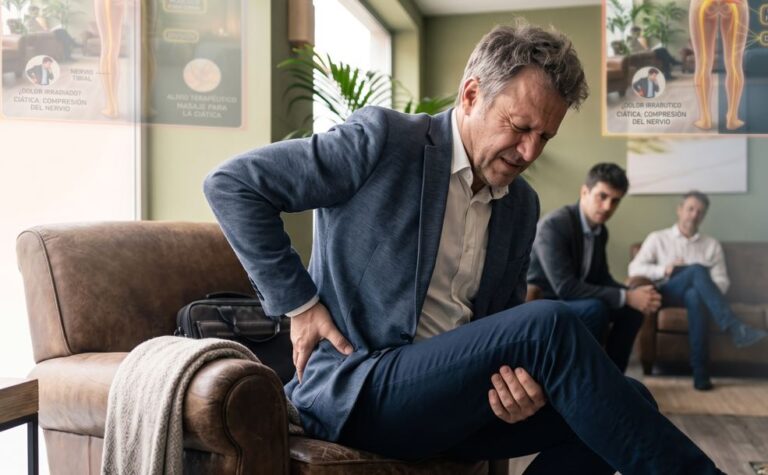

Does Massage Really Help Back Pain?
What the Evidence Says
Back pain affects millions of people every year, making it one of the most common reasons for seeking professional massage.
But can massage actually help?
The honest answer is more nuanced than a simple yes or no.
Massage isn’t a miracle cure, nor is it the right solution for every type of back pain.
However, when used appropriately—and as part of a broader approach to recovery—it may help reduce muscular tension, improve comfort and support better movement for many people.
Understanding when massage is likely to help, when it may not and why the underlying cause of your back pain matters is the key to making informed decisions about your health.
In This Guide
- Why back pain is so common.
- Does massage really work?
- What current evidence tells us.
- Which types of back pain may benefit most.
- When massage may not be appropriate.
- Deep Tissue vs Therapeutic Massage for back pain.
- When you should seek medical advice.
- Frequently asked questions.
Few health conditions are as common—or as frustrating—as back pain.
At some point in life, most people will experience it.
Sometimes it’s a dull ache that develops after sitting at a desk all day.
Sometimes it appears after lifting something heavy.
For others, it seems to arrive without any obvious reason at all.
Whatever the cause, one question usually follows:
“Will massage actually help?”
It’s an understandable question.
Back pain can make even simple daily activities feel more difficult.
Walking.
Driving.
Sleeping.
Working.
Even putting on your shoes can become uncomfortable.
When discomfort begins affecting everyday life, it’s natural to look for solutions that feel safe, effective and practical.
Massage is often one of the first options people consider.
Some people swear by it.
Others dismiss it as nothing more than a way to relax.
So who’s right?
The reality is that both perspectives only tell part of the story.
Massage can be extremely helpful for some types of back pain.
For others, it may provide only temporary relief—or it may not be the most appropriate treatment at all.
Everything depends on why your back hurts in the first place.
Back pain isn’t a single condition.
It’s a symptom.
And symptoms can have many different causes.
Muscular tension.
Joint irritation.
Poor movement habits.
Stress.
Long hours of sitting.
Heavy physical work.
Travel.
Even a lack of regular movement can all contribute to discomfort.
Because the causes vary so widely, the best approach also varies from person to person.
As someone who studied physiotherapy before specialising in massage therapy, I don’t believe there’s one treatment that works for everyone.
Instead, I believe the first step is understanding what your body is trying to tell you.
Only then can we decide whether massage is likely to play a helpful role in your recovery.
Throughout this guide, I’ll explain what current evidence says about massage and back pain, explore the situations where massage may be most beneficial and discuss the circumstances where other forms of assessment or treatment may be more appropriate.
My goal isn’t to convince you that massage is always the answer.
My goal is to help you understand when it can genuinely make a difference—and when it probably can’t.
Not All Back Pain Is the Same
One of the biggest misconceptions about back pain is the belief that it’s always the same problem.
In reality, back pain is a symptom—not a diagnosis.
Two people can both say,
“My back hurts.”
Yet the cause of their discomfort may be completely different.
That’s one of the reasons there isn’t a single treatment that works for everyone.
Understanding the possible source of your symptoms is far more important than simply focusing on where you feel pain.
This is also why I never approach every client in the same way.
Before deciding whether massage is appropriate, I first try to understand how the pain developed, what it feels like and how it affects your everyday life.
The Most Common Types of Back Pain
Although only an appropriate assessment can identify the underlying cause of your symptoms, many episodes of back pain fall into one of the following broad categories.
Muscular Back Pain
This is one of the most common reasons people seek massage.
Muscular back pain often develops gradually rather than appearing suddenly.
You may notice that your back feels tight after spending hours sitting at a desk.
Perhaps you’ve carried heavy luggage while travelling.
Maybe you’ve completed an unusually demanding workout.
Or perhaps stress has gradually increased tension throughout your shoulders and lower back.
Typical characteristics include:
- Muscle tightness.
- Stiffness after sitting.
- Discomfort that improves with gentle movement.
- A feeling that the muscles are “locked” or fatigued.
In these situations, massage may often play a very helpful role by reducing muscular tension, improving comfort and encouraging easier movement.
Joint-Related Back Pain
Sometimes discomfort originates from the joints of the spine rather than the muscles themselves.
People often describe this as feeling particularly stiff first thing in the morning or after remaining in one position for a long time.
Massage may help reduce the muscular tension surrounding these joints, but it isn’t designed to treat the joint itself.
That’s why understanding the underlying cause remains so important.
Nerve-Related Pain
Pain involving irritation of a nerve often feels different from muscular pain.
Rather than remaining in one place, symptoms may travel into the buttock or leg.
Some people experience tingling.
Others notice numbness, burning sensations or weakness.
These symptoms deserve careful assessment because they may indicate that the nervous system is involved.
As we discussed in my article on Can Massage Help Sciatica?, massage may help relieve surrounding muscular tension in some cases, but it isn’t appropriate as the sole solution for every type of nerve-related pain.
Referred Pain
One of the fascinating things about the human body is that pain isn’t always felt exactly where the problem begins.
Sometimes discomfort originating in the hips, gluteal muscles or surrounding tissues is experienced primarily in the lower back.
Likewise, muscular trigger points can occasionally produce pain that seems to spread well beyond the muscle itself.
This is another reason why a personalised assessment is so valuable.
Treating only the place where pain is felt doesn’t always address what’s contributing to it.
Why Does Back Pain Develop?
Back pain rarely has a single cause.
More often, it develops because several different factors gradually combine over time.
Think about a typical week.
Long hours sitting.
Stressful deadlines.
Little movement.
Poor sleep.
Carrying shopping bags.
Travelling.
Skipping exercise because you’re busy.
None of these activities alone necessarily causes back pain.
But together, they may gradually increase the physical demands placed on your body.
Eventually, your muscles become fatigued.
Your movement changes.
Stiffness develops.
And discomfort begins to appear.
This is why back pain is often better understood as the result of multiple contributing factors rather than one isolated event.
Does Massage Address the Cause?
The answer depends entirely on what is causing the pain.
If your discomfort is primarily related to muscular tension, reduced mobility or protective muscle guarding, massage may help improve how your body feels by addressing those contributing factors.
If your symptoms are caused by another condition, massage may still help reduce surrounding muscular tension, but it won’t necessarily resolve the underlying problem.
This distinction is incredibly important.
Massage doesn’t need to “fix everything” in order to be valuable.
Helping someone move more comfortably, sleep better, reduce unnecessary muscle tension and feel more confident in their body can all be meaningful outcomes—even when massage isn’t treating the original source of the pain directly.
What Does Current Evidence Say?
Research over the past two decades has shown that massage therapy may provide short-term improvements in pain and function for some people experiencing non-specific back pain, particularly when combined with advice to remain active and other appropriate approaches.
The evidence does not suggest that massage is a universal cure.
Instead, it supports the idea that massage can be one valuable part of a broader management plan.
Current clinical guidelines for many types of non-specific low back pain increasingly encourage approaches that keep people moving, reduce fear of movement and support overall function.
Massage may contribute to those goals by helping reduce muscular tension, improving comfort and making movement feel easier for some individuals.
In other words…
Massage works best when it’s viewed as part of the solution rather than the entire solution.
Why I Focus on the Person—Not Just the Pain
When someone visits my private massage studio in Eixample, I don’t begin by asking,
“Where does it hurt?”
I also want to know:
- When did it begin?
- What does the pain feel like?
- What makes it better?
- What makes it worse?
- How is it affecting your daily life?
- What would you like to be able to do more comfortably?
Those answers often tell me much more than the location of the pain alone.
Two people with discomfort in exactly the same area may need completely different approaches.
That’s why every massage I provide is adapted to the individual rather than following the same routine for everyone.
So… When Is Massage Most Likely to Help?
Although every person is different, there are certain situations where massage is often particularly helpful as part of a broader approach to managing back pain.
The key is remembering that massage works best when the symptoms are influenced by muscles, movement and soft tissues—not when it’s expected to solve every possible cause of back pain.
Let’s look at some of the most common examples.
If You Spend Long Hours Sitting
Modern life places extraordinary demands on the body.
Many people spend eight or more hours each day sitting in front of a computer, driving or working from a laptop.
Over time, this can contribute to:
- Tight hip flexors.
- Fatigued lower back muscles.
- Stiff shoulders.
- Reduced movement through the spine.
- Increased muscular tension.
It’s rarely the sitting itself that’s the problem.
It’s spending long periods in the same position without enough movement.
For many office workers, a Therapeutic Massage Barcelona may help reduce accumulated muscular tension, improve comfort and make everyday movement feel easier.
Combined with regular movement breaks and appropriate exercise, massage can become an effective part of managing desk-related back discomfort.
If Stress Is Showing Up in Your Back
Stress isn’t only emotional.
It’s physical.
Many people don’t realise how much muscular tension they carry until someone points it out during a massage.
When we’re under pressure, we often:
- Raise our shoulders.
- Tighten our jaw.
- Brace our lower back.
- Breathe more shallowly.
- Move less naturally.
None of this is intentional.
It’s simply how the nervous system responds.
Over time, those protective patterns may contribute to muscular discomfort and stiffness.
Massage can’t eliminate the source of stress.
But it may help your body let go of some of the physical tension that stress creates.
For many clients, this combination of muscular relaxation and nervous system recovery is one of the most valuable aspects of treatment.
If Your Back Feels Worse After Travelling
Travelling may be exciting.
Your back doesn’t always agree.
Long flights.
Heavy luggage.
Hours spent sitting.
Hotel beds.
Walking much more than usual.
All of these place new demands on your body.
Many visitors to Barcelona tell me that their holiday is wonderful—but their lower back isn’t enjoying it quite as much.
When back discomfort develops primarily because of muscular fatigue and prolonged sitting, massage may help relieve tension and support recovery, allowing you to enjoy the rest of your trip more comfortably.
This is one reason why many Business travelers choose to book a massage midway through their stay rather than waiting until they return home.
If You Exercise Regularly
Exercise is one of the best things you can do for your back.
Yet active people sometimes experience muscular tightness simply because their bodies are working hard.
Strength training.
Running.
Cycling.
Padel.
Golf.
Swimming.
Every activity places repeated demands on different muscle groups.
Massage isn’t a replacement for proper recovery.
Instead, it can complement healthy training by helping reduce muscular tightness, improving movement and supporting overall recovery between sessions.
If You’ve Been Living With Back Pain for Months
Persistent back pain often feels very different from a sudden episode.
Many people develop protective movement patterns without even realising it.
They move differently.
Sit differently.
Walk differently.
Certain muscles become overactive while others work less efficiently.
Massage won’t erase months or years of back pain overnight.
However, it may help reduce muscular guarding, improve comfort and make movement feel less restricted.
For many people, those improvements make it easier to return to activities that support long-term recovery.
When Massage May Be Less Helpful
Being honest about the limitations of massage is just as important as explaining its benefits.
Massage is unlikely to be the most appropriate treatment when symptoms are primarily caused by conditions requiring medical investigation or specialist care.
Examples include:
- Significant nerve compression.
- Serious spinal injuries.
- Infections.
- Certain inflammatory conditions.
- Some fractures.
- Other medical conditions affecting the spine.
In these situations, delaying appropriate assessment while hoping massage alone will solve the problem isn’t the safest approach.
Knowing when massage isn’t the answer is part of providing responsible care.
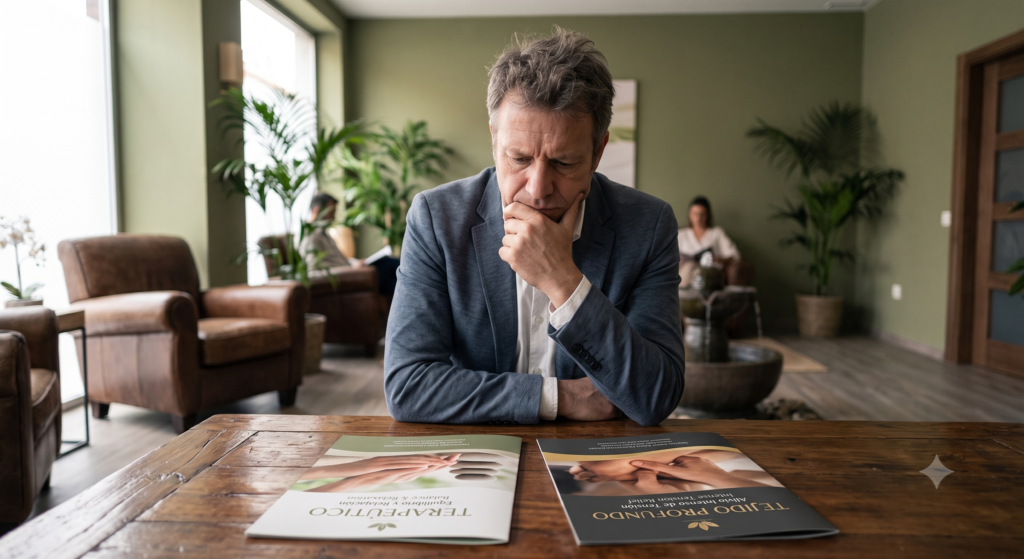
Deep Tissue or Therapeutic Massage for Back Pain?
This is another question I hear almost every week.
The answer depends entirely on why your back hurts.
A Deep Tissue Massage Barcelona may be appropriate when long-standing muscular tightness is contributing to restricted movement and discomfort.
Using slower, more focused techniques, the treatment works with deeper layers of muscle and connective tissue where chronic tension often develops.
A Therapeutic Massage Barcelona, on the other hand, offers greater flexibility.
Rather than following a fixed routine, the session is adapted to your symptoms, movement patterns and goals on that particular day.
Some people benefit from gentle techniques.
Others need more focused work.
Many benefit from a combination of both.
That’s why I don’t believe in recommending a massage based only on its name.
I recommend the treatment that best matches your body.
My Philosophy: Treat the Person, Not Just the Pain
One of the most important lessons I learned during my physiotherapy studies is that pain is rarely just about one muscle or one joint.
Every person arrives with a different story.
Diverse habits.
Different routines.
Different goals.
Some clients simply want to walk comfortably while exploring Barcelona.
Others want to return to the gym.
Some want to sleep through the night without waking because their back feels stiff.
Those goals matter.
Because successful treatment isn’t measured only by what happens on the massage table.
It’s measured by what you’re able to do more comfortably afterwards.
That’s why every session I provide is designed around the person—not simply around the area that hurts.
Ready to Take the Next Step?
If you’re living with back pain, it’s completely understandable to want answers.
You want to know what’s causing it.
You want to know whether massage is likely to help.
And above all, you want to feel confident that you’re choosing the right approach for your body.
The most important thing I’d like you to remember is this:
Back pain isn’t one single condition, and massage isn’t one single solution.
Sometimes massage can make a meaningful difference.
Sometimes it works best alongside exercise, movement and other forms of care.
And sometimes the most appropriate first step is a medical assessment.
Understanding that difference is what allows massage to become part of a safe, personalised and effective recovery plan.
When massage is appropriate, my goal is never simply to help you feel better for an hour.
My goal is to help you move more comfortably, reduce unnecessary muscular tension and support your body in a way that fits your everyday life.
Not Sure Whether Massage Is Right for Your Back Pain?
You don’t have to make that decision alone.
If you’re experiencing back pain and you’re unsure whether massage is appropriate, feel free to contact me before booking.
Tell me a little about your symptoms, how long you’ve been experiencing them and what you’re hoping to achieve.
If I believe massage is likely to help, I’ll recommend the treatment that best matches your needs.
If I think another type of assessment would be more appropriate first, I’ll tell you that too.
Whether you’re looking for a Therapeutic Massage Barcelona, a Deep Tissue Massage Barcelona or a private massage in Eixample, my approach is always the same:
Listen first.
Understand second.
Treat third.
Because no two people experience back pain in exactly the same way.
Frequently Asked Questions
Can massage really help lower back pain?
For many people, yes.
Massage may help reduce muscular tension, improve comfort and support movement, particularly when muscles and soft tissues are contributing to the discomfort.
The benefits depend on the underlying cause of the pain and should always be considered as part of an individual approach.
Is Deep Tissue Massage the best massage for back pain?
Not necessarily.
Deep Tissue Massage may be helpful when long-standing muscular tightness is present.
However, some people benefit more from a personalised Therapeutic Massage that combines different techniques according to their symptoms.
Can massage make back pain worse?
Occasionally, some mild tenderness can occur after treatment, especially if significant muscular tension has been addressed.
However, increasing pain, severe discomfort or symptoms that continue to worsen are not typical responses and should be discussed with your therapist or a healthcare professional.
How many massage sessions do I need for back pain?
There isn’t one answer that suits everyone.
Some people feel significant improvement after a single session, while others benefit from a series of treatments combined with exercise, movement and other healthy habits.
The most appropriate plan always depends on your individual situation.
Should I exercise after a massage?
In most cases, gentle movement such as walking is encouraged.
After a more intensive treatment, it may be sensible to delay high-intensity exercise until your muscles feel comfortable again.
Listening to your body is usually the best guide.
When should I see a doctor instead of booking a massage?
If your back pain is accompanied by progressive weakness, loss of bladder or bowel control, numbness around the groin, fever, unexplained weight loss or severe pain following significant trauma, you should seek medical assessment promptly.
Massage should never delay appropriate medical care when these symptoms are present.
Continue Reading
If you found this guide helpful, you may also enjoy:
- Can Massage Help Sciatica? What the Evidence Says
- Deep Tissue vs Therapeutic Massage: Which One Is Right for You?
- How Often Should You Get a Massage?
- Is It Normal to Feel Sore After a Massage?
- Why Your Lower Back Hurts After Flying to Barcelona
- Massage for Back Pain & Sciatica Barcelona
Together, these articles are designed to help you understand your body, recover more confidently and make informed decisions about your wellbeing.
Further Reading
If you’d like to explore the topic in greater depth, these organisations provide reliable, evidence-based information on back pain and its management:
- Harvard Health Publishing – Back pain and non-surgical management.
- American College of Physicians (ACP) – Clinical guidelines for non-invasive treatment of low back pain.
- NICE (National Institute for Health and Care Excellence) – Low back pain and sciatica guidance.
- Cochrane Library – Systematic reviews on massage therapy and musculoskeletal conditions.
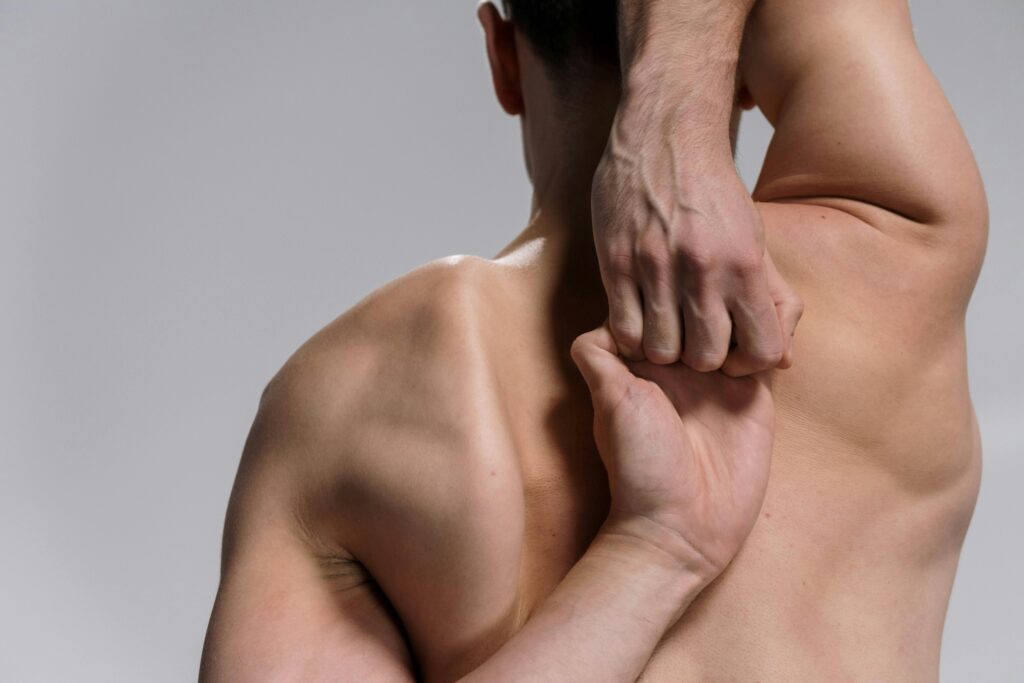
Best Massage for Back Pain in Barcelona: Relief, Recovery and Real Results
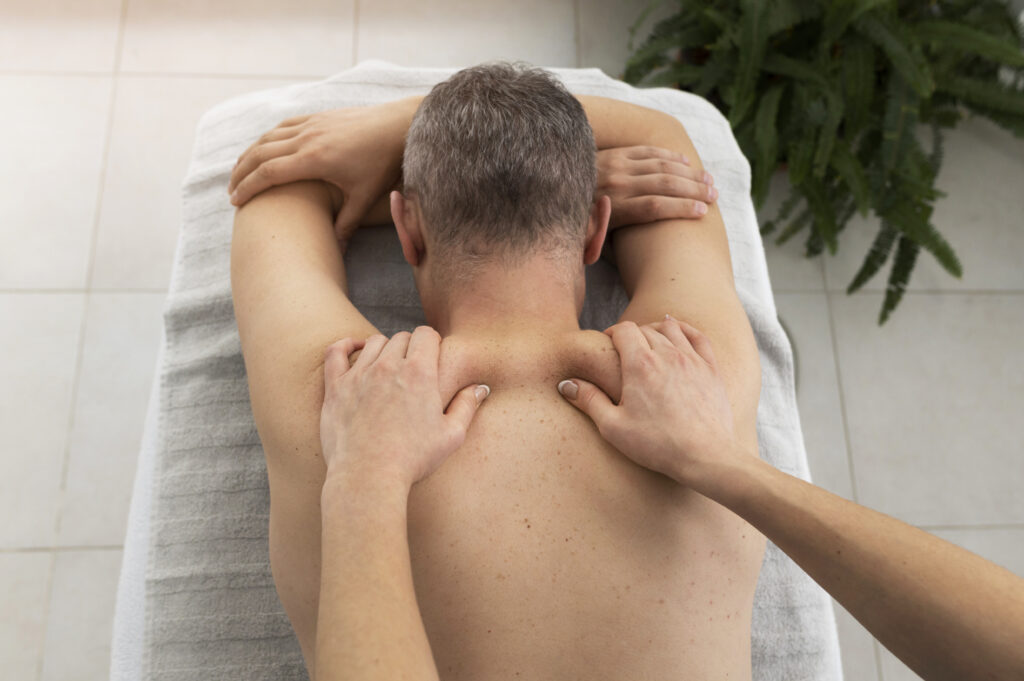
Jet Lag Recovery Tips for International Travelers in Barcelona
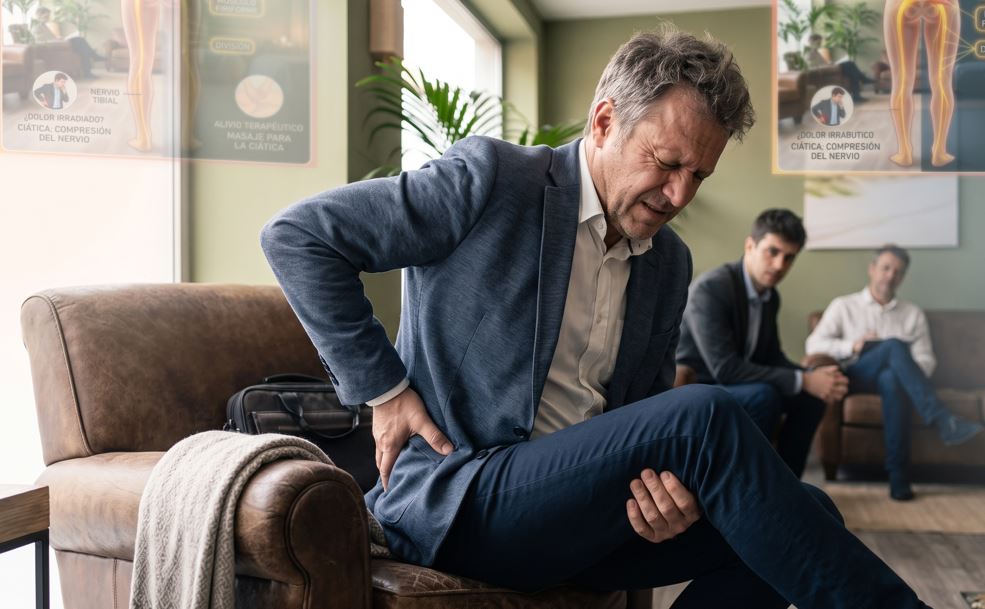
Can Massage Help Sciatica?
Deep Tissue vs Therapeutic Massage: Which One Is Right for You?
Thai Massage Near Me: Benefits for a Deep Body Relief