Why Pilots Often Experience Neck and Back Pain (and How Massage Can Help)
Flying an aircraft requires extraordinary concentration, precision and responsibility.
What many people don’t see is the physical effort that takes place behind the controls.
Long hours in a seated position, repetitive movements, vibration, irregular sleep schedules and crossing multiple time zones all place unique demands on the body.
Over time, these factors can contribute to persistent tension in the neck, shoulders and lower back.
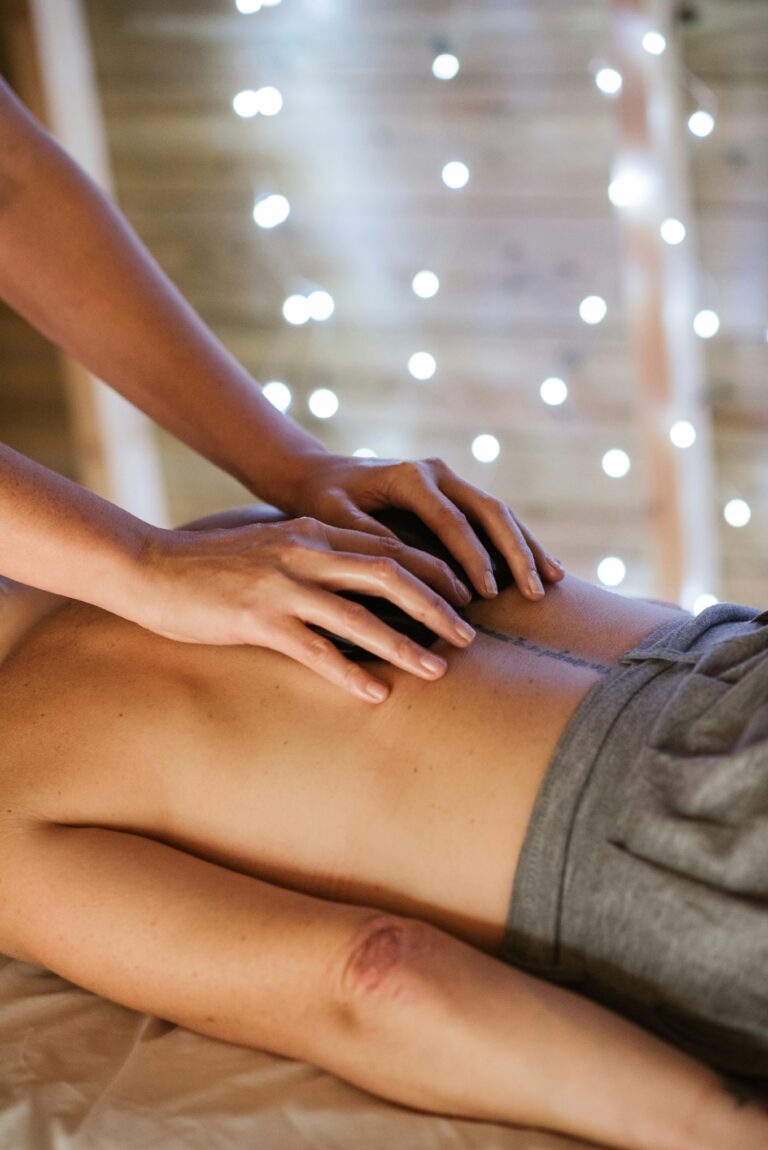
Massage can’t remove the challenges of the profession—but it may help support recovery, reduce muscular tension and improve comfort between flights.
In This Guide
- Why pilots commonly develop muscle tension.
- The physical demands of flying.
- Why neck and lower back pain are so common.
- How prolonged sitting affects the body.
- Can massage help pilots recover?
- Practical recovery tips between flights.
- When to seek professional advice.
From the outside, being an airline pilot often looks like an exciting career.
Travelling across countries.
Landing in world-famous cities.
Watching the sunrise from 35,000 feet.
For many people, it sounds like the perfect job.
Yet behind every smooth landing is a body working continuously for hours at a time.
Pilots spend long periods seated in a restricted position, maintaining intense concentration while making hundreds of small movements throughout a flight.
Even though the work may not appear physically demanding, the body experiences constant low-level stress.
Over time, these demands can accumulate.
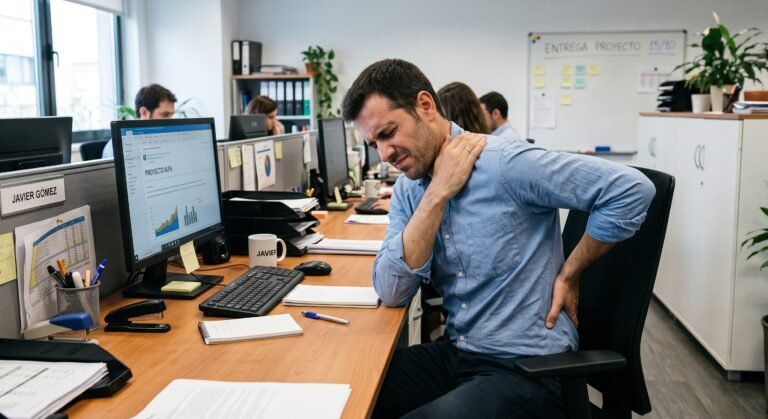
Many pilots notice persistent stiffness in the neck.
Others develop tight shoulders after repeated flights.
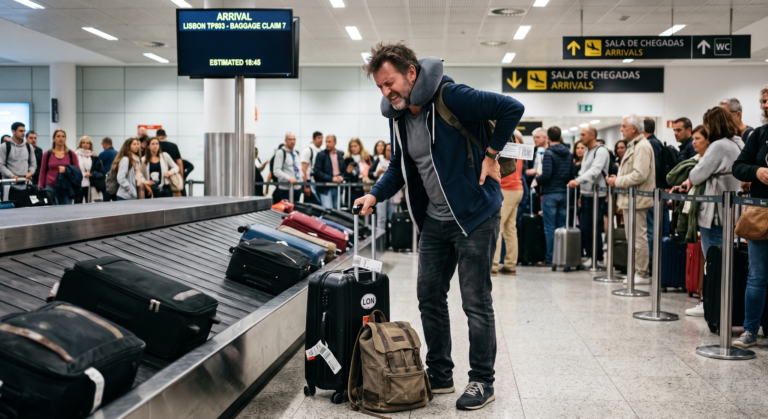
Some experience discomfort in the lower back, hips or legs, particularly after long-haul routes or several consecutive working days.
These symptoms don’t necessarily mean something is seriously wrong.
Often, they’re the natural consequence of a profession that asks the body to remain alert, stable and relatively still for extended periods.
One of the things I’ve noticed while treating airline professionals is that the source of their discomfort is rarely just one factor.
Instead, it’s usually a combination of prolonged sitting, muscular fatigue, disrupted sleep, travel schedules and the physical demands of operating an aircraft.
Understanding these factors is the first step towards recovering more effectively.
In this guide, I’ll explain why pilots frequently experience neck and back pain, what current understanding tells us about the physical demands of aviation and how massage may become one useful part of maintaining comfort and wellbeing between flights.
Flying Is More Physically Demanding Than It Looks
When people think about the physical demands of being a pilot, they often imagine long hours of sitting.
While that’s certainly part of the picture, it only tells half the story.
Flying requires the body to remain in a state of continuous low-level activity.
Pilots spend hours maintaining posture, making precise movements, monitoring instruments and staying mentally alert.
Even small, repetitive actions performed over many hours can gradually increase muscular fatigue.
Unlike someone sitting comfortably at home, pilots rarely have the freedom to change position whenever they like.
They often remain seated in the same posture for extended periods while maintaining intense concentration.
Over time, those demands can contribute to muscular stiffness and reduced mobility.
Why the Neck and Shoulders Work So Hard
The neck is one of the areas most commonly affected.
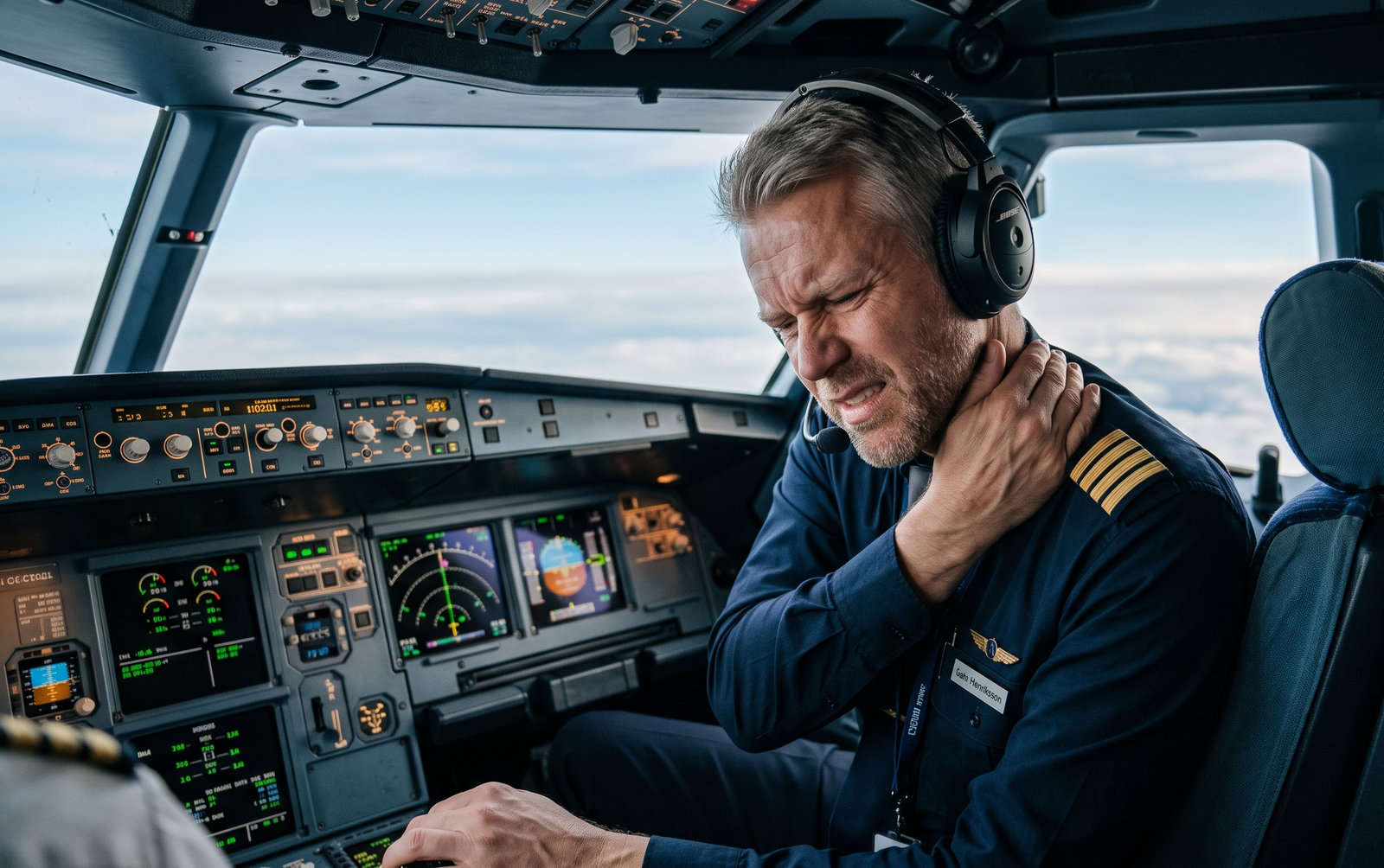
Throughout a flight, pilots repeatedly move their heads to monitor instruments, check mirrors, communicate with the crew and maintain visual awareness inside and outside the cockpit.
Although each movement is small, thousands of repetitions over weeks and months gradually place additional demands on the muscles of the neck and upper shoulders.
At the same time, prolonged concentration often leads people to unconsciously increase muscle tension.
Many pilots don’t even realise they’re holding their shoulders slightly raised until the flight is over.
This combination of repetitive movement and sustained muscle activation is one reason why neck stiffness is such a common complaint within aviation.
Why Lower Back Pain Is So Common Among Pilots
The lower back also experiences unique challenges during flight.
Remaining seated for prolonged periods reduces the natural movement that keeps muscles and joints comfortable.
When the body stays in one position for too long, the muscles responsible for supporting posture gradually become fatigued.
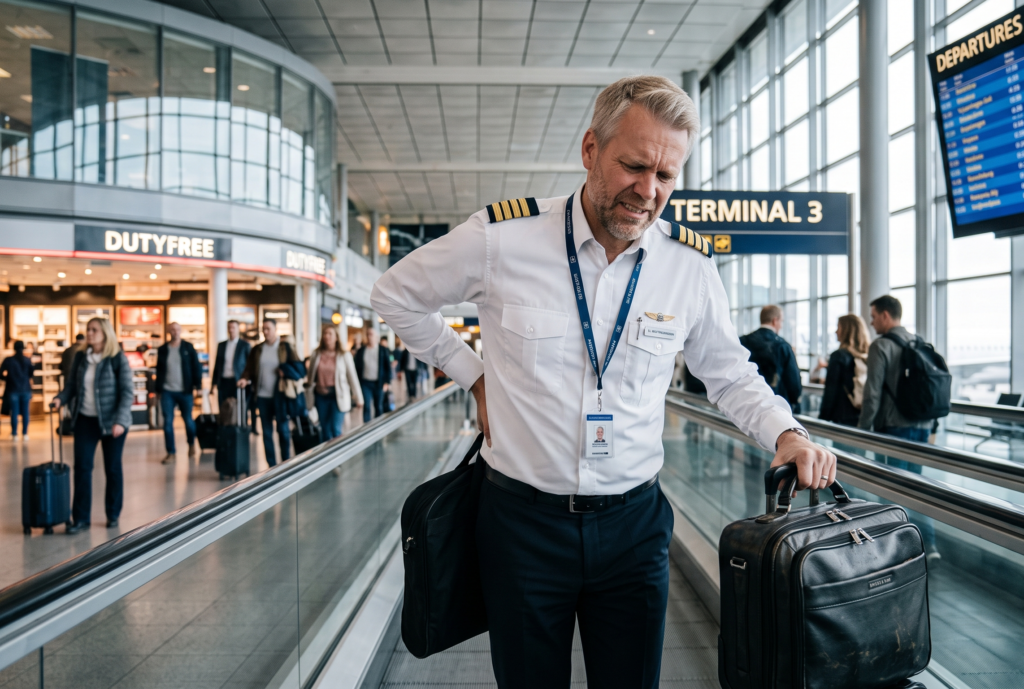
In addition, pilots often carry luggage, overnight bags and flight equipment between airports and hotels.
Although each task seems relatively minor on its own, together they create a significant cumulative physical workload.
It’s often this accumulation—not one single flight—that contributes to recurring lower back discomfort.
The Hidden Effect of Whole-Body Vibration
One factor many people never consider is vibration.
During flight, the body is exposed to continuous low-level vibration transmitted through the seat and the aircraft itself.
Research in occupational health suggests that prolonged exposure to whole-body vibration may contribute to fatigue and discomfort in the lower back for some professionals, particularly when combined with long periods of sitting.
This doesn’t mean every pilot will develop back pain.
However, it helps explain why aviation places different physical demands on the body compared with many other occupations.
Sleep, Jet Lag and Muscle Recovery
Physical recovery doesn’t depend only on muscles.
It also depends on rest.
Many pilots work irregular schedules, cross multiple time zones and experience disrupted sleep patterns.
When sleep becomes less predictable, the body has fewer opportunities to recover from the physical demands of work.
Muscles that would normally relax overnight may remain tense for longer.
Energy levels fluctuate.
Recovery slows.
Over time, this combination of physical and mental fatigue may make existing muscular tension feel even more noticeable.
Why Small Physical Demands Add Up
One flight rarely causes a long-term problem.
Neither does carrying one suitcase.
Or sleeping in one hotel.
The challenge is repetition.
Small physical demands performed day after day eventually accumulate.
Think of it like filling a glass with water.
Each individual drop seems insignificant.
Yet eventually, the glass becomes full.
The same principle applies to muscular tension.
Long flights.
Airport transfers.
Time zone changes.
Extended concentration.
Limited movement.
None of these factors is necessarily problematic on its own.
Together, however, they create the perfect conditions for persistent tightness in the neck, shoulders and lower back.
Why Every Pilot Experiences It Differently
Not every pilot develops the same symptoms.
Some mainly notice neck stiffness.
Others struggle with lower back discomfort.
Some experience tight hips after long-haul flights.
Others feel heaviness in their legs after several consecutive working days.
Several factors influence how the body responds, including:
- Flight duration.
- Type of aircraft.
- Individual posture.
- Physical fitness.
- Previous injuries.
- Recovery habits.
- Sleep quality.
- Overall stress levels.
This is why there isn’t a single recovery strategy that works for everyone.
Understanding your own body—and responding to its early signs of fatigue—is often the most effective way to prevent minor tension from becoming a more persistent problem.
So… Can Massage Actually Help Pilots?
The honest answer is:
Yes—provided the massage is addressing the right problem.
Massage can’t change the number of hours you spend in the cockpit.
It can’t eliminate jet lag.
It won’t remove the physical demands of aviation.
However, it may help reduce muscular tension, improve mobility and support recovery from the repetitive physical demands that flying places on the body.
For many pilots, that’s exactly what makes the difference.
The goal isn’t simply to feel relaxed for an hour.
The goal is to return to your next flight feeling more comfortable, moving more freely and carrying less unnecessary muscular tension.
The Areas I Most Commonly See in Aviation Professionals
Although every person is different, airline professionals often describe similar patterns of muscular discomfort.
Neck
The neck is usually the first area to complain.
Hours of sustained posture, repeated head movements and prolonged concentration can gradually leave the cervical muscles feeling tight and fatigued.
Many pilots describe stiffness when turning their head after landing or discomfort that gradually increases over several consecutive flights.
Shoulders
Shoulder tension often develops without people noticing it.
Concentration naturally encourages many of us to elevate our shoulders slightly, particularly during demanding tasks.
Maintaining that subtle muscular contraction for hours at a time eventually creates fatigue.
By the end of a rotation, the shoulders often feel heavier than expected.
Lower Back
The lumbar region constantly supports the upper body during long periods of sitting.
When movement becomes limited, the muscles responsible for maintaining posture gradually tire.
Many pilots notice that the discomfort isn’t necessarily severe.
Instead, it’s a persistent feeling of stiffness that slowly builds over several working days.
Hips
One area that often receives less attention is the hips.
Remaining seated for prolonged periods can leave the hip muscles feeling tight, particularly at the front of the hips.
Reduced hip mobility may also influence how comfortably the lower back moves, making the two areas closely connected.
Legs
Even though pilots spend much of their working day seated, the legs can still feel surprisingly fatigued.
Reduced movement during long flights may contribute to feelings of heaviness or stiffness, especially after multiple sectors or long-haul routes.
Many airline professionals tell me they notice the difference most when they finally begin walking through the terminal after landing.
Why Recovery Between Flights Matters
Recovery isn’t only about resting.
It’s about giving your body an opportunity to adapt to repeated physical demands.
Professional athletes understand this extremely well.
Training is important.
Recovery is equally important.
The same principle applies to aviation.
Every flight places small physical demands on the body.
Individually they may seem insignificant.
Over weeks, months and years, they accumulate.
Supporting recovery between flights may help reduce the build-up of muscular tension and make everyday movement feel more comfortable.
How I Adapt Massage for Pilots
One thing I’ve learned is that no two pilots arrive with exactly the same needs.
Some have just completed a short European rotation.
Others have crossed several time zones after a long-haul flight.
Some mainly notice neck stiffness.
Others are much more aware of tension through the lower back or hips.
That’s why I never follow exactly the same routine.
Instead, I begin by understanding how your body feels today.
Depending on your symptoms, the session may include focused work on areas of persistent muscular tension, gentle mobilisation techniques or a broader therapeutic approach designed to improve overall comfort and movement.
The treatment isn’t based on your profession alone.
It’s based on how your body has responded to the physical demands of flying.
Recovery Is More Than Just One Massage
Massage works best when it’s part of a wider recovery routine.
Simple habits can make a meaningful difference over time.
For example:
- Walking regularly during longer layovers whenever possible.
- Performing gentle mobility exercises before or after flights.
- Prioritising good hydration.
- Maintaining regular physical activity on days off.
- Allowing time for quality sleep whenever schedules permit.
Massage doesn’t replace those habits.
It complements them.
Together, they help support a body that spends countless hours adapting to the unique demands of aviation.
Looking After Yourself Helps You Look After Others
Pilots spend their careers looking after the safety of hundreds of passengers.
It’s easy to forget that their own wellbeing matters too.
Taking time to recover isn’t a luxury.
It’s part of maintaining long-term physical health and feeling comfortable both inside and outside the cockpit.
Whether that’s through movement, exercise, good sleep or occasional massage, investing in recovery allows your body to continue doing the remarkable job it performs every day.
Looking After Yourself Is Part of Being a Great Pilot
Pilots dedicate their careers to looking after others.
Every flight demands professionalism, concentration and countless small decisions that most passengers never notice.
It’s a role that requires both mental and physical resilience.
Yet while aircraft undergo regular maintenance, it’s surprisingly common for pilots to postpone looking after their own bodies.
Neck stiffness becomes “normal.”
Lower back discomfort becomes part of the job.
Heavy shoulders are simply accepted after another long rotation.
The problem is that our bodies gradually adapt to discomfort.
Over time, what once felt unusual can begin to feel ordinary.
That doesn’t mean it’s something you simply have to live with.
Looking after your body isn’t about chasing perfection.
It’s about giving yourself the opportunity to recover from the physical demands that come with your profession.
My Approach to Treating Aviation Professionals
Every pilot arrives with a different story.
Some have just completed a short European route.
Others have crossed several time zones.
Some mainly notice stiffness through the neck.
Others struggle more with the lower back, hips or shoulders.
That’s why I never believe in following exactly the same routine for everyone.
Before every session, I take time to understand:
- How your body feels today.
- Which areas are most uncomfortable.
- How long you’ve been experiencing the tension.
- What movements make it better or worse.
- What you’d like to feel after the session.
Only then do I adapt the treatment.
Sometimes that means a more focused Deep Tissue Massage Barcelona.
Sometimes a personalised Therapeutic Massage Barcelona is the better option.
Often, it’s a thoughtful combination of techniques designed around your body’s needs on that particular day.
Because every flight is different.
Every body is too.
Frequently Asked Questions
Do pilots often experience neck pain?
Yes.
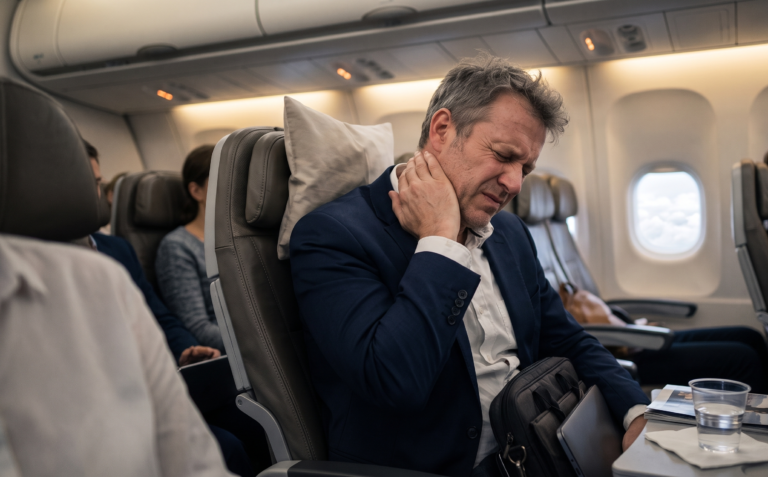
Long periods of sitting, repeated head movements and sustained concentration can all contribute to muscular tension in the neck.
Many pilots notice stiffness after long flights or several consecutive working days.
Why do pilots get lower back pain?
Lower back discomfort is often associated with prolonged sitting, limited opportunities to move, whole-body vibration and the cumulative physical demands of aviation.
Several factors usually contribute rather than one single cause.
Can massage help pilots recover?
Massage may help reduce muscular tension, improve mobility and support recovery from the repetitive physical demands of flying.
Its role is to support recovery—not replace healthy movement, sleep and other good recovery habits.
Is Deep Tissue Massage good for pilots?
For some pilots, yes.
Particularly when long-standing muscular tightness is contributing to discomfort.
However, the most appropriate treatment always depends on the individual rather than the profession alone.
Should pilots get a massage between flights?
Many pilots choose to receive a massage during longer layovers or on days off as part of their recovery routine.
The ideal timing depends on your schedule, how your body feels and your personal recovery goals.
Is massage helpful after long-haul flights?
For many people, massage can be a comfortable way to reduce muscular tension after spending many hours seated during long-haul travel.
Combined with movement, hydration and good rest, it may support recovery before your next journey.
Continue Reading
If you found this guide helpful, you may also enjoy:
- Best Massage for Business Travelers in Barcelona
- Why Your Neck Hurts After a Long Flight to Barcelona
- Why Your Lower Back Hurts After Flying to Barcelona
- Why Your Legs Feel Heavy After Exploring Barcelona
- How Often Should You Get a Massage?
- Deep Tissue vs Therapeutic Massage: Which One Is Right for You?
Together, these guides are designed to help frequent travellers and professionals understand their bodies, recover more comfortably and maintain long-term wellbeing.

Why I Created Lina Signature Massage in Barcelona
Lina Signature Massage? When someone comes to my massage studio in Barcelona, I never know…

Morning or Evening Massage: Which Is Better?

What Happens to Your Body During a 60-Minute Massage?
Best Massage During a Layover in Barcelona
Why Pilots Often Experience Neck and Back Pain (and How Massage Can Help)