
Deep Tissue vs Therapeutic Massage: Which One Is Right for You?
Massage Education Series
Helping you understand your body, choose the right treatment and get the most from every massage.
If you’ve ever searched for a massage in Barcelona, you’ve probably asked yourself the same question:
Should I book a Deep Tissue Massage or a Therapeutic Massage?
At first glance, they seem very similar.
Both are designed to relieve muscular tension, improve comfort and help you feel better.
Yet they aren’t the same treatment.
In fact, choosing the wrong massage can leave you wondering why you didn’t experience the results you were expecting—not because the massage was poor, but because it wasn’t the most appropriate approach for your body.
The good news is that once you understand the difference, choosing becomes much easier.
And it has very little to do with how much pressure is used.
In This Guide
- The real difference between Deep Tissue and Therapeutic Massage.
- Why pressure isn’t the most important factor.
- Which massage is better for different types of pain.
- Common myths about deep pressure.
- Which treatment I recommend for travellers, office workers and active people.
- When Deep Tissue Massage is the right choice.
- When Therapeutic Massage is likely to be more effective.
- How to choose the massage that best matches your body.
It’s time to learn when to choose a Deep Tissue Massage or a Therapeutic Massage
One of the questions I hear most often is surprisingly simple:
“Which massage should I book?”
It’s a completely understandable question.
The names sound similar, many websites describe them in almost identical ways and it’s easy to assume that the only real difference is how much pressure the therapist applies.
But that’s one of the biggest misconceptions in massage therapy.
Many people believe that a stronger massage automatically produces better results.
Others avoid Deep Tissue Massage altogether because they’ve heard it’s painful.
In reality, neither assumption tells the whole story.
A successful massage isn’t defined by how intense it feels.
It’s defined by whether the treatment matches your body, your symptoms and your goals.
Think about it this way.
If you wear running shoes to a formal event, the shoes aren’t the problem—they’re simply designed for a different purpose.
Massage works exactly the same way.
A treatment that feels perfect for someone recovering from weeks of muscular tension may not be the best choice for someone experiencing stress-related tightness, recovering after a long flight or dealing with occasional lower back discomfort.
Every body tells a different story.
Your daily routine.
Your posture.
The amount of time you spend sitting.
Whether you exercise regularly.
How you sleep.
Even the way you travel.
All of these factors influence how your muscles behave and which type of massage is likely to benefit you the most.
That’s why, when someone visits my private massage studio in Eixample, I don’t simply ask which massage they want.
I first try to understand why they’re booking a massage.
Are you recovering after exploring Barcelona for several days?
Have you arrived with neck stiffness after a long flight?
Do you spend hours working at a computer?
Are you dealing with persistent muscle tightness that never seems to disappear?
Or are you simply looking to relax and reconnect with your body?
The answers to those questions are often far more important than the name of the massage itself.
In this guide, I’ll explain the real differences between Deep Tissue Massage Barcelona and Therapeutic Massage Barcelona, clarify some of the most common myths and help you understand which treatment is most likely to give you the results you’re looking for.
Whether you’re a visitor discovering Barcelona, a local resident or someone searching for a private massage in Eixample, my goal is to help you make an informed decision with confidence.
The Biggest Myth About Massage: Stronger Doesn’t Always Mean Better
Let’s start with one of the most common misconceptions I hear.
“I want the strongest massage you can do.”
At first, that might sound like a reasonable request.
Many people associate strong pressure with better results. They assume that if a massage hurts, it must be working harder to release muscle tension.
In reality, that’s not how the body works.
While Deep Tissue Massage often uses slower, more focused pressure than other techniques, the effectiveness of a treatment isn’t measured by how uncomfortable it feels.
Your muscles don’t respond to pain like a knot in a rope that simply needs more force to loosen.
They respond to appropriate pressure, good technique and, most importantly, the right treatment for the problem you’re experiencing.
Sometimes that requires deeper work.
Sometimes it doesn’t.
One of the biggest surprises for many first-time clients is discovering that a carefully tailored therapeutic massage can sometimes produce better results than an extremely deep treatment.
The goal isn’t to “fight” your muscles.
It’s to help them recover.
Every Body Tells a Different Story
This is why I never believe in a one-size-fits-all approach.
Two people may arrive with exactly the same complaint—”my shoulders feel tight”—yet require completely different treatments.
One person may have muscular tension caused by long hours working at a computer.
Another may have accumulated fatigue after several days of sightseeing around Barcelona.
A third may simply be carrying stress without even realising how much tension they’re holding in their neck and shoulders.
The symptoms may sound similar.
The causes often aren’t.
That’s why understanding why your muscles feel tight is just as important as treating the tension itself.
Before every session, I take time to understand how your discomfort developed, what activities you do every day and what you’re hoping to achieve from your massage.
Only then do I decide which techniques are most appropriate.
What Is a Deep Tissue Massage?
Despite its name, Deep Tissue Massage isn’t simply a massage where the therapist presses harder.
Its primary goal is to work with deeper layers of muscle and connective tissue that may have developed persistent tension over time.
Using slower, more deliberate techniques, Deep Tissue Massage focuses on areas that often feel dense, restricted or chronically tight.
These patterns usually develop gradually.
Long working hours.
Frequent travel.
Intensive exercise.
Poor posture.
Repetitive movements.
All of these can contribute to muscles that remain under continuous low-level tension.
Rather than rushing through the treatment, Deep Tissue Massage allows time for tissues to gradually respond to carefully applied pressure.
Many clients describe the sensation as “good discomfort”—intense enough to feel productive, but never overwhelming.
Contrary to popular belief, Deep Tissue Massage shouldn’t feel like you’re simply enduring pain.
Communication is essential.
During every session, I adjust pressure according to your comfort level and how your body responds.
After all, the objective isn’t to see how much discomfort you can tolerate.
It’s to help you move more comfortably afterwards.
Deep Tissue Massage May Be a Good Choice If You:
- Experience persistent muscular tightness.
- Regularly work at a desk for long hours.
- Train at the gym or participate in sports.
- Recover from frequent travel.
- Feel stiffness in your shoulders, back or legs that doesn’t improve with stretching alone.
- Prefer focused work on specific areas of tension.
What Is a Therapeutic Massage?
Therapeutic Massage is often misunderstood because the name is broad.
Some people assume it’s simply a lighter version of Deep Tissue Massage.
In reality, it’s something quite different.
A Therapeutic Massage isn’t defined by pressure.
It’s defined by purpose.
The treatment is designed around your individual needs rather than following a fixed sequence of techniques.
During one session, I may use gentle, relaxing movements to calm an overactive nervous system.
A few minutes later, I might apply more focused pressure to release tension around the shoulder blades.
Later in the same treatment, I may incorporate stretching or mobilisation techniques to improve movement in a specific area.
In other words, Therapeutic Massage adapts to your body—not the other way around.
This flexibility makes it one of the most versatile treatments I offer.
It’s particularly popular among travellers, professionals and clients experiencing discomfort that doesn’t fit neatly into a single category.
Rather than asking,
“How much pressure would you like?”
I ask,
“How would you like your body to feel when you leave?”
That answer shapes the entire session.
Therapeutic Massage May Be the Right Choice If You:
- You’re experiencing neck or back discomfort without knowing exactly why.
- You’ve recently travelled and feel generally stiff.
- You’re dealing with stress-related muscle tension.
- You’d like a personalised treatment rather than a standard routine.
- You spend many hours working at a computer.
- You want to improve comfort, mobility and overall wellbeing.
So… Which One Is Better?
Here’s the answer most people don’t expect and I think this answer will disappoint many people…
Neither.
Deep Tissue Massage isn’t better than Therapeutic Massage.
Therapeutic Massage isn’t better than Deep Tissue Massage.
They’re simply designed for different situations.
Choosing between them is a little like choosing between hiking boots and running shoes.
Both are excellent.
Both have their strengths.
But each one performs best under different circumstances.
That’s why, when someone contacts me asking,
“Which massage should I book?”
My answer is almost always the same.
Tell me how your body feels.
From there, I can recommend the treatment that is most likely to help you achieve the results you’re looking for.
Which Massage Is Right for You?
Choosing the right massage becomes much easier when you stop thinking about techniques and start thinking about how your body feels.
Below are some of the most common situations I see in my private massage studio in Eixample and the treatment I usually recommend.
Remember that every person is different, but these examples may help you identify which option is most appropriate for you.
If You Spend Hours Sitting at a Desk
Whether you work from home or in an office, sitting for long periods often leads to tight shoulders, a stiff neck and reduced mobility in the upper back.
In many cases, a Therapeutic Massage Barcelona is the best starting point because it allows me to address several contributing factors during the same session rather than focusing on a single muscle group.
If long-standing muscular tension is also present, I may incorporate deeper techniques where appropriate.
If You’re Recovering After a Long Flight
Flying places unique demands on the body.
Hours of sitting, carrying luggage and sleeping in unfamiliar positions can leave you feeling stiff before your holiday has even begun.
If you’ve arrived in Barcelona with general muscular discomfort, restricted movement or travel fatigue, I often recommend a Therapeutic Massage Barcelona because it allows the session to adapt to the areas most affected by your journey.
Many travellers combine this with the recovery advice shared in my guides on neck pain after flying and lower back pain after flying, creating an excellent foundation for enjoying the rest of their stay.
If Your Muscles Always Feel Tight
Some people stretch regularly.
Exercise consistently.
Stay active.
Yet their muscles still feel permanently tight.
When tension has been building over weeks or months, a Deep Tissue Massage Barcelona may be the more appropriate option.
By working more specifically with deeper muscular layers, the treatment can help release persistent tightness that superficial techniques may not fully address.
If You’re Training or Exercising Regularly
Whether you enjoy running, strength training, cycling or recreational sports, your muscles experience repeated physical demands.
Recovery is just as important as training itself.
Depending on your goals, a Deep Tissue Massage Barcelona may help address areas of accumulated muscular tension, while a Therapeutic Massage Barcelona may be more appropriate when movement patterns, flexibility and overall comfort require a broader approach.
If Stress Is Living in Your Body
Not all muscular tension comes from physical activity.
Sometimes the cause is emotional rather than mechanical.
Stress often settles in the neck, shoulders, jaw and upper back without us even noticing.
In these situations, a personalised Therapeutic Massage Barcelona is frequently the most beneficial choice because the treatment can combine relaxation with targeted work on areas holding unnecessary tension.
Many clients leave saying they hadn’t realised how much stress they were carrying until it was gone.
If You Simply Don’t Know Which Massage to Choose
This is actually the easiest situation to solve.
You don’t need to know exactly which treatment you need before booking.
That’s my job.
Simply tell me:
- Where you feel discomfort.
- When it started.
- What makes it better or worse.
- What you’d like to achieve from the session.
From there, I’ll recommend the treatment that best suits your body rather than asking you to guess between different massage names.
| If you… | I usually recommend… |
|---|---|
| Feel general muscular stiffness after travelling | Therapeutic Massage |
| Experience persistent muscle tightness | Deep Tissue Massage |
| Spend long hours working at a computer | Therapeutic Massage |
| Train regularly or exercise intensely | Deep Tissue Massage |
| Feel stressed and physically tense | Therapeutic Massage |
| Have tight calves after sightseeing in Barcelona | Deep Tissue Massage |
| Want a treatment tailored to several different issues | Therapeutic Massage |
| Aren’t sure what’s causing your discomfort | Therapeutic Massage |
The Best Massage Is the One Your Body Needs Today
One of the reasons I love massage therapy is that no two sessions are ever exactly the same.
Even if you’ve visited me before, your body may feel completely different today than it did a month ago.
Maybe you’ve just completed a marathon.
Perhaps you’ve spent several days walking around Barcelona.
Perhaps you’ve been working long hours, sleeping poorly or travelling frequently.
Your body changes.
Your massage should change too.
That’s why I don’t believe in choosing a treatment based solely on its name.
I believe in choosing the treatment that best supports how your body feels today.
Sometimes that’s a focused Deep Tissue Massage Barcelona.
Sometimes it’s a personalised Therapeutic Massage Barcelona.
And sometimes it’s a combination of techniques designed specifically for you.
Ready to Choose the Right Massage?
If you’re still unsure which treatment is right for you, don’t worry.
You don’t need to make that decision alone.
Simply send me a WhatsApp message, tell me how you’re feeling and I’ll personally recommend the massage that best matches your needs.
Every session in my private massage studio in Eixample is tailored to the individual, whether you’re visiting Barcelona for business, enjoying a holiday or looking for ongoing support for muscular tension.
My goal is simple:
To help you move more comfortably, recover more effectively and leave feeling better than when you arrived.
Frequently Asked Questions
Is Deep Tissue Massage always painful?
No. While Deep Tissue Massage often involves more focused pressure, it shouldn’t be unbearably painful. I always adapt the pressure to your comfort level and how your muscles respond during the session.
Is Therapeutic Massage only for injuries?
Not at all. Therapeutic Massage is suitable for many situations, including muscular tension, stress, postural discomfort, travel fatigue and general stiffness. The treatment is personalised according to your individual needs.
Which massage is better for office workers?
Many office workers benefit from a Therapeutic Massage because prolonged sitting and computer use often create tension in multiple areas of the body. However, if long-standing muscular tightness is present, incorporating deeper techniques may also be helpful.
Which massage is better after travelling?
For many travellers, Therapeutic Massage is an excellent choice because it can address the combination of stiffness, fatigue and muscular tension that often develops after a journey.
Can I combine Deep Tissue and Therapeutic techniques?
Absolutely. In many cases, I combine different techniques within the same session, depending on how your body responds and what you’re hoping to achieve.
How do I know which massage I should book?
You don’t need to decide on your own.
Simply tell me about your symptoms, your daily activities and your goals for the session. I’ll recommend the treatment that I believe is most appropriate for your body.
Continue Your Massage Journey
If you enjoyed this guide, you may also like:
- Why Your Neck Hurts After a Long Flight to Barcelona (And How Massage Can Help)
- Why Your Lower Back Hurts After Flying to Barcelona (And How Massage Can Help)
- Why Your Legs Feel Heavy After Exploring Barcelona (And How Massage Can Help)
- Best Massage for Business Travelers in Barcelona
- Massage for Back Pain & Sciatica Barcelona
Understanding your body is the first step.
Choosing the right massage is the second.
I’m here to help you with both.

Massage for Neck and Shoulder Pain in Barcelona: Which Massage Should You Choose?

Massage for Back Pain in Barcelona: Which Treatment Should You Choose?

Why Does My Back Hurt More When I’m Stressed?
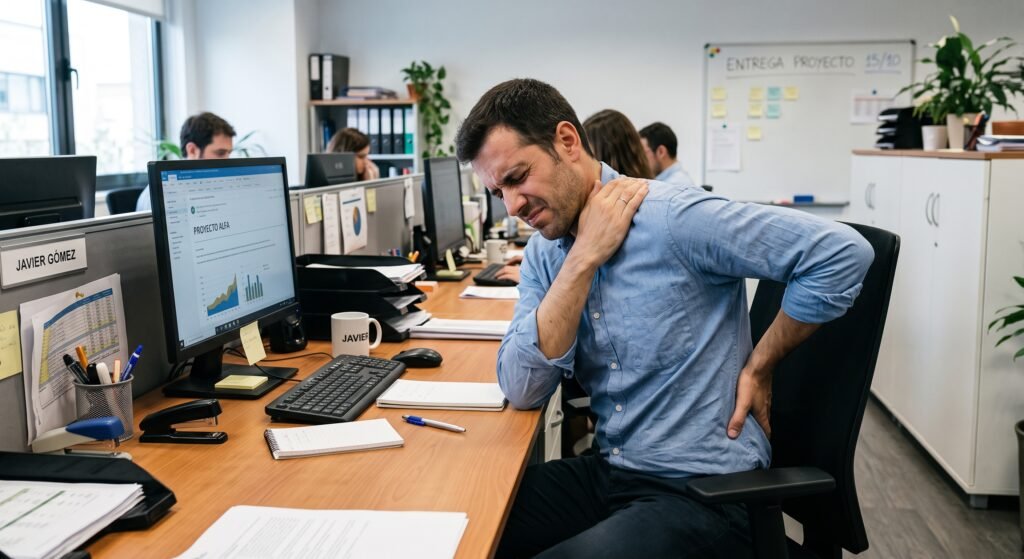
Why Do I Have Knots in My Back? And Can Massage Actually Get Rid of Them?
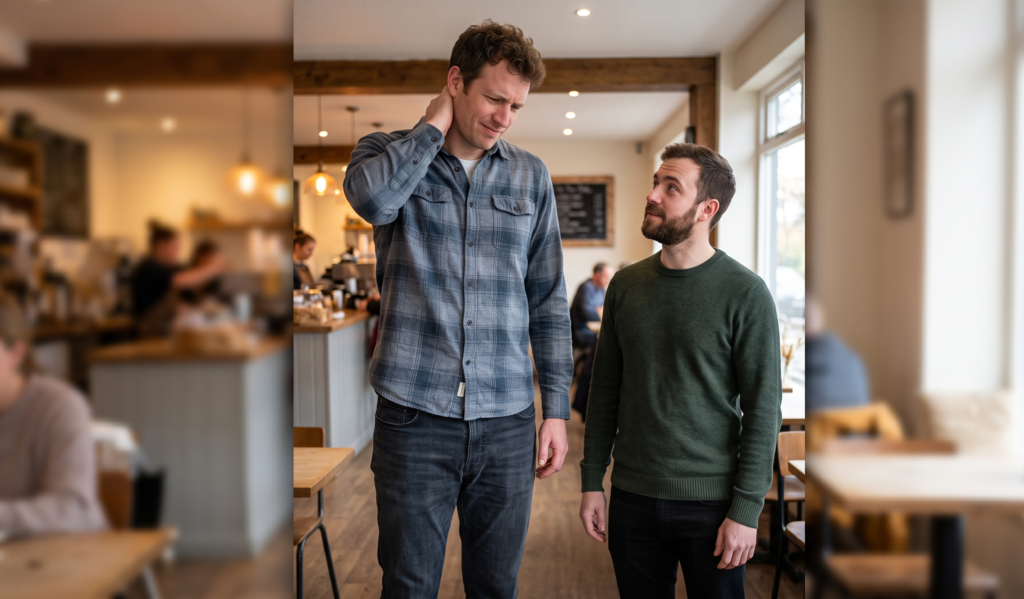
Do Tall People Have More Neck & Back Pain?