
Massage for Neck and Shoulder Pain in Barcelona: Which Massage Should You Choose?
A Practical Guide to Therapeutic Massage, Deep Tissue and Personalised Treatment for Neck & Shoulder Tension
Your neck hurts.
Your shoulders feel heavy.
There’s a suspiciously familiar point between your shoulder blade and spine.
So you search:
“Massage for neck and shoulder pain in Barcelona.”
And suddenly you’re choosing between:
Deep Tissue Massage.
Therapeutic Massage.
Relaxing Massage.
Thai Massage.
Sports Massage.
And several treatments promising to release things you weren’t aware needed releasing.
So which massage should you actually choose?
If your neck and shoulders feel tight, tired or uncomfortable, the answer isn’t automatically:
“The strongest one.”
The most appropriate massage depends on what you’re experiencing, how sensitive the area feels, what may be contributing to it and—very importantly—what you actually want from the session.
Let’s make that decision considerably easier.
First: Why Do Your Neck and Shoulders Hurt?
Before choosing a massage, this question matters.
Because:
“My shoulders are tight.”
isn’t a diagnosis.
Your symptoms might appear after:
Long working days.
Computer use.
Travel.
Training.
Driving.
Poor sleep.
Stressful periods.
Physically demanding work.
Or simply several of those things happening simultaneously.
Some people experience discomfort around the base of the neck.
Others feel it across the tops of the shoulders.
Some have one irritating point beside the shoulder blade.
And some arrive with the wonderfully precise anatomical description:
“This whole situation.”
Gestures vaguely from ears to lower back.
I understand.
But knowing the context helps us decide what kind of massage might make sense.
Neck and Shoulder “Tension” Isn’t Always the Same Thing
People use the word tension to describe many sensations.
Tight.
Heavy.
Stiff.
Fatigued.
Sensitive.
Restricted.
Achy.
Sometimes:
“I just need someone to press this.”
Very scientific.
Those sensations are real.
But feeling tight doesn’t necessarily mean a muscle is physically shortened, damaged or permanently contracted.
The nervous system, workload, movement, sleep, stress and sensitivity can all influence how an area feels.
That’s why my first question isn’t:
“How hard can I press?”
It’s:
“What’s been happening?”
The Laptop Is an Easy Suspect
If you work behind a computer, you’ve probably already blamed your posture.
Maybe someone has told you:
“Your head is too far forward.”
Then you spend the next three days trying to sit perfectly upright.
Shoulders back.
Chest up.
Chin tucked.
Core activated.
By lunchtime you’re concentrating more on sitting than actually working.
Here’s the good news:
There isn’t one perfect posture you need to maintain all day.
As I explain in Can Massage Help With Tech Neck?, neck and shoulder discomfort is usually more interesting than:
Bad posture = pain.
How long you stay in one position can matter.
Movement matters.
Workload matters.
Your workstation may matter.
Sleep can matter.
Stress can matter.
And individual sensitivity matters.
Your neck doesn’t need perfect posture.
It needs options.
Why Do My Shoulders Feel Tight After Computer Work?
Imagine holding your arms in front of you for hours.
Typing.
Using a mouse.
Looking at a screen.
Concentrating.
Occasionally forgetting that the rest of your body exists.
Even relatively low physical demands can become noticeable when they’re repeated for long periods.
You may also move less while concentrating.
Some people subtly elevate their shoulders.
Others clench their jaw.
And when the working day becomes stressful, these behaviours can become even more noticeable.
That doesn’t necessarily mean your computer is damaging your shoulders.
It may simply mean:
Workload is workload—even when you’re sitting down.
Stress Deserves a Mention
Have you ever noticed that your shoulders feel completely different during a stressful week?
You haven’t suddenly lifted something heavy.
You didn’t injure yourself.
But somehow:
Jaw tight.
Shoulders elevated.
Neck uncomfortable.
That familiar spot between the shoulder blades has returned.
As I explain in Why Does My Back Hurt More When I’m Stressed?, stress can influence sleep, behaviour, muscular activity and how the nervous system experiences pain.
That doesn’t mean your symptoms are imaginary.
And it doesn’t mean:
“Just relax.”
Because telling a stressed person to relax has historically achieved spectacular results.
It simply means stress can be one piece of the picture.
And Then There Are the Famous Shoulder Knots
You know the one.
Between your shoulder blade and spine.
Maybe slightly higher.
You find it with your fingers.
Then you spend several minutes pressing it.
Then:
Tennis ball.
Wall.
Massage gun.
Door frame.
Partner.
Possibly a piece of furniture not originally designed for healthcare.
If this sounds familiar, you’re not alone.
But as I explain in Why Do I Have Knots in My Back?, a “muscle knot” isn’t necessarily a literal knot of tangled muscle fibres waiting to be mechanically crushed.
The area may feel extremely sensitive or tight.
That’s real.
But the explanation can involve more than one small piece of tissue.
Which brings us to an important point:
A massage doesn’t necessarily need to attack the knot to help the person attached to it.
Neck Pain and Shoulder Pain Often Travel Together
This is another reason I don’t always treat these areas separately.
Your neck, shoulders and upper back work together during many everyday activities.
Computer work.
Driving.
Carrying bags.
Training.
Using your phone.
Even sitting on a plane.
So someone who books because:
“My neck hurts.”
may also describe discomfort around the shoulder blades.
And someone searching for a shoulder massage in Barcelona may actually want attention across the entire upper back and neck.
That’s why a personalised session can be useful.
We’re not required to respect the administrative borders between body parts.
What About Phone Use?
Phones often receive approximately the same treatment as posture.
“Looking down at your phone is destroying your neck!”
That’s unnecessarily dramatic.
Your neck is capable of looking down.
It’s literally one of the things it does.
The problem may be spending long periods doing the same thing without much variation—especially if that happens on top of computer work, stress, poor sleep and limited movement.
So no:
You don’t need to hold your phone at eye level like you’re presenting Simba in The Lion King.
Move.
Change position.
Look around occasionally.
Your neck likes variety too.
Travelling Can Make Your Neck and Shoulders Feel Completely Different
Barcelona receives plenty of visitors who arrive already carrying several hours of travel in their bodies.
Plane seat.
Airport.
Suitcase.
Backpack.
Different pillow.
Different bed.
Jet lag.
Then sightseeing.
And because apparently nobody comes to Barcelona to sit quietly…
Twenty thousand steps.
Your neck and shoulders may feel tired simply because your normal routine has been replaced by an unusually demanding one.
For travellers, this context matters when choosing a massage.
The deepest treatment available isn’t automatically the best first choice after a long journey.
Sometimes your body wants focused work.
Sometimes it wants to slow down.
Often it wants both.
Gym and Training Can Affect the Same Areas
Neck and shoulder discomfort isn’t exclusively an office-worker problem.
Rows.
Pull-ups.
Pressing movements.
Boxing.
Swimming.
Heavy carries.
Upper-body strength training.
All can create muscular fatigue around the shoulders and upper back.
And if you train after spending eight hours behind a laptop?
Congratulations.
Your shoulders have a second job.
Again, this doesn’t automatically mean anything is wrong.
But the context influences how I might approach your massage.
What If I Wake Up With a Stiff Neck?
This is another classic.
You wake up.
Turn your head.
And immediately realise today will involve rotating your entire torso to look left.
Suddenly you’re Batman.
It’s easy to blame your pillow.
Sometimes sleeping position may influence comfort.
But morning neck discomfort can also reflect what happened the previous day, existing sensitivity, sleep quality or simply spending several hours relatively still.
Most ordinary episodes improve.
Persistent, severe or unusual symptoms deserve appropriate assessment rather than endlessly buying increasingly expensive pillows.
Your pillow deserves due process.
When Massage May Be Useful
Massage may be worth considering when your neck and shoulder discomfort feels predominantly muscular and is associated with things such as:
Computer work.
Long working days.
Travel.
Training.
General muscular fatigue.
Recurring feelings of tightness.
Stressful periods.
Or simply wanting relief from an area that has been feeling overloaded.
Some people find massage helps temporarily reduce discomfort, feel less tense or move more comfortably.
And sometimes…
It simply feels extremely good.
That counts too.
But Neck Pain Deserves Some Extra Caution
The neck is an area where I don’t want to be casual about unusual symptoms.
Massage shouldn’t automatically be the first option if symptoms follow significant trauma or are associated with pronounced or progressive weakness, unusual numbness, coordination problems, severe unexplained headache, significant dizziness, fever or other concerning neurological or systemic symptoms.
Likewise, persistent or progressively worsening symptoms deserve appropriate assessment.
The fact that something feels muscular doesn’t guarantee that massage is appropriate.
Knowing when not to treat matters.
So Which Massage Should You Choose?
Now we arrive at the question that probably brought you here.
If you’re looking for a massage for neck and shoulder pain in Barcelona, you’ll usually encounter options such as:
or personalised combinations of several techniques.
And once again:
The winner isn’t automatically Deep Tissue.
Let’s start with Therapeutic Massage.
Therapeutic Massage for Neck and Shoulder Pain
For recurring neck, shoulder or upper-back discomfort, Therapeutic Massage is often the approach I prefer because it gives us flexibility.
The session can focus on:
Neck.
Shoulders.
Upper back.
Areas around the shoulder blades.
And other relevant regions according to what you’re experiencing.
Pressure can change.
Techniques can change.
Movement can be incorporated where appropriate.
And deeper work can still be included.
The objective isn’t to perform one identical routine.
It’s to respond to the person in front of me.
Deep Tissue Massage for Neck and Shoulders
If you enjoy stronger pressure, Deep Tissue Massage may feel fantastic around the upper back and shoulders.
Slow, deeper techniques can be particularly satisfying for people who describe their muscles as heavy or persistently tense.
But:
Deep Tissue isn’t synonymous with:
Maximum force.
The neck isn’t a stubborn jar lid.
Pressure should still be adapted.
Some areas may tolerate deeper work beautifully.
Others may feel more sensitive.
And that can change from one day to another.
Therapeutic or Deep Tissue?
Here’s the simplest way I think about it:
Therapeutic Massage gives us the strategy.
Deep Tissue gives us one possible set of techniques.
They don’t have to compete.
A therapeutic session can include Deep Tissue techniques where appropriate.
So if you’re thinking:
“I want something therapeutic… but I also want strong pressure.”
Excellent.
Those statements aren’t contradictory.
What If I Want My Neck Worked Deeply?
Tell me.
But this is one area where more pressure deserves particular care.
The neck contains sensitive structures, and I don’t believe aggressive pressure simply for the sake of intensity is a sensible goal.
We can work deeply where appropriate without turning your cervical region into an extreme sport.
Remember:
Deep pressure should be purposeful—not performative.
What If I Don’t Know What I Need?
Then don’t worry about choosing perfectly.
You don’t need to arrive saying:
“I believe my levator scapulae requires 7.3 kilograms of pressure.”
Please don’t.
Tell me what you actually know:
Where does it bother you?
When do you notice it?
Do you work at a computer?
Have you been travelling?
Do you train?
Do you enjoy strong massage?
Mmm do you mainly want relief, relaxation—or both?
That’s considerably more useful.
Because “neck and shoulder pain” isn’t a massage technique.
It’s the beginning of the conversation.
Next: What Type of Neck and Shoulder Pain Do You Have?
An office worker with upper-back tension.
A traveller after a ten-hour flight.
Someone with recurring shoulder knots.
A person who trains heavily.
Someone whose neck becomes uncomfortable during stressful periods.
Someone who woke up stiff this morning.
They may all search:
“neck and shoulder massage near me.”
But they shouldn’t automatically receive the same treatment.
So in the next section, we’ll make this practical:
What Massage Should You Choose for Your Type of Neck and Shoulder Tension?
Because choosing the right massage becomes much easier once we stop treating every tight shoulder like the same shoulder.
Now let’s make this useful.
Because two people can search:
“neck and shoulder massage Barcelona”
and be experiencing completely different things.
One has spent ten hours behind a laptop.
Another arrived yesterday after a long flight.
Someone trained shoulders at the gym.
Someone else has been sleeping badly during an unusually stressful week.
And then there’s the person who simply says:
“Lina, everything from here upward.”
Same general area.
Different circumstances.
So instead of automatically giving every uncomfortable shoulder the same massage, let’s look at some of the situations I commonly see.
1. Neck and Shoulder Tension After Computer Work
Let’s begin with the classic.
Laptop open.
Emails.
Meetings.
Mouse.
Phone.
Another meeting that definitely could have been an email.
Several hours later, your shoulders feel heavy and the area between your shoulder blades has started demanding attention.
This is often described as Tech Neck, although Tech Neck isn’t a formal medical diagnosis.
And while posture gets blamed constantly, I don’t think the solution is spending eight hours trying to sit like someone has balanced a book on your head.
The bigger picture may include:
Long periods in similar positions.
Limited movement.
Workload.
Workspace setup.
Stress.
Sleep.
Physical activity.
And individual sensitivity.
Which Massage Might Help?
For this situation, I generally like a Therapeutic Massage approach.
Why?
Because the problem often doesn’t feel restricted to one tiny point.
We may work around:
Upper back.
Shoulders.
Neck.
Areas surrounding the shoulder blades.
And incorporate movement or deeper techniques according to your response.
If you enjoy stronger pressure, Deep Tissue can absolutely form part of the session.
But:
Office worker ≠ automatically needs maximum pressure.
Sometimes what your shoulders need most is simply a different experience after spending eight hours doing approximately the same thing.
2. The Recurring Knot Between Your Shoulder Blades
You know exactly where it is.
You can find it within three seconds.
Your partner knows where it is.
Your tennis ball knows where it is.
Possibly your door frame knows where it is.
That familiar sensitive point around the shoulder blade can become incredibly frustrating.
And the natural reaction is:
“Press harder.”
But as I explain in Why Do I Have Knots in My Back?, a “muscle knot” isn’t necessarily a literal knot waiting to be mechanically broken apart.
Which Massage Might Help?
Both Therapeutic Massage and Deep Tissue Massage can be useful options depending on what you enjoy.
Deeper, slower pressure may feel extremely satisfying.
But I don’t necessarily spend the entire session attacking the exact point.
We may also work around the:
Shoulders.
Upper back.
Neck.
Surrounding musculature.
And consider movement.
Because:
The loudest spot isn’t always the whole story.
And your rhomboid doesn’t need to confess to anything.
3. Neck and Shoulder Tension During Stressful Periods
Sometimes nothing particularly dramatic has changed physically.
But work becomes intense.
Sleep gets worse.
Your calendar becomes offensive.
You begin answering messages at times when respectable people should be watching Netflix.
And suddenly your shoulders are approximately here:
Stress doesn’t mean your symptoms are imaginary.
Stress, sleep, behaviour, muscular activity and the nervous system can all influence how your neck and shoulders feel.
Some people clench their jaw more.
Most of the people move less.
Some sleep poorly.
Some notice familiar muscular discomfort becoming considerably louder.
Which Massage Might Help?
This is one situation where I wouldn’t automatically recommend the strongest possible Deep Tissue session.
You may respond beautifully to a combination of:
Focused Therapeutic Massage.
Moderate or deeper pressure where appropriate.
Slower techniques.
Relaxation.
And simply one hour where absolutely nobody requires an answer from you.
That last technique is highly underrated.
4. Neck and Shoulder Tension After a Long Flight
You’ve landed in Barcelona.
Wonderful.
Your luggage arrived.
Even better.
Your neck?
Currently pointing slightly left for administrative reasons.
Flights can involve:
Long periods of sitting.
Sleeping in unusual positions.
Carrying luggage.
Limited movement.
Travel fatigue.
Disrupted sleep.
Then you arrive and immediately begin sightseeing.
Because apparently:
Resting on holiday is unacceptable.
Which Massage Might Help?
After travelling, I often prefer to see how your body feels before deciding on pressure.
Some travellers love deeper massage immediately.
Others feel tired and more sensitive than usual.
A Therapeutic Massage or Lina Signature Massage can work particularly well because we can combine focused attention with slower techniques rather than forcing the entire session into one style.
And if your upper back isn’t the only thing complaining after the flight?
We don’t have to pretend it is.
5. Neck and Shoulder Tension After Sightseeing
Barcelona has another talent besides architecture:
Making tourists carry bags around for twelve hours.
Backpack.
Camera.
Shopping.
Water bottle.
Phone permanently in hand.
Twenty-five thousand steps.
Then another museum because:
“We’re already here.”
By evening, your shoulders may feel surprisingly tired.
Which Massage Might Help?
If the discomfort feels like general muscular fatigue, a personalised massage may make more sense than treating only the neck.
We can work around:
Shoulders.
Upper back.
Neck.
And potentially other areas that have become tired from walking and travelling.
This is another situation where Lina Signature Massage can be particularly useful.
The massage can include focused therapeutic work while still allowing the rest of your body to recover.
Because sometimes:
“My shoulders hurt”
actually means:
“Barcelona won today.”
6. Neck and Shoulder Tension After the Gym
Rows yesterday?
Pull-ups?
Shoulder press?
Boxing?
Swimming?
Or perhaps your trainer said:
“Today is upper body.”
And your shoulders have been processing this information ever since.
Training can naturally leave muscles feeling fatigued or sore.
That doesn’t automatically mean something needs to be “released.”
Sometimes muscles have simply…
worked.
Therapeutic or Deep Tissue After Training?
It depends.
If you enjoy deeper pressure and your muscles aren’t unusually sensitive, Deep Tissue Massage may feel great.
If you’re sore, fatigued or several areas are involved, a Therapeutic Massage gives us more freedom to adjust intensity.
Timing matters too.
The massage that feels wonderful on a normal day may feel very different immediately after a demanding workout.
Your body gets a vote.
And yes…
We’re dedicating an entire article to Deep Tissue vs Therapeutic Massage after the gym in Barcelona.
Because apparently we enjoy making massage decisions unnecessarily exciting.
7. You Wake Up With a Stiff Neck
You open your eyes.
Beautiful morning.
Birds singing.
Barcelona sunshine.
You turn your head.
No.
Now every time someone speaks to your left, you rotate your entire body like Batman.
Morning neck stiffness is incredibly common.
And immediately:
“It must be my pillow.”
Maybe.
But the pillow isn’t necessarily the sole criminal.
Your previous day’s activity, sleep quality, existing sensitivity and time spent relatively still may all influence how your neck feels in the morning.
Which Massage Might Help?
If the discomfort feels muscular, is relatively ordinary for you and there are no concerning symptoms, Therapeutic Massage may be a reasonable option for comfort.
Pressure should be adapted according to sensitivity.
A suddenly irritated neck isn’t necessarily the moment to demonstrate how much Deep Tissue you can tolerate.
Sometimes:
Gentler first. Deeper if appropriate.
Your neck doesn’t need to be taught a lesson.
8. Neck and Shoulder Tension From Driving
This one doesn’t get enough attention.
Long drives can mean:
Similar position.
Hands in front of you.
Concentration.
Limited movement.
And, depending on Barcelona traffic…
A spiritual test.
Professional drivers may experience even longer periods in this environment.
Which Massage Might Help?
A personalised Therapeutic Massage can focus on the neck, shoulders and upper back according to where fatigue is most noticeable.
Deep Tissue techniques can be included if you enjoy stronger pressure.
But once again, the useful question isn’t:
“Which muscle is bad?”
It’s:
“What has this body been doing for the last eight hours?”
Context changes everything.
9. Neck and Shoulder Tension in Physically Demanding Jobs
Not everyone with shoulder tension works behind a laptop.
Massage therapists.
Hairdressers.
Chefs.
Hospitality workers.
Healthcare professionals.
Cleaners.
Tradespeople.
Crew.
Anyone performing repetitive or physically demanding work can experience muscular fatigue around the upper body.
And yes:
Massage therapists can get shoulder tension too.
Terrible branding. 😉
Which Massage Might Help?
This is where I become interested in workload.
If your shoulders have been physically working all week, you may enjoy Therapeutic or Deep Tissue Massage depending on your preference and sensitivity.
But massage shouldn’t be presented as the only solution.
Rest.
Movement.
Strength.
Workload management.
Sleep.
And recovery between demanding days may all matter.
Workload is workload—whether it comes from a keyboard or your hands.
10. Neck and Shoulder Tension When You’re Tall
Tall clients frequently tell me something like:
“Everything is too low.”
Desk.
Sink.
Counter.
Airplane seat.
Hotel shower.
Laptop.
Sometimes the world really does seem to have chosen one default body size and committed to it.
Being tall doesn’t automatically cause neck or shoulder pain.
But your environment may require you to adapt more frequently.
As I explain in Do Tall People Have More Neck & Back Pain?, height can provide context without becoming a diagnosis.
Which Massage Might Help?
There’s no special massage technique required simply because you’re tall.
Treatment still depends on:
Your symptoms.
Your activity.
The sensitivity.
Or your preferences.
Your daily environment.
Height gives me context. The individual gives me the treatment plan.
11. Shoulder Tension From Carrying Bags
Handbag.
Laptop bag.
Backpack.
Suitcase.
Shopping.
Or that tiny “personal item” airline bag into which you’ve somehow compressed your entire existence.
Carrying loads isn’t inherently bad.
Bodies are designed to carry things.
But unusual or prolonged loading may leave muscles feeling fatigued, particularly when you’re travelling and doing considerably more than usual.
Which Massage Might Help?
If one shoulder or the upper back simply feels tired after carrying luggage, Therapeutic Massage allows us to focus where needed without assuming the area requires aggressive treatment.
If you enjoy deeper work, we can incorporate it.
Again:
Fatigue doesn’t automatically mean damage.
Sometimes a tired muscle is simply a tired muscle.
12. Neck Tension With Headaches
This situation deserves more care.
Some people experience headaches alongside neck or shoulder discomfort.
Musculoskeletal factors can sometimes be part of the picture.
But headaches have many possible causes.
So I don’t like statements such as:
“Your headache is coming from this muscle.”
Unless there’s a very good reason to know that.
Massage may feel helpful for some people who experience familiar tension alongside certain headaches.
But a new, severe, unusual or rapidly changing headache—particularly with neurological symptoms or other concerning signs—deserves appropriate medical assessment.
Which Massage Might Help?
If the headache pattern is familiar, has been appropriately assessed when necessary and massage is suitable, I would usually favour a careful Therapeutic Massage rather than immediately applying maximum pressure around the neck.
The neck isn’t an area where:
“Let’s see what happens.”
is a treatment philosophy.
13. Neck and Shoulder Tension With Jaw Clenching
Have you ever noticed:
Busy week.
Jaw tight.
Shoulders tight.
Neck tight.
And somehow you’ve been biting your teeth together while answering emails?
Stress and concentration can influence behaviours such as jaw clenching in some people.
And discomfort around the jaw, neck and shoulders can sometimes appear together.
Which Massage Might Help?
A personalised therapeutic approach may include attention around the neck and shoulders while considering the broader pattern you’re experiencing.
But again:
We’re not claiming one tight muscle caused everything.
Humans are more interesting than that.
Unfortunately for SEO.
14. “I Just Want Someone to Press My Shoulders”
You know what?
Completely valid.
Not everyone needs a detailed biomechanical reason for wanting massage.
Sometimes your shoulders feel tired.
You love strong massage.
And you know from experience that having someone work on them feels fantastic.
Excellent.
You don’t need to turn every massage into a rehabilitation project.
Which Massage Might Help?
If deeper pressure is what you genuinely enjoy, Deep Tissue Massage may be exactly what you’re looking for.
We still adapt the pressure.
We still communicate.
And we still respect sensitive areas.
But massage is also allowed to simply:
Feel really, really good.
15. “My Entire Upper Body Feels Tight”
Neck.
Shoulders.
Upper back.
Between the shoulder blades.
Maybe lower back too.
Congratulations.
You have selected:
All of the above.
This often happens during periods involving multiple factors.
Work.
Travel.
Training.
Stress.
Poor sleep.
Long days.
Or simply life becoming unnecessarily ambitious.
Which Massage Might Help?
This is exactly where I like a personalised session or Lina Signature Massage.
Rather than forcing sixty minutes into one technique, we can combine approaches.
Focused Therapeutic Massage.
Deep Tissue where appropriate.
Thai-inspired movement.
Slower relaxing work.
Natural aromatic oils if desired.
Different areas can receive different treatment.
Because your trapezius and lower back are not legally required to agree on pressure.
Therapeutic, Deep Tissue or Lina Signature?
Let’s simplify everything.
Choose Therapeutic Massage if:
Your neck or shoulder discomfort is recurring.
You want focused work.
Several areas are involved.
You aren’t sure how much pressure you’ll want.
You want the treatment adapted around your symptoms.
Choose Deep Tissue Massage if:
You genuinely enjoy deeper pressure.
Your muscles feel heavily worked or tense.
You’ve responded well to deeper massage before.
You specifically want stronger, slower muscular work.
Choose Lina Signature Massage if:
You want more than one style.
You want focused work and relaxation.
Travel has left several areas tired.
Your neck and shoulders aren’t your only complaint.
Or your answer to:
“Which massage sounds best?”
is:
“Yes.”
A Quick Guide
Computer work + neck/shoulder tension
→ Therapeutic Massage
Recurring shoulder-blade knot
→ Therapeutic or Deep Tissue
Stress + muscular tension
→ Therapeutic + slower relaxing techniques
After a long flight
→ Therapeutic or Lina Signature
After sightseeing
→ Lina Signature or Therapeutic
Or After gym/training
→ Therapeutic or Deep Tissue depending on sensitivity
Woke up with ordinary muscular stiffness
→ Therapeutic Massage
Physically demanding job
→ Therapeutic or Deep Tissue
You simply love strong massage
→ Deep Tissue
Your entire upper body feels tired
→ Lina Signature
And if you’re still unsure?
That’s fine.
You don’t need to diagnose yourself before booking.
But There’s One Important Question Left
We’ve talked about which massage you might choose.
Now we need to talk about something arguably more important:
How should someone actually massage the neck and shoulders safely and effectively?
Because this isn’t an area where I believe:
More pressure = more expertise.
There are sensitive structures around the neck.
Communication matters.
Positioning matters.
Pressure matters.
And knowing when not to massage matters enormously.
So next:
What Should a Good Neck and Shoulder Massage Actually Feel Like?
Because you shouldn’t need to survive your massage to benefit from it.
Let’s talk about the massage itself.
Because there’s an interesting belief surrounding neck and shoulder tension:
If it feels very tight, someone needs to press very hard until it stops feeling tight.
Preferably while you stare through the face cradle questioning your life choices.
I understand where the idea comes from.
When an area feels stubborn, stronger pressure can feel incredibly satisfying.
And some clients genuinely love Deep Tissue Massage.
But a good neck and shoulder massage isn’t defined by how much discomfort you can tolerate.
It’s defined by something much more useful:
How appropriately the treatment responds to you.
First: The Neck Deserves Respect
Your upper back contains large areas where deeper muscular work may feel wonderful.
The neck is different.
It’s a relatively small and anatomically complex region containing important nerves, blood vessels and other sensitive structures.
That doesn’t mean:
“Never massage the neck.”
Of course not.
It means we don’t treat it like we’re tenderising a steak.
Pressure, direction, positioning and technique matter.
And aggressive pressure over sensitive structures simply because:
“The client asked for strong massage”
isn’t something I consider good practice.
Strong can still be intelligent.
Deep Pressure Doesn’t Need to Be Everywhere
This is one of the biggest advantages of personalising a massage.
Imagine you love strong pressure.
Fantastic.
Your upper back may respond beautifully to deeper, slower work.
Around your shoulders?
Also excellent.
Then we reach a more sensitive area around your neck.
We can reduce the pressure.
Nothing has gone wrong.
You haven’t suddenly been downgraded from Deep Tissue.
Different areas can need different approaches during the same massage.
Pressure is a tool—not an identity.
What Does “Good Pain” Mean During Massage?
Clients sometimes tell me:
“It hurts, but in a good way.”
I know exactly what they mean.
There can be an intense sensation during deeper massage that still feels satisfying and manageable.
You’re able to breathe.
Your body isn’t desperately pulling away.
You feel in control.
And the sensation feels productive rather than threatening.
But “good pain” is subjective.
There isn’t a magic number on a pressure scale where massage suddenly becomes therapeutic.
And you never need to tolerate pain simply because you believe:
No pain = no benefit.
Massage isn’t leg day.
And What Is Definitely NOT “Good Pain”?
Sharp.
Electric.
Burning.
Suddenly shooting.
Unusual tingling.
Numbness.
Or anything that makes you immediately think:
“Nope.”
That’s information.
Tell me.
Immediately.
You don’t receive bonus points for silently tolerating something that feels wrong.
If a technique produces an unusual or concerning sensation, I want to know.
The objective isn’t to overpower your nervous system.
It’s to work with your response.
Your Body Gives Feedback Before You Speak
Sometimes clients don’t say:
“That’s too much.”
But their body becomes very persuasive.
Breath stops.
Hands grip the bed.
Shoulders lift.
Feet tense.
The entire body braces.
At that point, I don’t think:
Excellent. We’re really getting somewhere.
I think:
Maybe we need to adjust.
That doesn’t necessarily mean the massage has to become extremely gentle.
Sometimes a small reduction in pressure or a slower technique completely changes how an area responds.
Deep Tissue can still feel deep without becoming a battle.
Communication Isn’t Interrupting the Massage
Some clients are incredibly polite.
Too polite.
I ask:
“How’s the pressure?”
They say:
“Perfect.”
Their toes:
HELP.
Please tell me.
You can ask for more pressure.
Less pressure.
A different position.
More time somewhere.
Less time somewhere.
You can tell me an area is sensitive.
You can change your mind.
And you don’t need to apologise.
Your massage is not a performance review of the therapist.
Communication makes the session better.
I Don’t Chase Every “Knot”
Let’s return to that point beside your shoulder blade.
You know the one.
We find it.
It feels sensitive.
Pressing it feels strangely satisfying.
Wonderful.
But then something happens:
Five minutes.
Ten minutes.
Fifteen minutes.
Still pressing the same tiny point.
At some stage, we have to ask:
Are we helping this area—or have we simply developed a personal vendetta against it?
As I explain in Why Do I Have Knots in My Back?, the sensation people describe as a knot doesn’t necessarily mean there’s a literal piece of muscle that needs to be crushed until it disappears.
I may work directly on the sensitive area.
But I may also work around it.
Upper back.
Shoulder.
Neck.
Other surrounding muscles.
Movement.
Sometimes changing the sensory experience of the entire region feels better than repeatedly attacking one centimetre of tissue.
Your Trapezius Isn’t the Enemy
The trapezius gets blamed for everything.
“My traps are too tight.”
“My traps won’t relax.”
“I need someone to destroy my traps.”
Poor trapezius.
It’s literally been working all week.
Your trapezius is a large, useful muscle involved in movements and control around the neck, shoulders and shoulder blades.
If it feels tired or sensitive, that doesn’t necessarily mean it’s dysfunctional.
Sometimes muscles feel like they’ve been working because…
They’ve been working.
Massage can help the area feel more comfortable without creating a story that your muscles are defective.
What Areas Might I Work During a Neck and Shoulder Massage?
Although your main complaint may be your neck, I usually think about the broader upper-body region.
Depending on your symptoms and preferences, a session may include:
Upper back
Often an important area when clients describe general shoulder fatigue or tension.
Shoulders
Including the muscular areas around the shoulder blades.
Neck
With pressure and techniques adapted carefully.
Base of the skull
Some people find slower work around this region very relaxing.
Arms
Particularly when upper-body workload or training is relevant.
Lower back
If your complaint isn’t isolated to the upper body.
And potentially other areas depending on the type of session you book.
Your neck isn’t an island.
What About the Front of the Neck?
This is an important distinction.
When people say:
“Massage my neck.”
they often imagine the muscular areas around the back and sides.
The front of the neck contains particularly sensitive anatomical structures.
This isn’t somewhere I believe aggressive Deep Tissue techniques belong.
More pressure is not an achievement.
And when working anywhere around the neck:
Anatomical awareness matters.
What About Cracking the Neck?
A massage session doesn’t require dramatic neck manipulation to be effective.
That satisfying pop some people associate with treatment isn’t proof that something was “put back into place.”
And I don’t need your neck to make a sound to consider the session successful.
No pop?
No problem.
Your body isn’t a bubble-wrap challenge.
Massage can focus on muscular comfort, movement and relaxation without turning the session into a competition for the loudest crack.
Do I Need to Stretch Your Neck?
Not necessarily.
Gentle movement or stretching may feel pleasant for some clients and can be incorporated when appropriate.
But stretching isn’t automatically required simply because something feels tight.
And I don’t believe your neck needs to be pulled into increasingly dramatic positions to prove we’re accomplishing something.
Sometimes simple movement is enough.
Sometimes no stretching at all makes more sense.
Again:
Technique follows the person.
What Position Is Best for Neck and Shoulder Massage?
It depends on the person and the technique.
Much of the upper back and shoulder work may be performed while you’re lying face down.
Other techniques may be easier or more comfortable in different positions.
And comfort matters.
If lying face down makes your neck uncomfortable, tell me.
The ironic outcome of:
“I booked a massage because my neck hurts and then spent sixty minutes in a position that made my neck hurt”
is something I’d prefer to avoid.
Small positioning changes can make a significant difference. And many of my clients already know that… I love changing positions…
Should a Neck Massage Make You Sore Afterwards?
Possibly.
But it doesn’t need to.
After deeper massage, some people experience temporary tenderness or soreness.
Others feel completely normal.
Both can happen.
What I don’t want is for soreness to become our scoreboard.
You don’t need to wake up tomorrow thinking:
“Wow, I can barely move. Lina really did an excellent job.”
No. 🙁
As I explain in Is It Normal to Feel Sore After a Massage?, post-massage soreness isn’t proof of effectiveness.
The objective is not to create tomorrow’s problem while treating today’s discomfort.
Should You Feel Better Immediately?
Sometimes.
Some clients leave and immediately notice:
“My shoulders feel lighter.”
“My neck moves more comfortably.”
“That spot is much quieter.”
Others simply feel relaxed.
Some notice changes later.
And sometimes the improvement is modest.
That’s normal too.
Massage isn’t a guaranteed reset button.
I don’t promise that every neck or shoulder complaint disappears after one session.
Human bodies don’t work like:
CTRL + ALT + MASSAGE.
But if the session helps you feel more comfortable, move more easily or simply gives an overloaded area a break, that can still be valuable.
What About Range of Motion?
You may notice that turning your head feels easier after massage.
Great.
But I’m not interested in chasing maximum range of motion simply for the sake of producing a dramatic before-and-after result.
More movement isn’t automatically better if obtaining it requires aggressive or uncomfortable techniques.
The useful question is:
Does movement feel comfortable and natural for you?
Not:
Can we turn your head three additional degrees for Instagram?
Massage Shouldn’t Make You Afraid of Moving
This is something I care about enormously.
If you leave believing:
“My neck is fragile.”
“My shoulders are damaged.”
“But my posture is destroying me.”
“I need someone to fix me every week.”
then we’ve created a different problem.
Your neck is designed to move.
The shoulders are designed to move.
Your spine is designed to move.
They’re adaptable structures—not museum exhibits.
Massage should ideally help you feel more comfortable and confident using your body, not frightened of it.
What About Massage Guns on the Neck?
Massage guns can feel useful on certain muscular areas.
But the neck isn’t somewhere I’d casually use aggressive percussion.
Particularly around the front and sides, where important sensitive structures are located.
If you’re using a massage gun yourself, don’t assume:
Smaller area = more concentrated violence required.
More intensity isn’t always better.
And unusual neurological symptoms aren’t something to experiment on with a massage gun.
What Should a 60-Minute Neck and Shoulder Massage Look Like?
It depends on what you need.
A 60-minute session might focus heavily on:
Upper back.
Shoulders.
Neck.
Areas around the shoulder blades.
But it doesn’t necessarily need to spend the entire hour there.
If your lower back also feels tired…
We can include it.
If you’ve been travelling and your legs feel exhausted…
That may influence the session.
If your entire body feels overloaded…
A more integrated approach may make sense.
This is where Therapeutic Massage and Lina Signature Massage give us considerable flexibility.
Sometimes Relaxation Is Part of the Treatment
This deserves more attention.
Someone comes in saying:
“My shoulders are extremely tight. I need Deep Tissue.”
We begin with focused work.
Great.
But halfway through the session, their breathing slows.
Their body relaxes.
The shoulders stop feeling quite so guarded.
At that point, do I need to wake them emotionally by attacking another knot?
Not necessarily.
Therapeutic massage and relaxation aren’t opposites.
A massage can have purpose and still feel wonderful.
In fact, that’s often exactly what I want.
And Sometimes You Really Do Want Deep Tissue
Let’s not overcorrect.
Some clients simply love strong massage.
They know how their body responds.
They enjoy deeper pressure.
And their upper back feels fantastic afterwards.
Perfect.
Deep Tissue Massage can absolutely be the right choice.
The point isn’t:
“Deep Tissue is bad.”
The point is:
Deep Tissue should be intelligent.
Strong where appropriate.
Adjusted where necessary.
And never performed simply to prove that the therapist can press hard.
What If I Fall Asleep?
Congratulations. 🙂
You don’t need to stay awake to “receive” the massage properly.
If you relax enough to fall asleep, that’s completely fine.
You also don’t need to fall asleep for the massage to be successful.
Some people talk.
Some stay silent.
Persons drift in and out.
Some spend forty minutes mentally redesigning their kitchen.
Human brains are fascinating.
Your only job is to communicate when something needs adjusting.
What If I Don’t Want to Talk?
Also completely fine.
We need enough communication before and during the massage to work safely and understand your preferences.
After that?
Silence is welcome.
You’re not required to entertain me.
This is your hour.
When I Would Stop or Modify the Massage
If something produces unusual neurological sensations…
We change it.
If an area becomes increasingly irritated…
We adjust.
If you feel dizzy or unwell…
We stop and assess what’s happening.
If the symptoms you’re describing raise concerns that massage may not be appropriate…
I would rather recommend proper assessment.
A massage therapist should never be so committed to completing the booked treatment that they ignore new information.
The plan is allowed to change.
When Neck Pain Needs More Than Massage
Massage can be useful for many people experiencing ordinary muscular neck and shoulder discomfort.
But it isn’t a universal answer.
Seek appropriate medical assessment for concerning symptoms such as:
Significant trauma.
Progressive weakness.
Major or unusual numbness.
Problems with coordination.
Severe or unusual headache.
Significant dizziness associated with other neurological symptoms.
Fever or systemic illness with significant neck pain.
Or symptoms that are severe, unexplained or progressively worsening.
And if you’re simply unsure?
Getting assessed is a perfectly reasonable decision.
You don’t lose points for being cautious.
A Good Massage Should Feel Like Someone Is Listening
Not only listening to what you say.
Listening to how your body responds.
Pressure.
Breathing.
Movement.
Sensitivity.
Feedback.
Comfort.
All of that gives us information.
The objective isn’t to impose a massage onto your body.
It’s to build the session around you.
That’s why I don’t think the most useful question is:
“How strong is your Deep Tissue Massage?”
A better question might be:
“Will you adapt it to me?”
My answer?
Absolutely.
So What Would a Neck and Shoulder Massage With Me Be Like?
Now we’ve reached the fun part.
Because if you’re searching for a massage for neck and shoulder pain in Barcelona, you probably don’t only want to understand massage theory.
At some point you’re thinking:
“Okay, Lina. What happens if I actually book?”
Fair question.
In the final part, I’ll show you exactly what to expect from a personalised 60-minute session with me in Barcelona—from the first conversation to choosing between Therapeutic, Deep Tissue or Lina Signature Massage.
And most importantly:
You don’t need to know which one you need before you arrive.
What Is a Neck and Shoulder Massage With Me Actually Like?
First:
You don’t need to arrive knowing whether you need Therapeutic Massage, Deep Tissue or Lina Signature Massage.
You don’t need to identify the exact muscle.
And you definitely don’t need to walk through the door saying:
“I believe my upper trapezius is approximately 73% contracted.”
Just tell me what you’re experiencing.
Where does it bother you?
When do you notice it?
How long has it been happening?
Do you spend long hours behind a computer?
Have you been travelling?
Do you train?
Does stress seem to influence it?
And perhaps most importantly:
What would you like from the massage?
Focused work?
Strong pressure?
Relaxation?
A combination?
That’s where we start.
Before the Massage
When you arrive at my private studio for a private massage, we’ll have a short conversation before beginning.
Nothing dramatic.
You haven’t accidentally booked a job interview.
I simply want enough information to understand what you’re looking for and whether massage seems appropriate.
If you’re coming specifically because of neck or shoulder discomfort, I may ask about:
Your symptoms.
How long they’ve been present.
Previous episodes.
Your work.
Training.
Travel.
Your preferred pressure.
Anything that makes the symptoms noticeably better or worse.
And whether you’ve experienced unusual neurological or other concerning symptoms.
This gives me context before I put my hands on you.
Then We Choose the Approach
Depending on what you tell me, your session may lean more toward:
or a personalised combination of techniques.
This isn’t a multiple-choice exam.
You don’t fail if you selected Deep Tissue online and we decide a slightly different approach makes more sense when you arrive.
The booking gives us a starting point.
Your body gives us the rest of the information.
Therapeutic Massage for Neck and Shoulder Tension
If your symptoms are recurring, several areas are involved or you’re simply unsure what kind of massage you need, Therapeutic Massage can be a useful option.
The session can focus on areas such as:
Neck.
Shoulders.
Upper back.
Around the shoulder blades.
And other relevant regions according to what you’re experiencing.
Pressure doesn’t need to remain identical throughout the treatment.
Some areas may respond beautifully to deeper work.
Others may need something slower.
That’s the advantage.
The technique can change without losing the purpose of the session.
Deep Tissue Massage for Neck and Shoulders
If you’re someone who genuinely loves strong massage, tell me.
Deep Tissue is absolutely an option.
I work with many clients who enjoy deeper pressure, particularly around the upper back and shoulders.
But as we’ve discussed throughout this guide:
Deep Tissue doesn’t mean maximum force everywhere.
I may work deeply around one area and reduce the intensity around another.
Particularly around the neck, I prefer precision over aggression.
Your massage can be strong without becoming something you need to recover from emotionally.
Lina Signature Massage: When You Want More Than One Thing
Then there’s my Lina Signature Massage.
This is especially useful for the client who says:
“I want my shoulders worked deeply.”
“But I also want to relax.”
“My lower back is tired too.”
“I’ve been travelling.”
“And maybe some stretching would feel good.”
Basically:
“Can I have everything?”
Yes.
That’s why I created it.
Lina Signature Massage can combine elements of:
Therapeutic Massage.
Deep Tissue.
Thai-inspired techniques and movement.
Relaxing massage.
Natural aromatic oils.
The exact balance is personalised according to what you’re looking for and how your body responds during the session.
You don’t need to fit neatly into one massage category.
Your 60-Minute Session
My standard massage session is 60 minutes.
If neck and shoulder tension is your main concern, we can give those areas particular attention.
But that doesn’t automatically mean:
60 minutes attacking your trapezius.
Depending on your needs, the session may include:
Upper back.
Shoulders.
Neck.
Areas around the shoulder blades.
Lower back.
Arms.
Or other areas where appropriate.
If you’re travelling and your entire body feels tired, we may distribute the session differently.
If your complaint is extremely focused, we may spend more time around the upper body.
There isn’t one predetermined routine.
Massage for Neck and Shoulder Pain in Eixample, Barcelona
I work from a private massage studio in Eixample, Barcelona.
Sessions are one-to-one and by appointment.
For me, the private setting matters.
You’re not entering a treatment assembly line.
You’re not wondering which therapist will appear when the door opens.
When you contact Barcelona Massage by Lina, you’re booking directly with me.
That means we can communicate before the appointment, discuss what you’re looking for and adapt the session when you arrive.
For people specifically looking for neck massage, shoulder massage, Therapeutic Massage or Deep Tissue Massage in Barcelona, that personal continuity can make the experience considerably easier.
Massage for Office Workers in Barcelona
If your neck and shoulders spend most of their week negotiating with a laptop…
You’re very welcome.
Office work is one of the most common contexts in which people describe recurring upper-back, shoulder and neck tension.
But I’m not going to spend your session telling you that you sit incorrectly.
We may talk about movement variety.
Your working routine.
Training.
Stress.
How long you remain in similar positions.
And simple changes that may help you feel more comfortable.
But your massage isn’t a posture lecture.
You already have enough meetings.
Massage for Business Travellers
Business travel is its own category of physical chaos.
Flight.
Laptop.
Meeting.
Taxi.
Hotel desk.
Another meeting.
Dinner.
Emails from bed.
Repeat.
Your neck and shoulders barely know which time zone they’re in.
If you’re in Barcelona for work and want a massage between meetings or after travelling, a personalised session can focus on the areas that feel most overloaded without turning the experience into another task on your schedule.
Sometimes sixty quiet minutes are surprisingly valuable.
Massage for Tourists in Barcelona
Then we have holiday mode.
You arrive determined to relax.
And immediately walk 22 kilometres.
Barcelona is wonderful.
But sightseeing can involve backpacks, phones, cameras, unfamiliar beds, flights and considerably more activity than your normal routine.
If your shoulders feel tired halfway through the trip, massage can simply become part of your recovery.
My private studio in Eixample is convenient for many visitors staying around central Barcelona.
And taking one hour away from sightseeing is allowed.
I checked.
Barcelona won’t disappear. And the perfect massage for tourists is waiting for you!
Hotel Massage in Barcelona
If getting to the studio isn’t convenient, I can also provide hotel massage in Barcelona, depending on availability and location.
This can be particularly useful for:
Business travellers.
Clients after long flights.
Visitors with demanding schedules.
Or anyone who has returned to their hotel after sightseeing and decided:
“I am absolutely not putting my shoes back on.”
Understandable.
Hotel appointments need to be arranged in advance, and travel costs are covered by the client.
Contact me with your hotel location and preferred time so I can confirm availability.
What Should You Wear?
For an oil-based massage, you can undress to your personal comfort level.
Appropriate draping is used throughout the session, and only the area being worked on needs to be uncovered.
If we’re planning more Thai-inspired movement or techniques that work better with clothing, we can discuss that beforehand.
Comfort matters.
You shouldn’t spend your massage wondering whether you’re doing massage etiquette correctly.
You’re not being graded.
What If I Don’t Like Strong Pressure?
Then we don’t use strong pressure.
Simple.
And please, don’t be scared of me.
I’m small. I promise I can behave.
A therapeutic massage doesn’t need to hurt.
Just because I can use deeper pressure doesn’t mean I have to.
Tell me what you enjoy.
Light, moderate, deep—or somewhere in between.
I would much rather adjust the pressure than have you spend sixty minutes politely suffering while secretly wondering how someone my size became this dangerous.
The pressure adapts to you. Not the other way around.
What If I LOVE Strong Pressure?
Also excellent.
Tell me that too.
We can use deeper work where appropriate.
The difference is that I still want feedback.
If one area tolerates strong pressure beautifully and another doesn’t, we adapt.
Strong massage can still be personalised massage.
What If I Just Want to Relax?
You don’t need to invent neck pain to justify getting a massage.
Massage is allowed to be enjoyable.
If relaxation is your priority, tell me.
We can choose an approach that reflects that.
And if you want:
80% relaxation + 20% “please work on this shoulder”
that’s useful information too.
There is no rule saying therapeutic work and relaxation must live in separate rooms.
When I Would Rather You Seek Assessment First
If your neck or shoulder symptoms involve concerning neurological or systemic signs, massage may not be the appropriate first step.
Examples include:
Significant or progressive weakness.
Major or unusual numbness.
Coordination problems.
Severe symptoms following trauma.
A new or unusually severe headache.
Significant dizziness alongside neurological symptoms.
Fever or systemic illness with substantial neck pain.
Or symptoms that are severe, unexplained or progressively worsening.
In situations like these, appropriate medical assessment takes priority.
I would rather lose a booking than pretend massage is the answer to something outside my scope.
So What’s the Best Massage for Neck and Shoulder Pain?
After four parts…
It’s finally time for the dramatic reveal.
There isn’t one.
If your neck and shoulder discomfort is recurring or you want the treatment adapted around several areas, Therapeutic Massage may make the most sense.
Or you genuinely enjoy stronger muscular work, Deep Tissue Massage may be ideal.
If you want deeper work, therapeutic attention, movement and relaxation combined, Lina Signature Massage gives us the greatest flexibility.
But the best massage isn’t simply:
The strongest.
It’s the one that responds appropriately to what you’re experiencing.
Book Your Neck and Shoulder Massage in Barcelona
If your neck and shoulders have been feeling tight, tired or uncomfortable, you don’t need to decide exactly which massage you need before contacting me.
Tell me:
Where do you feel the discomfort?
How long has it been happening?
What does your normal day look like?
What kind of pressure do you enjoy?
Do you want focused work, relaxation—or both?
From there, I can help you choose the most appropriate session.
- Appointment only
Contact me to book your massage in Barcelona.
- Private massage studio in Eixample, Barcelona
- Locals, tourists & business travellers welcome
- Hotel massage available by appointment
Frequently Asked Questions
What is the best massage for neck and shoulder pain?
There isn’t one massage that’s best for everyone.
Therapeutic Massage offers flexibility when symptoms involve several areas or require different techniques, while Deep Tissue Massage may suit people who enjoy stronger muscular work.
The right choice depends on your symptoms, sensitivity and preferences.
Is Deep Tissue Massage good for neck and shoulder tension?
Deep Tissue Massage can feel beneficial for some people experiencing muscular upper-back and shoulder tension.
However, deeper pressure isn’t automatically better, particularly around sensitive areas of the neck.
Pressure should always be adapted.
Is Therapeutic Massage good for neck pain?
Therapeutic Massage may help some people feel more comfortable when neck discomfort appears muscular.
Its advantage is that the session can be adapted around the neck, shoulders and upper back rather than following one fixed routine.
Persistent or concerning symptoms may require appropriate assessment.
Can massage help shoulder knots?
Massage may temporarily change how a sensitive or “knotted” area feels and can be enjoyable for people experiencing muscular tension.
However, a muscle knot isn’t necessarily a literal knot that must be mechanically broken.
Working around the surrounding neck, shoulder and upper-back region may also be useful.
Can massage help Tech Neck?
Massage may help some people temporarily reduce muscular discomfort associated with screen-heavy days.
However, Tech Neck isn’t simply a problem of “bad posture.”
Movement variety, workload, sleep, stress and workspace comfort may also influence symptoms.
Read my full guide: Can Massage Help With Tech Neck?
Does neck massage need to hurt to work?
No.
Massage doesn’t need to hurt to be useful.
Some people enjoy deeper pressure, but pain isn’t evidence that a treatment is more effective.
Can I ask for strong pressure on my shoulders but lighter pressure on my neck?
Absolutely.
In fact, this is a good example of why personalisation matters.
Different areas can receive different pressure during the same session.
Can massage help neck tension from stress?
Some people find massage helpful for temporary muscular comfort and relaxation during stressful periods.
Stress can influence sleep, behaviour, muscular activity and pain sensitivity, so the relationship between stress and physical discomfort can be complex.
Can I get a neck and shoulder massage after a flight?
If you’re otherwise well and your symptoms feel like ordinary muscular fatigue or stiffness after travelling, massage can be an enjoyable part of travel recovery.
The session can be adjusted depending on how sensitive or tired your body feels after the journey.
What massage should I choose after working at a computer?
Therapeutic Massage can be a useful option because it allows the session to focus on the neck, shoulders and upper back while adjusting techniques and pressure.
Deep Tissue techniques can still be incorporated if you enjoy stronger work.
Is 60 minutes enough for neck and shoulder massage?
For many people, yes.
A 60-minute session provides time to focus on the upper back, shoulders and neck while including other relevant areas when appropriate.
The exact structure depends on what you’re experiencing.
How often should I get neck and shoulder massage?
There is no universal schedule.
Some people enjoy massage regularly, while others book only during particularly demanding periods.
Frequency should depend on whether massage is useful and enjoyable for you—not on the belief that your body requires constant correction.
Do you offer neck and shoulder massage in Eixample?
Yes.
I offer personalised massage by appointment from my private studio in Eixample, Barcelona.
Depending on what you’re looking for, your session may include Therapeutic Massage, Deep Tissue techniques or Lina Signature Massage.
Do you offer hotel massage in Barcelona?
Yes, depending on availability and hotel location.
Hotel massage must be arranged in advance, and travel costs are covered by the client.
I don’t know which massage to book. What should I choose?
Contact me and describe what you’re experiencing.
You don’t need to diagnose yourself or choose the perfect technique beforehand.
I can help you decide between Therapeutic, Deep Tissue and Lina Signature Massage.
Continue Your Recovery Journey
If neck and shoulder tension is your main concern, continue with:
Why Does My Back Hurt More When I’m Stressed?
→ For discomfort that becomes more noticeable during stressful periods.
Deep Tissue vs Therapeutic Massage: Which One Is Right for You?
→ If you’re still deciding between these two approaches.
Why International Travelers Are Choosing Private Massage in Barcelona
→ Privacy is valued during a massage.
Do Tall People Have More Neck & Back Pain?
→ How body size and the environment can interact.
Massage for Back Pain in Barcelona: Which Treatment Should You Choose?
→ If your symptoms extend beyond the neck and shoulders.

Massage After Walking All Day in Barcelona: How to Recover and Enjoy Your Trip
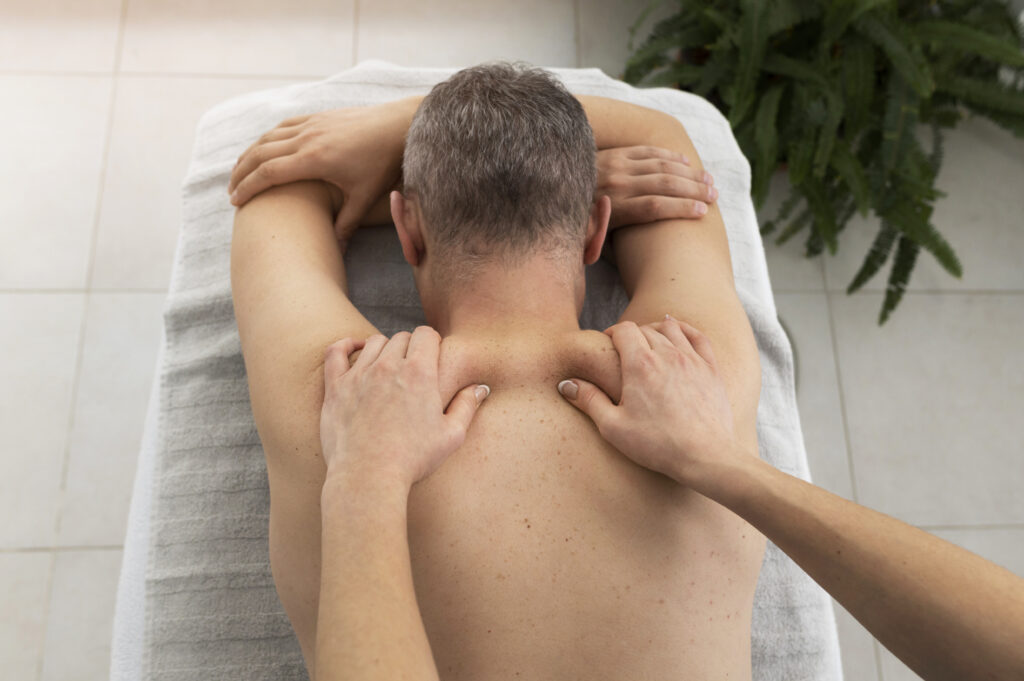
Jet Lag Recovery Tips for International Travelers in Barcelona
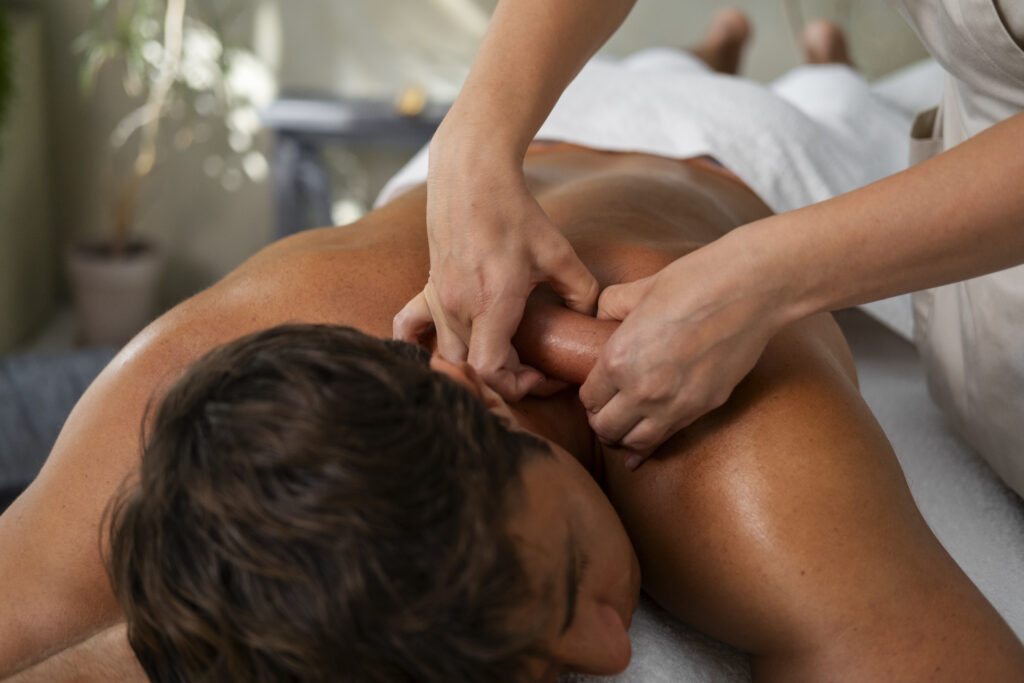
Relaxing Massage in Barcelona: Discover its Benefits
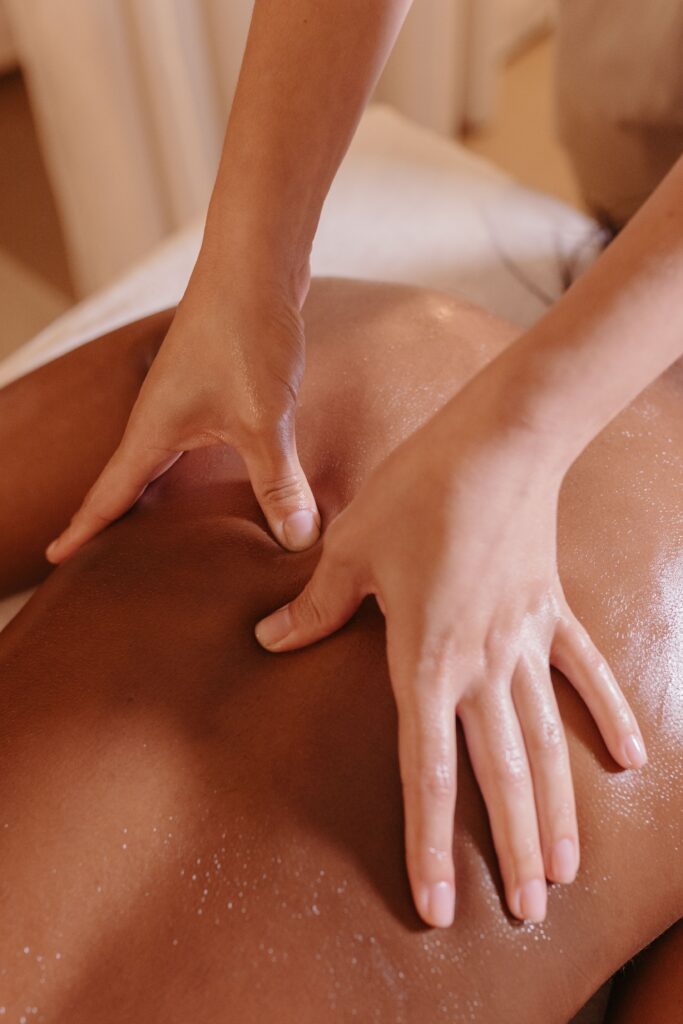
Why a Deep Tissue Massage in Eixample is the Ultimate Reset for Your Body
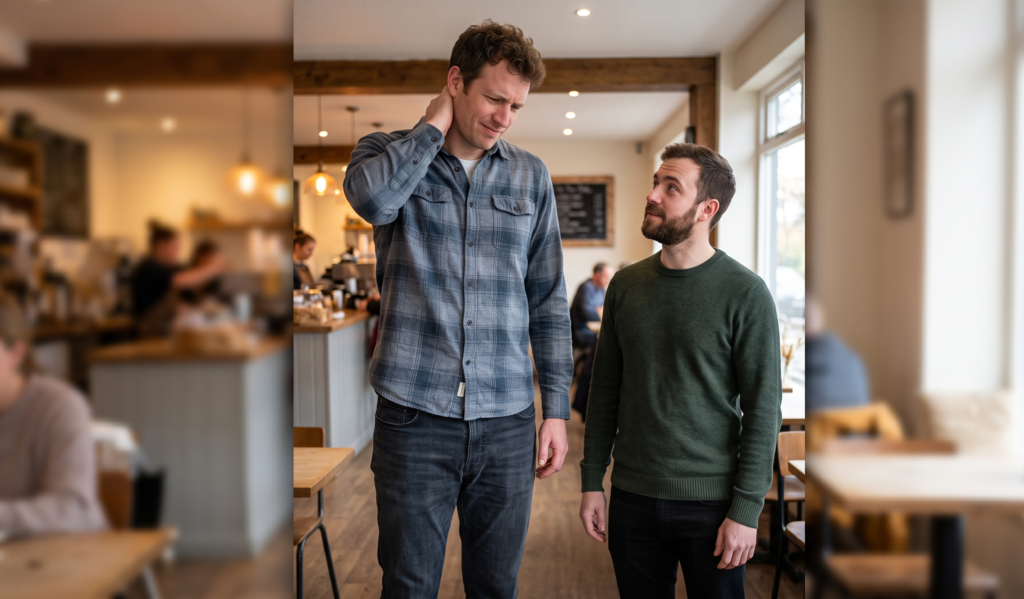
Do Tall People Have More Neck & Back Pain?