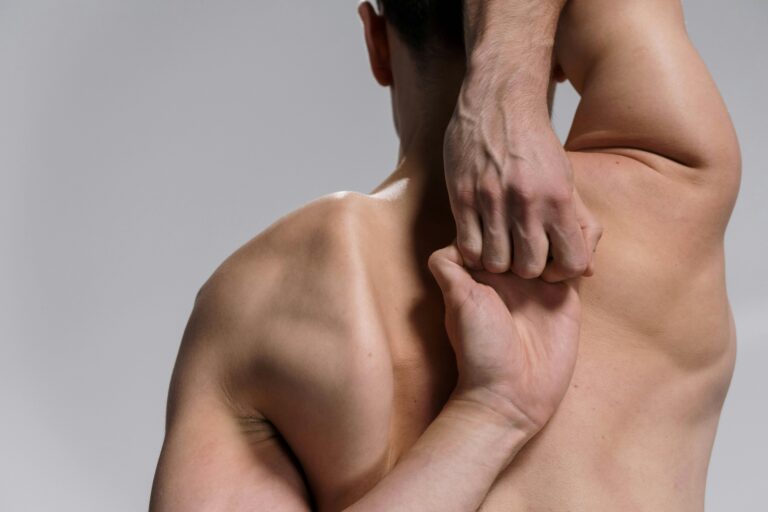

What Happens to Your Body During a 60-Minute Massage?
From the First Touch to the Final Minute
You lie down.
The room becomes quiet.
For the first time that day, you don’t need to answer a message, carry a bag, look at a screen or think about where you need to be next.
Then the massage begins.
Within an hour, many people notice something interesting.
Their breathing feels slower.
Their shoulders seem lower.
Areas they hadn’t realised were tense suddenly feel different.
Some become sleepy.
Others feel remarkably calm.
And occasionally, someone stands up after the session and says:
“I didn’t realise how tense I was.”
But what actually happened during those 60 minutes?
The answer is more interesting than simply saying that your muscles “relaxed.”
Massage involves touch, pressure, movement and sensory input. Your skin, muscles, connective tissues and nervous system all participate in the experience, while your brain continuously interprets the sensations it receives.
And despite some popular wellness claims, a good massage doesn’t need mysterious explanations about “flushing toxins” to be effective.
The real physiology is fascinating enough.
Massage isn’t simply something being done to your muscles.
It’s an ongoing conversation between touch, movement, sensory receptors, your nervous system and your perception of comfort.
Understanding that interaction helps explain why a 60-minute massage can feel so different from the moment it begins to the moment you stand up again.
In This Guide
- What happens during the first few minutes of massage.
- Why your body may gradually begin to relax.
- What massage actually does to tight muscles.
- What people mean when they talk about “muscle knots.”
- How massage interacts with the nervous system.
- Why some people become sleepy during a treatment.
- Whether massage really “releases toxins.”
- Why you may feel different immediately afterwards.
- What to expect during the hours following your session.
Before Minute One: Your Body Has Already Arrived
A massage doesn’t really begin with the first massage stroke.
It begins with the body you bring into the room.
Maybe you’ve spent eight hours sitting at a desk.
Perhaps you’ve been walking around Barcelona all day.
You may have travelled on a plane that morning.
You could be carrying tension through your jaw without noticing it.
Or perhaps you’re simply mentally exhausted.
This matters because no two people arrive at a massage in exactly the same state.
Even the same person may need something completely different from one week to the next.
That’s why I don’t think a good massage should feel like a choreography that is repeated identically for every client.
Before beginning, I want to understand how your body feels today.
Where do you feel tension?
Does anything feel particularly sensitive?
Have you been sitting, travelling or training?
Do you want focused therapeutic work, or does your body simply need an opportunity to slow down?
Those answers influence what happens during the next 60 minutes.
Minutes 0–10: Your Body Begins to Slow Down
The beginning of a massage is often quieter and gentler than people expect.
There’s a reason for that.
Your nervous system needs time to interpret what’s happening.
The first touch introduces new sensory information: pressure, warmth, movement and contact.
Your brain receives that information and continuously decides how to respond.
If the pressure feels safe and comfortable, many people gradually begin to let go of some of the muscular guarding they were carrying when they arrived.
You may notice your breathing becoming deeper.
Your hands may feel less tense.
Your jaw may relax.
Your shoulders may begin to settle into the table.
Sometimes this happens within minutes.
Sometimes it takes longer.
There is no correct response.
Why Breathing Often Changes During Massage
One of the first things I notice during a session is breathing.
At the beginning, some clients breathe quickly and relatively shallowly.
Several minutes later, their breathing often becomes slower and more regular.
This doesn’t mean I’ve pressed a magical “relaxation button.”
Instead, massage takes place in an environment where several things encourage the body to settle down.
You’re lying still.
External stimulation is reduced.
You don’t need to perform a task.
Touch provides continuous sensory input.
And, perhaps for the first time that day, you have permission to do absolutely nothing.
Together, these conditions can support a shift toward a calmer physiological state.
Your Nervous System Is Part of the Massage
We often talk about massage as though muscles were the only structures involved.
They aren’t.
Your nervous system plays an enormous role in how touch and pressure are experienced.
Sensory receptors in the skin and deeper tissues continuously send information toward the brain.
The brain then interprets that information.
Pressure.
Temperature.
Movement.
Comfort.
Sensitivity.
Potential threat.
This helps explain something I see frequently in practice:
More pressure doesn’t automatically mean a better massage.
If pressure becomes uncomfortable enough that you hold your breath, tighten your muscles or brace against the treatment, simply pressing harder isn’t necessarily productive.
Sometimes the most effective approach is to work gradually and allow the body to become comfortable with deeper pressure.
A therapeutic massage should work with your body—not fight against it.
The First Ten Minutes Aren’t Wasted Time
People sometimes assume that therapeutic work only begins once the massage becomes deeper.
I see it differently.
Those first minutes give me valuable information.
How does the tissue respond?
Where does movement feel restricted?
Which areas feel particularly sensitive?
Does the client relax with pressure or instinctively tense against it?
All of this helps determine how I approach the rest of the session.
A personalised massage isn’t simply about finding the tightest muscle and pressing harder.
It’s about listening to what the body is communicating through movement, tension and response.
And we’re only ten minutes in.
Minutes 10–30: The Muscles Begin to Respond
By this point in the session, something has usually changed.
The body is more familiar with the touch.
Breathing may be calmer.
Areas that initially felt guarded may begin to tolerate more movement and pressure.
This is often when I can start working more specifically on the areas that need attention.
Perhaps the shoulders feel unusually tense.
Maybe the lower back has been uncomfortable after sitting for hours.
Or perhaps there’s one particular spot around the shoulder blade that seems to complain every time you move.
This is where massage becomes increasingly individual.
Rather than simply increasing the pressure everywhere, I can begin adapting the technique according to how each area responds.
Because muscles don’t all need the same thing.
And neither do clients.
What Does Massage Actually Do to a Tight Muscle?
People often imagine a tight muscle as something physically shortened that needs to be stretched or pushed back into place.
The reality is more complex.
What we experience as “tightness” can involve several things at once: muscular activity, sensitivity, fatigue, reduced movement, stress and the way the nervous system is interpreting sensations from that area.
That’s one reason you can sometimes feel extremely tight even when there isn’t anything structurally “wrong” with the muscle.
During massage, pressure and movement provide new sensory input to the nervous system.
At the same time, the tissues are being moved, compressed and stretched in ways they may not have experienced throughout the day.
For many people, the result is a temporary reduction in the sensation of tightness and an increased feeling of freedom when they move.
That’s very different from saying that I physically “push the tension out.”
Your body is much more sophisticated than that.
So… What Exactly Is a Muscle Knot?
Ah, the famous muscle knot.
Almost everyone who comes for a massage knows the feeling.
You touch a particular area around your shoulder or back and suddenly think:
“There. That’s the spot.”
It may feel harder.
More sensitive.
Or strangely satisfying when pressure is applied.
People commonly call these areas “knots.”
But your muscle hasn’t literally tied itself into a tiny knot.
The term is an informal way of describing a localised area that feels tight, tender or unusually sensitive.
In some cases, therapists may describe these areas as myofascial trigger points, although the exact mechanisms behind trigger points are still debated and researched.
What’s important is that the discomfort you feel is real—even if the popular explanation of a muscle being physically “knotted” isn’t quite accurate.
Am I Breaking Up Muscle Knots With My Hands?
No.
And personally, I think that’s reassuring.
Your muscles aren’t pieces of rope that need to be untangled.
When I work on a sensitive area, I’m using pressure, movement and different manual techniques to influence how that area feels and moves.
Sometimes an area that initially feels extremely sensitive becomes much more comfortable after several minutes.
Clients often interpret this as:
“The knot disappeared.”
What has changed may include local sensitivity, muscle tone, your perception of the area and how comfortably you can move.
The important result isn’t whether we can claim to have “broken” something.
It’s whether you feel and move better afterwards.
Why Does Some Pressure Feel So Good?
Here’s one of the most interesting parts of massage.
Sometimes pressure on a tense area feels intense—but strangely satisfying.
Clients often describe it as:
“That hurts… but in a good way.”
There’s an important distinction here.
Strong sensation isn’t automatically harmful.
But pain isn’t something we need to chase either.
The ideal pressure is different for everyone and can even change throughout the same session.
A technique that feels wonderful on your shoulders might feel far too intense around your calves.
An area that tolerated deep pressure last week may feel much more sensitive today.
That’s why communication matters.
I don’t believe a therapeutic massage should become a competition to see how much pressure you can tolerate.
More Pressure Doesn’t Mean More Benefit
This is one of the biggest misconceptions about massage.
Deep Tissue Massage doesn’t mean “as hard as possible.”
And therapeutic massage doesn’t need to hurt to be effective.
If pressure becomes so intense that you’re clenching your jaw, holding your breath or actively trying to escape from my elbow, your body is giving us useful information.
We should listen to it.
Sometimes deeper pressure is appropriate.
Sometimes slower pressure is better.
Sometimes an area needs movement rather than intensity.
And sometimes the best decision is simply to leave a sensitive area alone for a moment and return to it later.
Good massage isn’t about winning a battle against your muscles.
It’s about adapting the treatment to their response.
What About Blood Circulation?
You’ve probably heard that massage “improves circulation.”
There’s some truth behind that statement, but it deserves a little nuance.
Manual pressure temporarily changes how tissues are compressed and released, and massage can influence local blood flow.
But that doesn’t mean blood was previously “stuck” inside your muscles or that massage suddenly flushes your entire circulatory system.
Your heart and blood vessels already do an extraordinary job of circulating blood around your body every second of the day.
Massage doesn’t replace that system.
Instead, the mechanical pressure and movement involved in massage can create temporary local changes while also encouraging movement and relaxation.
The reality is less dramatic than many wellness claims.
But it’s also much more interesting.
And No—We’re Not “Flushing Out Toxins”
This one deserves its own section.
Massage is frequently advertised as a way to “release toxins” stored inside the muscles.
It’s a compelling idea.
There’s just one problem:
That’s not how your body detoxifies itself.
Your liver, kidneys, lungs and other physiological systems are constantly processing and eliminating substances your body doesn’t need.
Massage doesn’t squeeze mysterious toxins out of your muscles.
And you don’t need to drink enormous amounts of water after a massage to “flush them away.”
Staying normally hydrated is a good idea, of course.
But because hydration supports normal physiological function—not because your massage has released a wave of toxins into your bloodstream.
Understanding this doesn’t make massage less valuable.
Quite the opposite.
It allows us to appreciate the benefits of massage without needing explanations that the human body simply doesn’t require.
By Minute 30, the Session Has Changed
We’re halfway through.
And the massage often feels very different from those first few minutes.
Areas that initially felt sensitive may now feel easier to work with.
Movements may feel more comfortable.
The client may be breathing deeply—or already drifting toward sleep.
And I now have much more information about how their body is responding.
This is the point where the session can become even more personalised.
Maybe the shoulders need more time than expected.
Perhaps the lower back responded quickly and doesn’t need additional work.
Or maybe we’ve discovered that the area you thought was causing the problem isn’t actually the area that feels most sensitive today.
That’s why I don’t watch the clock and think:
“Minute 30. Time to perform technique number seven.”
I pay attention to the person on the bed.
Because your body doesn’t follow a script.
Neither should your massage.
Minutes 30–55: When Your Nervous System Takes Centre Stage
By the second half of a massage, many clients are noticeably different from the person who first walked into the room.
The breathing is slower.
The hands are resting more heavily.
The shoulders no longer seem to be fighting the table.
Conversation often becomes quieter.
And sometimes I ask a question and receive absolutely no answer.
They’re asleep.
That’s usually a pretty good sign.
But why does this happen?
The explanation isn’t simply that your muscles have “loosened.”
By this point, your nervous system has been receiving continuous, predictable sensory input for more than half an hour.
You’re warm.
You’re lying still.
External stimulation is limited.
You don’t need to make decisions.
And for once, nobody needs anything from you.
That combination can create ideal conditions for the body and mind to settle into a deeply relaxed state.
Massage Isn’t Only About Muscles
This is perhaps the most important idea in this entire guide.
When I massage your shoulders, I’m not interacting with the muscles alone.
Pressure and movement stimulate sensory receptors throughout the skin and deeper tissues.
Those signals travel through the nervous system and are interpreted by the brain.
Your brain is constantly asking questions without you consciously realising it.
Is this pressure comfortable?
Is this movement safe?
Should I relax?
Should I protect this area?
Does this sensation require my attention?
The experience of massage emerges from that continuous conversation between the body and brain.
This is one reason two people can receive exactly the same pressure and experience it completely differently.
And it’s why the same massage can even feel different to you from one week to another.
Your nervous system isn’t identical every day.
Neither is your perception.
Sympathetic vs Parasympathetic: What’s Actually Happening?
You may have heard massage described as “activating the parasympathetic nervous system.”
There’s some truth to the idea, although the reality is more nuanced than flipping a switch from stress mode to relaxation mode.
Your autonomic nervous system helps regulate processes that happen largely without conscious effort.
One side is commonly associated with increased alertness and mobilisation—the sympathetic nervous system.
The other is associated more strongly with rest, digestion and recovery—the parasympathetic nervous system.
Both are essential.
Neither is “bad.”
During a calm massage, however, the combination of safe touch, reduced stimulation, comfortable positioning and slow breathing may encourage physiological responses associated with relaxation.
This can help explain why your breathing slows, why your body feels heavier and why you may become increasingly sleepy as the session progresses.
Why Does Massage Make You Sleepy?
This happens all the time.
And no—you haven’t offended your massage therapist by falling asleep.
Quite the opposite.
For some people, a massage is one of the few moments in their week when they genuinely stop.
No emails.
No meetings.
No traffic.
No phone.
No decisions.
The lights are low.
The room is warm.
The sensory environment is predictable.
And the body has gradually become comfortable with touch.
It’s hardly surprising that the brain occasionally decides:
“Perfect. I’m going to sleep now.”
Falling asleep doesn’t mean you’ll miss the benefits of your massage.
And staying awake doesn’t mean you’re failing to relax.
Both responses are completely normal.
What If You Can’t Relax During a Massage?
This is important too.
Not everybody melts into the table within ten minutes.
Some people remain alert throughout the entire session.
Others find it difficult to stop thinking.
Some feel uncomfortable being still.
And people receiving their first massage may simply need time to become familiar with the experience.
None of this means the massage isn’t “working.”
Relaxation isn’t something you should have to perform.
In fact, trying desperately to relax can sometimes achieve exactly the opposite.
I don’t expect you to enter the room and immediately switch your brain off.
You can talk.
You can stay quiet.
You can fall asleep.
You can ask questions.
You can tell me the pressure feels different today.
The session should adapt to you—not the other way around.
Why You Sometimes Lose Track of Time
There’s another funny thing that happens during massage.
People occasionally ask me afterwards:
“Was that really an hour?”
It was.
When external stimulation decreases and you stop constantly checking your phone, watching the clock or moving between tasks, your perception of time can change.
You may drift between wakefulness and light sleep.
Your attention may move toward physical sensations rather than the passing minutes.
And without your normal stream of interruptions, an hour can feel surprisingly short.
It’s one of the rare moments in modern life when you’re not expected to optimise every minute.
You’re simply allowed to experience it.
What About Stress Hormones?
You’ll often see claims online that massage “dramatically lowers cortisol” or causes huge increases in specific feel-good hormones.
The research is more complicated than those headlines suggest.
Some studies have observed changes in physiological markers associated with stress and relaxation following massage, but the size and consistency of those effects vary between studies.
So I prefer a simpler and more accurate way of describing it.
Many people feel less stressed after massage.
They report feeling calmer.
Their muscles may feel less tense.
Their breathing may feel easier.
They may sleep better that evening.
Those experiences matter even when we don’t reduce them to one hormone.
The human experience of relaxation is much more complex than a single laboratory measurement.
Pain Isn’t Only About the Tissue
This is another fascinating part of the relationship between massage and the nervous system.
Pain is real.
But pain doesn’t always tell us exactly how much tissue damage exists.
The brain creates the experience of pain using information from the body together with many other factors—including previous experiences, stress, sleep, expectations and context.
That’s one reason muscular discomfort can sometimes feel different after a massage even though we haven’t physically “repaired” a structure in 60 minutes.
Massage can change sensory input.
It can change how comfortable movement feels.
It can reduce the perceived intensity of certain sensations.
And sometimes, simply feeling safe enough to move an area again can make a meaningful difference.
This doesn’t mean massage cures every type of pain.
It doesn’t.
Persistent, severe or unexplained pain should always be appropriately assessed.
But it helps explain why the relationship between touch, movement and comfort is far more interesting than simply “loosening a muscle.”
Minutes 50–55: The Body Is Completely Different—Or Is It?
We’re approaching the end of the session.
You may feel dramatically different.
Perhaps your shoulders feel lighter.
Your neck moves more comfortably.
Your breathing is slower.
Your mind feels quieter.
But here’s something important:
Your body hasn’t been completely rebuilt in 55 minutes.
Your anatomy hasn’t changed.
Your muscles haven’t been “detoxified.”
And I haven’t physically erased every source of tension.
What has changed is the experience you’re having inside your body.
Sensations may feel different.
Movement may feel easier.
Your nervous system may be calmer.
Areas that demanded your attention earlier may no longer feel as noticeable.
And that matters.
Because one of the most valuable outcomes of massage isn’t transforming your body into something new.
Sometimes it’s simply helping you feel more comfortable in the body you already have.
And Then Something Interesting Happens
After nearly an hour of lying still, warm and relaxed, the massage is almost finished.
This is precisely when I don’t want to suddenly say:
“Okay! We’re done. Get up!”
😂
Your body deserves a transition.
The final few minutes give us an opportunity to gradually reduce the intensity of the treatment and allow you to become more aware of the room again.
The pressure may become gentler.
The movements may become slower.
The session begins to close.
Because ending a massage well is part of the massage itself.
And we still have five minutes left.
Minutes 55–60: Why the Ending Matters
The final minutes of a massage aren’t an afterthought.
After almost an hour of continuous touch, pressure and relative stillness, suddenly ending the treatment can feel surprisingly abrupt.
So I prefer to bring the session to a close gradually.
The pressure becomes gentler.
The movements become slower.
Areas that received more focused work may be revisited briefly with lighter techniques.
And little by little, your attention begins returning to the room around you.
Those final minutes create a transition between the massage table and everything waiting for you outside.
Because as lovely as staying there for another three hours might sound…
Eventually, you do have to get up.
What Happens When You Stand Up?
This is often when clients notice the biggest difference.
You sit up and suddenly become aware of your body again.
Your shoulders may feel lower.
Your neck may move more comfortably.
Your legs might feel unusually light—or surprisingly heavy and relaxed.
And occasionally there’s that wonderfully strange moment of:
“Wait… what day is it?”
That’s why I always recommend getting up slowly.
After spending an hour lying comfortably and relatively still, moving immediately into a standing position can occasionally make some people feel briefly light-headed.
Take your time.
Sit for a moment.
Let your body adjust.
There’s absolutely no prize for being the fastest person off the massage bed.
What Happens During the Hours After a Massage?
The experience doesn’t necessarily end when you leave the room.
For the next several hours, you may continue noticing changes in how your body feels.
Some people feel energised.
Others become wonderfully sleepy.
You may notice that certain movements feel easier or that an area you were constantly aware of earlier in the day demands less attention.
And sometimes, particularly after more focused therapeutic or deep tissue work, an area may feel slightly tender afterwards.
Responses vary considerably from person to person.
They can even vary between two massages received by the same person.
That’s another reason I don’t believe there’s one “normal” way you should feel after massage.
Is It Normal to Feel Sore After a Massage?
Mild tenderness can occur after massage, particularly when you’ve received more focused work on sensitive areas.
It should not, however, be treated as proof that the massage was effective.
You don’t need to hurt the following day for a treatment to have “worked.”
And more soreness doesn’t mean more benefit.
If you already know you’re sensitive to deeper work—or you have an important workout, flight or meeting the following day—tell me.
Pressure and technique can be adjusted accordingly.
Persistent, severe or unusual pain is different and shouldn’t simply be dismissed as a normal consequence of massage.
Do You Really Need to Drink Lots of Water Afterwards?
You don’t need to force yourself to drink litres of water because a massage has supposedly released “toxins.”
As we discussed earlier, that’s not how detoxification works.
Your liver and kidneys already take care of that job.
Normal hydration, however, is still a good idea.
If you’ve been travelling, exercising, walking around Barcelona in warm weather or simply haven’t drunk much throughout the day, having some water afterwards makes perfect sense.
Drink because hydration supports your body.
Not because we’re trying to flush your massage away.
Should You Exercise After a Massage?
It depends.
A gentle walk after a relaxing or therapeutic massage can feel wonderful.
A demanding gym session immediately after intensive bodywork may not feel quite as appealing.
The right choice depends on the type of massage you’ve received, the intensity of the treatment, your training routine and how your body feels afterwards.
Rather than following a rigid rule, pay attention to your response.
If you feel relaxed and sleepy, perhaps today isn’t the day to chase a personal best.
If you feel comfortable and energetic, normal gentle activity may be perfectly appropriate.
Recovery should complement your life—not dictate it.
So, What Really Happened During Those 60 Minutes?
Quite a lot.
But perhaps not in the way massage myths would have us believe.
Your muscles weren’t physically untied.
Toxins weren’t squeezed out of your body.
Your anatomy wasn’t reconstructed.
Instead, your body experienced an hour of carefully applied touch, pressure and movement.
Your nervous system processed thousands of sensory signals.
Areas of muscular tension received focused attention.
Your perception of stiffness or discomfort may have changed.
Movement may feel easier.
And perhaps most importantly, you had an hour in which your body wasn’t being asked to perform.
No laptop.
No luggage.
No workout.
No rushing across Barcelona.
Just time to slow down.
And sometimes that’s exactly what the body needs.
Why No Two 60-Minute Massages Should Feel Exactly the Same
This is one of the principles I care about most in my work.
A massage shouldn’t simply be a memorised sequence performed from minute one to minute sixty.
Your body changes.
Your lifestyle changes.
Your training changes.
Your stress changes.
The way you slept last night matters.
The flight you took yesterday matters.
The workout you did this morning may matter.
That’s why I adapt every session according to the person in front of me.
Sometimes the shoulders need more attention.
Sometimes it’s the lower back.
Sometimes your legs are exhausted after walking around Barcelona.
And sometimes you arrive expecting deep therapeutic work only to realise that what your body needs most that day is simply to slow down.
Your body doesn’t follow a script.
Neither should your massage.
Experience a Personalised Massage in Barcelona
If you’re visiting Barcelona—or simply need some time away from the pace of everyday life—I’d be happy to welcome you to my private massage studio in Eixample.
My sessions are personalised rather than based on a fixed routine.
Depending on what your body needs, I may combine elements of therapeutic work, deeper techniques, mobility and relaxation to create a treatment adapted to you.
Whether you’re experiencing muscular tension, recovering after travelling, feeling stiff from work or simply want an hour to disconnect, we can decide together what approach makes the most sense that day.
Because the question isn’t simply:
“Which massage should I book?”
Sometimes the better question is:
“What does my body need today?”
Frequently Asked Questions
What happens to your body during a massage?
Massage provides mechanical and sensory stimulation through touch, pressure and movement.
Your skin, muscles, connective tissues and nervous system respond to this input, which may influence how you experience muscular tension, movement, discomfort and relaxation.
What happens to your nervous system during massage?
Massage provides continuous sensory input that the brain and nervous system process throughout the treatment.
In a comfortable environment, this experience may support physiological responses associated with relaxation, including slower breathing and a greater sense of calm.
Does massage really remove muscle knots?
Not literally.
What people commonly call a “muscle knot” is usually an area that feels particularly tight, tender or sensitive.
Massage may change how that area feels and moves, but therapists aren’t physically untangling knots inside the muscle.
Does massage release toxins?
There isn’t good evidence supporting the popular claim that massage “flushes toxins” from muscles.
Your liver, kidneys, lungs and other physiological systems continuously process and eliminate substances your body doesn’t need.
Why do I feel sleepy after a massage?
A quiet environment, reduced external stimulation, lying still and receiving comfortable touch can all encourage relaxation.
For some people, that means becoming sleepy during or after the treatment.
Is soreness normal after a massage?
Mild temporary tenderness can sometimes occur, particularly after more focused or deeper work.
However, soreness isn’t necessary for a massage to be effective, and severe or persistent pain shouldn’t simply be considered normal.
Is a 60-minute massage enough?
For many people, 60 minutes provides enough time for a personalised full session or more focused attention on particular areas.
What can realistically be addressed depends on your individual needs and how many areas require attention.
Where can I get a private therapeutic massage in Barcelona?
I offer personalised sessions at my private massage studio in Eixample, Barcelona.
Treatments are adapted according to how your body feels on the day rather than following exactly the same massage routine for every client.
Continue Reading
If you’d like to understand your body—and massage—a little better, continue with:
- Deep Tissue vs Therapeutic Massage: Which One Is Right for You?
- Is It Normal to Feel Sore After a Massage?
- How Often Should You Get a Massage?
- Does Massage Really Help Back Pain?
- The Science of Travel Fatigue
- Why Your Neck Hurts After a Long Flight
- Why Your Legs Feel Heavy After Exploring Barcelona
These guides are designed to help you make informed decisions about massage, recovery and your wellbeing rather than relying on wellness myths.

Why I Created Lina Signature Massage in Barcelona
Lina Signature Massage? When someone comes to my massage studio in Barcelona, I never know…
Morning or Evening Massage: Which Is Better?

What Happens to Your Body During a 60-Minute Massage?

Best Massage During a Layover in Barcelona

Why Pilots Often Experience Neck and Back Pain (and How Massage Can Help)