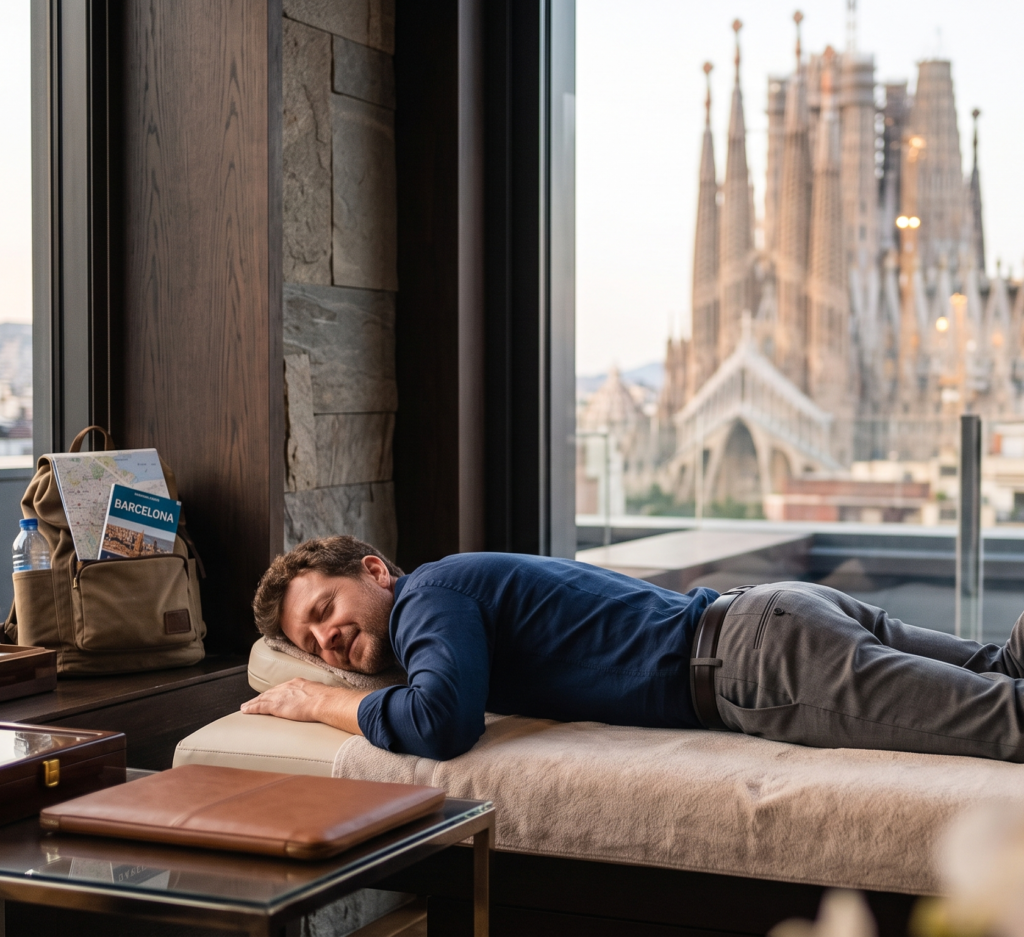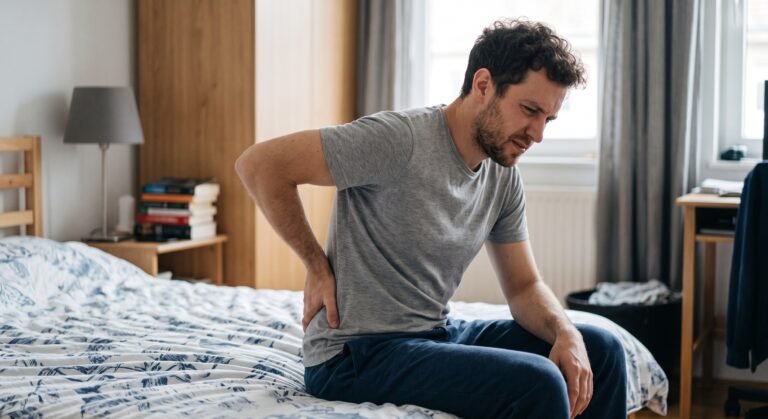
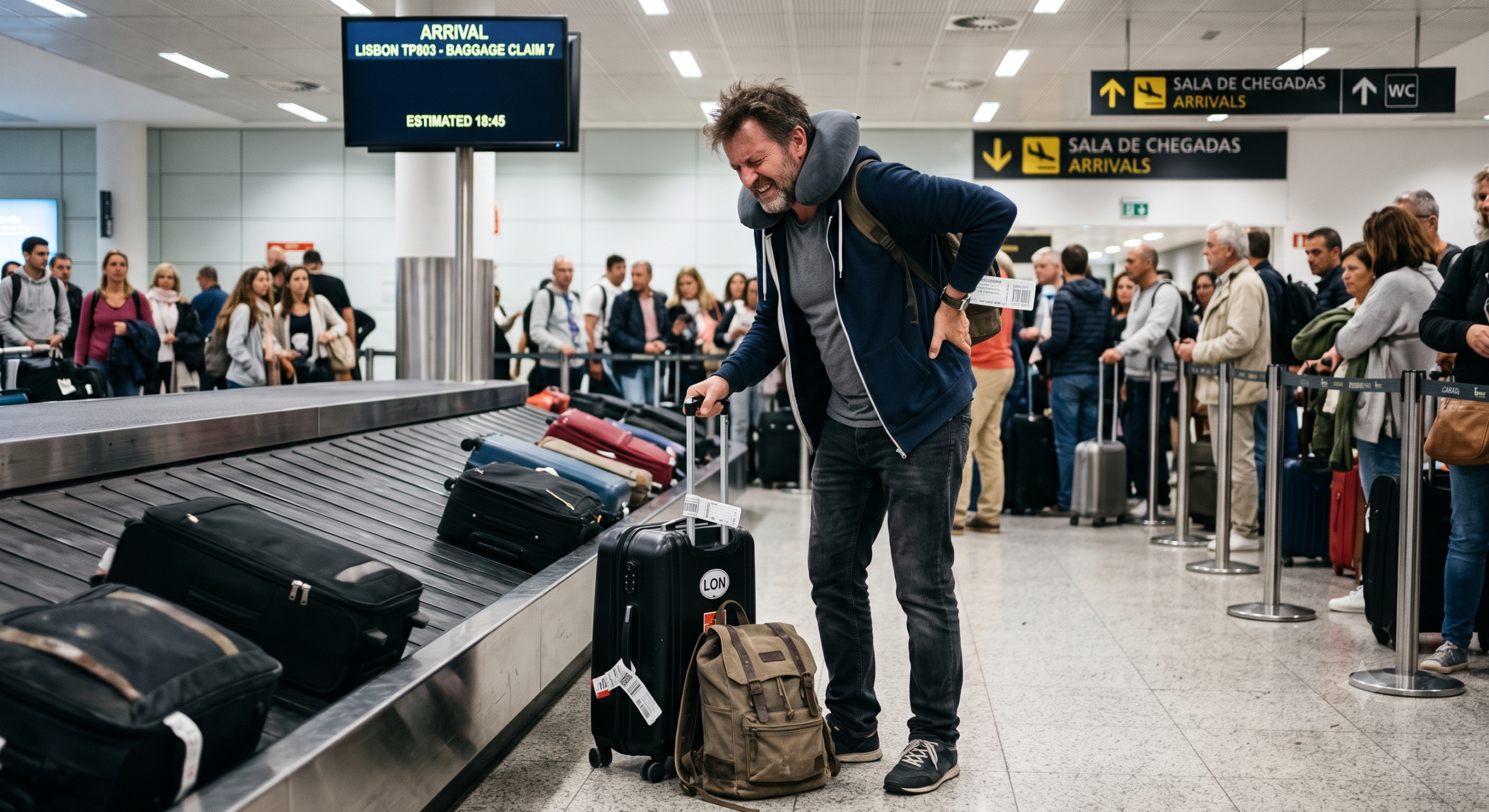
Why Your Lower Back Hurts After Flying to Barcelona (And How Massage Can Help)
Travel Recovery Series
Helping travellers recover naturally, move comfortably and enjoy every moment in Barcelona.
Your holiday begins the moment the plane lands.
But for many travellers, so does an unexpected discomfort.
A dull ache in the lower back.
A feeling of stiffness when standing up.
Difficulty bending to pick up a suitcase.
A tightness that wasn’t there before boarding the aircraft.
Lower back pain after flying is one of the most common travel-related complaints, affecting holidaymakers, business travellers and frequent flyers alike.
The encouraging news is that, in most cases, it isn’t caused by an injury. Instead, it’s your body’s response to hours of restricted movement, sustained sitting and muscular fatigue.
With the right recovery strategies—and, when appropriate, professional massage—you can often relieve discomfort quickly and continue enjoying everything Barcelona has to offer.
In This Guide
- Why flying often causes lower back pain.
- The hidden effects of prolonged sitting on your spine.
- Why symptoms frequently appear after landing.
- How to relieve lumbar stiffness naturally.
- When massage can accelerate recovery.
- Which massage is best for lower back discomfort.
- When persistent pain requires medical assessment.
- How to explore Barcelona comfortably from your very first day.
Lower Back Pain After a Flight is More Common Than You Think
You finally arrive in Barcelona.
The aircraft doors open, warm Mediterranean air replaces the cool cabin atmosphere and the excitement of your journey quickly returns.
You collect your luggage, walk through the arrivals hall and head towards the taxi rank.
Everything feels exactly as you imagined.
Until you bend down to lift your suitcase.
A sudden stiffness catches your lower back.
Nothing dramatic.
Just enough to make you pause for a moment.
Perhaps you ignore it.
After all, you’ve just spent several hours sitting on a plane. It will probably disappear on its own.
But as the day continues, something feels different.
Walking through Passeig de Gràcia isn’t quite as comfortable as you expected.
Standing in line to admire Basílica de la Sagrada Família makes your back feel tighter.
By the time you arrive at your hotel in Eixample, even unpacking your suitcase seems to require more effort than it should.
If this sounds familiar, you’re certainly not alone.
Every day, thousands of travellers arrive in Barcelona experiencing lower back discomfort after flying. Whether you’ve travelled from London, New York, Dubai or Tokyo, spending several hours seated in a confined space places unique demands on your spine, muscles and joints.
Interestingly, the discomfort isn’t usually caused by the flight itself.
It’s caused by what your body has not been able to do during the journey.
Your lower back is designed for movement.
Walking.
Changing position.
Twisting.
Reaching.
Standing.
Throughout everyday life, the muscles supporting your lumbar spine are constantly adapting to small changes in posture.
During a flight, that natural rhythm almost disappears.
Instead, your body remains seated for hours, often with limited lumbar support, reduced opportunities to move and very little variation in posture.
Meanwhile, dehydration, muscle fatigue, disrupted sleep and the effort of carrying luggage after landing add even more stress to tissues that are already tired.
The result is a familiar sensation for many travellers: stiffness, reduced flexibility and an aching lower back that seems to appear precisely when your holiday is supposed to begin.
Fortunately, most cases improve with appropriate recovery strategies.
Gentle movement, hydration and adequate rest all play an important role, while many visitors also discover that targeted massage helps reduce muscular tension, restore comfortable movement and support a faster return to normal activity.
In this guide, we’ll explain why lower back pain after flying is so common, explore the science behind post-flight stiffness and show how treatments such as Massage for Back Pain & Sciatica Barcelona, Therapeutic Massage Barcelona, Deep Tissue Massage Barcelona and a private massage in Eixample may help you recover naturally—allowing you to spend less time thinking about discomfort and more time discovering one of Europe’s most extraordinary cities.
Why Does Flying Trigger Lower Back Pain?
At first glance, it seems surprising.
After all, flying doesn’t involve running, lifting weights or any particularly demanding physical activity.
In fact, you’re sitting down for most of the journey.
Yet for your lower back, prolonged sitting can be far more challenging than many people realise.
Your lumbar spine—the lower portion of your back—is designed for movement. Every time you walk, bend, twist or reach, the muscles surrounding your spine work together to distribute forces efficiently and maintain stability.
Movement keeps these structures healthy.
Long periods of stillness do the opposite.
During a flight, your body remains in a confined position for hours. Opportunities to stand, stretch or change posture are limited, particularly on busy flights or overnight journeys.
Gradually, muscles begin to fatigue, joints become less mobile and soft tissues lose some of the flexibility they normally enjoy during everyday activities.
By the time you arrive in Barcelona, your back has often been under continuous low-level stress for much longer than it was ever designed to tolerate.
Your Spine Loves Movement
One of the greatest misconceptions about back pain is that rest is always the best solution.
While short periods of rest may help when discomfort is severe, the spine actually depends on regular movement to remain comfortable.
Every step you take nourishes your joints.
Every change in posture distributes pressure differently.
And every gentle stretch allows muscles and connective tissues to adapt.
When movement disappears for several hours—as it often does during air travel—those natural recovery mechanisms slow down.
The result isn’t necessarily injury.
It’s stiffness.
Reduced mobility.
Muscular fatigue.
And that familiar aching sensation many travellers notice shortly after landing.
Sitting Changes the Pressure on Your Lower Back
The seated position itself also plays an important role.
Aircraft seats, although increasingly comfortable, cannot perfectly support every traveller’s natural spinal curve.
As fatigue develops, many people gradually slide forward in the seat, round their shoulders or allow their pelvis to tilt backwards.
These subtle changes increase the mechanical demands placed on the lumbar region.
Over several hours, muscles that normally stabilise the spine work continuously to compensate.
Imagine holding a light shopping bag.
For ten seconds, it feels effortless.
Hold it for three hours and even a small weight becomes exhausting.
The same principle applies to many of the muscles supporting your lower back during a long flight.
The Hidden Role of the Hip Flexors
One muscle group that rarely receives attention is the hip flexors.
Located at the front of the hips, these muscles help lift your knees and stabilise your pelvis during walking.
When you remain seated for prolonged periods, the hip flexors stay in a shortened position.
Meanwhile, the gluteal muscles—among the strongest muscles in the body—remain relatively inactive.
This temporary imbalance can alter how your pelvis moves once you stand up.
Instead of walking freely, many travellers experience:
- Tightness across the front of the hips.
- Stiffness in the lower back.
- A feeling that standing upright requires extra effort.
- Reduced flexibility when bending forward.
These sensations are usually temporary, but they help explain why your back often feels much worse during the first few hours after landing than it did while you were actually sitting on the plane.
Why Symptoms Often Appear After You Arrive
A question many travellers ask is:
“Why didn’t my back hurt during the flight?”
The answer lies in the body’s remarkable ability to adapt.
While you’re seated, your muscles gradually accommodate the position.
The moment you stand up, however, everything changes.
Oh, oh your spine begins bearing weight again.
Your hips extend.
Your gluteal muscles reactivate.
And… your lumbar muscles suddenly have to stabilise your body during walking.
It’s during this transition that accumulated stiffness often becomes noticeable.
Many people describe the feeling as though their back has “locked up.”
In reality, the muscles and joints simply need time—and movement—to readjust after hours of limited activity.
Carrying Luggage Adds Another Layer of Stress
Unfortunately, the journey rarely ends when the aircraft lands.
You still need to:
- Lift your suitcase from the overhead compartment.
- Pull wheeled luggage across the terminal.
- Carry a backpack or laptop bag.
- Wait in passport control.
- Stand at baggage reclaim.
- Travel to your accommodation.
Each of these activities asks your lower back to perform tasks immediately after several hours of inactivity.
If your muscles are already fatigued, even lifting a moderately heavy suitcase into a taxi can be enough to trigger noticeable discomfort.
This is one reason why many travellers report that their back feels progressively worse during the first afternoon in Barcelona rather than immediately after leaving the aircraft.
Barcelona Is a Wonderful City… But It Doesn’t Give Your Back Much Time to Recover
One of Barcelona’s greatest strengths is that it invites you to explore on foot.
You leave your hotel in Eixample, planning a short walk to breakfast.
Soon you’re admiring the elegant architecture of Passeig de Gràcia, continuing towards the Gothic Quarter, stopping for lunch near El Born and ending the afternoon by climbing the colourful paths of Park Güell.
Without even noticing, you’ve walked more than 15,000 steps.
For a healthy back, that’s usually not a problem.
For a back that has just spent eight or ten hours sitting on an aircraft, it’s a very different story.
The muscles haven’t yet had time to recover from the journey.
Instead of easing into movement gradually, they’re suddenly asked to support hours of walking, standing and carrying bags.
This explains why many travellers wake up on their second morning in Barcelona feeling considerably stiffer than they expected.
The encouraging news is that this type of discomfort often responds well to simple recovery strategies—and, when muscular tension is more significant, professional massage can help restore comfort and mobility, allowing you to enjoy the rest of your trip without constantly thinking about your back.
How to Relieve Lower Back Pain After a Long Flight
The good news is that most cases of post-flight lower back pain are temporary.
Once your body begins moving normally again, muscles gradually relax, joints regain mobility and the stiffness that seemed so noticeable after landing often starts to fade.
However, there is a significant difference between simply waiting for your back to recover and actively helping your body recover.
The earlier you support your muscles, the sooner you may feel comfortable enough to enjoy Barcelona without constantly thinking about your back.
Whether you’re visiting for a long weekend, a business conference or a once-in-a-lifetime holiday, these simple strategies can make a noticeable difference.
Start Walking—But Don’t Overdo It
It may sound contradictory, but one of the best things you can do after a long flight is to walk.
Not for hours.
Not at a fast pace.
Just enough to remind your body that it’s moving again.
A gentle walk encourages circulation, helps lubricate your joints and allows the muscles supporting your spine to begin working through their normal range of motion.
If you’ve just arrived in Barcelona, consider taking a relaxed stroll through your neighbourhood rather than immediately attempting a full day of sightseeing.
If you’re staying in Eixample, for example, a leisurely walk around the elegant streets before heading to dinner may help your body adapt far better than spending the afternoon carrying shopping bags or climbing hills.
Change Positions Frequently
Your back dislikes remaining in the same position for too long—whether sitting, standing or even lying down.
After travelling, try to avoid spending another three or four hours sitting in your hotel room catching up on emails or watching television.
Instead:
- Stand up every 30–45 minutes.
- Walk for a few minutes.
- Gently stretch your hips.
- Roll your shoulders backwards.
- Change posture regularly.
Small movements performed consistently are often more beneficial than one long stretching session.
Stretch the Muscles That Support Your Lower Back
Many people focus exclusively on the painful area.
In reality, lower back comfort depends on several neighbouring muscle groups working together.
Gentle stretches for the:
- Hip flexors
- Gluteal muscles
- Hamstrings
- Calves
can all help reduce unnecessary tension placed on the lumbar spine.
There’s no need for complicated yoga poses.
Simple, comfortable movements performed without forcing the body are usually sufficient after travelling.
Rehydrate and Eat Well
Travelling often disrupts normal routines.
Flights may involve irregular meals, limited water intake and long periods without fresh food.
Supporting your recovery starts with giving your body what it needs.
Drinking water regularly, choosing balanced meals and avoiding excessive alcohol during your first evening in Barcelona can all contribute to feeling better the following day.
Your muscles recover more efficiently when your body is properly nourished and hydrated.
Why Massage Can Be One of the Most Effective Recovery Tools
While self-care strategies are an excellent starting point, some travellers continue to experience persistent muscular tightness despite stretching and rest.
This is particularly common after:
- Long-haul international flights.
- Consecutive business trips.
- Frequent flying.
- Travelling with heavy luggage.
- Pre-existing back stiffness.
In these situations, professional massage can provide targeted support by addressing the muscles that have remained under continuous tension throughout the journey.
Rather than focusing only on the painful area, an experienced therapist evaluates how different muscle groups interact.
Lower back discomfort rarely exists in isolation.
The hips, gluteal muscles, hamstrings, thoracic spine and even the abdominal muscles all influence how comfortably your lumbar spine moves.
Treating these interconnected areas often helps restore more natural movement than concentrating on the lower back alone.
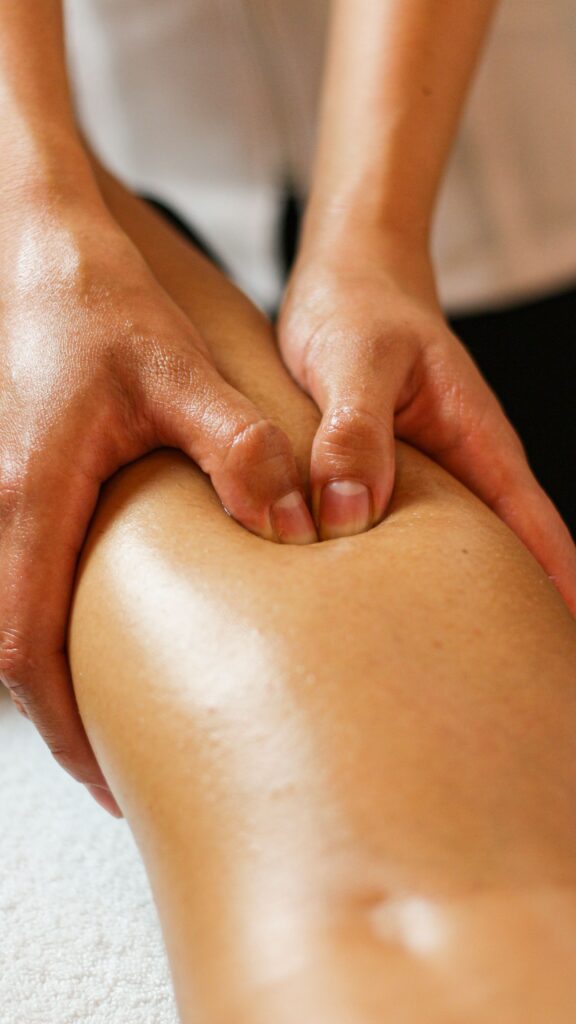
Therapeutic Massage in Barcelona
For travellers experiencing general lumbar stiffness after flying, a Therapeutic Massage in Barcelona offers a highly personalised approach.
Instead of following the same sequence for every client, the treatment is adapted to how your body feels that day.
Attention may be given not only to the lower back itself but also to the surrounding muscles that influence posture and movement.
This makes therapeutic massage particularly suitable for travellers whose discomfort developed gradually during their journey rather than from a specific injury.
Many clients notice that walking feels easier, sitting becomes more comfortable and simple activities such as bending to tie their shoes require much less effort afterwards.
Deep Tissue Massage in Barcelona
Sometimes the muscles protecting the lower back become significantly tighter after prolonged sitting.
In these situations, a Deep Tissue Massage in Barcelona may help release deeper patterns of muscular tension.
Using slower, focused techniques, this treatment targets areas that often become overloaded during travel, particularly around the lumbar region, hips and gluteal muscles.
It’s a popular choice among frequent flyers, business travellers and visitors who already experience occasional lower back tightness before travelling.
Following treatment, many clients describe feeling less compressed, with greater freedom of movement throughout the pelvis and spine.
Massage for Back Pain & Sciatica in Barcelona
If your discomfort extends beyond simple muscular fatigue—perhaps travelling into the buttock or accompanied by persistent tightness around the hip—a Massage for Back Pain & Sciatica Barcelona may be the most appropriate option.
While massage cannot treat every cause of back or sciatic pain, it can often help relieve muscular tension that contributes to discomfort in the lower back and surrounding tissues.
Each session begins by understanding how your symptoms behave, allowing the treatment to be adapted to your individual needs rather than applying the same techniques to every client.
For travellers who arrive in Barcelona with pre-existing lumbar stiffness that has worsened during the flight, this tailored approach is often especially reassuring.
Why Many Travellers Choose a Private Massage in Eixample
Convenience matters when you’re travelling.
After spending hours at the airport and on the plane, the last thing most visitors want is another long journey across the city for an appointment.
That’s one reason why many travellers choose a private massage in Eixample.
Located in one of Barcelona’s most central neighbourhoods, Eixample offers easy access from many hotels, business districts and major attractions.
Whether you’re staying near Passeig de Gràcia, Plaça de Catalunya or Sagrada Família, scheduling a massage in this area allows recovery to fit naturally into your itinerary.
Instead of losing half a day travelling across the city, you can enjoy a personalised treatment and return quickly to exploring Barcelona feeling lighter, more mobile and better prepared for the adventures ahead.
Recovery Is Easier When You Act Early
One of the most common mistakes travellers make is assuming that discomfort will simply disappear if they ignore it.
Sometimes it does.
But just as often, muscular tension lingers and begins to influence the way you move.
Take shorter steps.
You avoid bending.
You rotate your body instead of turning naturally.
Over several days, these small compensations may place additional strain on other muscles that were never the source of the problem.
Supporting your recovery early—through movement, hydration, good sleep and, when appropriate, professional massage—helps your body return to its normal movement patterns before those compensations become established.
And that’s exactly what you want when you’re about to spend several unforgettable days discovering everything Barcelona has to offer.
When Should You Take Lower Back Pain Seriously?
For most travellers, lower back discomfort after flying is temporary and improves as the body readjusts to normal movement.
A day or two of gentle activity, hydration, quality sleep and appropriate self-care is often enough for muscles to recover from the physical demands of travel.
However, not every episode of back pain should automatically be attributed to a long flight.
Travelling can sometimes aggravate an existing condition that had previously gone unnoticed, and in some cases the timing may simply be coincidental.
Understanding the difference between common travel-related stiffness and symptoms that deserve medical attention is an important part of looking after your health while away from home.
Seek medical advice if you experience:
- Severe pain that continues to worsen instead of improving.
- Pain following a fall, accident or sudden injury.
- Numbness, tingling or weakness in one or both legs.
- Loss of bladder or bowel control (this requires urgent medical attention).
- Fever, unexplained weight loss or other symptoms suggesting illness.
- Persistent pain that doesn’t improve after several days of appropriate self-care.
Fortunately, these situations are relatively uncommon.
Most travellers are simply experiencing muscular stiffness caused by prolonged sitting, reduced movement and the physical demands of flying.
Listening to your body—and responding early—is often the best way to recover comfortably and continue enjoying your trip.
Enjoy Barcelona—Not Your Back Pain
Barcelona is a city that invites movement.
Look up at extraordinary architecture.
You wander through lively neighbourhoods.
Maybe you climb viewpoints that reward you with unforgettable panoramas.
You lose track of time as one beautiful street leads naturally to another.
Your body should be free to enjoy those experiences.
When lower back discomfort becomes the centre of your attention, even the most memorable places can lose a little of their magic.
Recovery isn’t about slowing your holiday down.
It’s about making sure your body can keep pace with your curiosity.Whether you’re strolling through the elegant avenues of Passeig de Gràcia, enjoying the atmosphere of El Born, or watching the sunset from Montjuïc, feeling comfortable allows you to focus on the experience—not the discomfort.
Personalised Massage in the Heart of Eixample
Every traveller arrives in Barcelona with a different story.
Some have crossed continents on overnight flights.
Others have spent the week attending conferences, sitting through meetings or travelling between multiple cities before finally reaching Barcelona.
No two bodies respond to travel in exactly the same way.
That’s why every treatment at Barcelona Massage by Lina is tailored to the individual.
Rather than following a fixed routine, each session is adapted to your symptoms, your comfort level and your goals—whether you’re looking to ease muscular tension, move more freely or simply unwind after a demanding journey.
Located in the heart of Eixample, our private massage studio provides a calm and discreet environment within easy reach of many of Barcelona’s hotels and most visited attractions.
It’s an ideal choice for travellers searching for a private massage in Eixample, a personalised Therapeutic Massage Barcelona, a focused Deep Tissue Massage Barcelona, or specialised Massage for Back Pain & Sciatica Barcelona.
Our aim is simple:
To help you feel comfortable enough to enjoy every day of your stay in Barcelona.
Ready to Explore Barcelona with Greater Comfort?
Travel should leave you with incredible memories—not lingering back stiffness.
If your lower back feels tight after flying, taking time to recover early may help you enjoy the rest of your trip with greater comfort and confidence.
Discover our Massage for Back Pain & Sciatica Barcelona, Therapeutic Massage Barcelona, Deep Tissue Massage Barcelona, and Relaxing Massage Barcelona services to find the treatment that best matches your needs.
Not sure which massage is right for you?
Contact me via WhatsApp and we’ll be happy to recommend the most suitable option based on your symptoms, your travel plans and your personal preferences.
Because when your body feels better, every corner of Barcelona becomes even more enjoyable.
Frequently Asked Questions
Why does my lower back hurt after flying?
Long periods of sitting, reduced movement, muscle fatigue and carrying luggage can all contribute to temporary lower back stiffness after a flight.
Is lower back pain after flying normal?
Yes. Mild lower back discomfort is a common complaint after medium and long-haul flights and usually improves with movement, hydration and rest.
Can massage help relieve lower back pain after travelling?
Massage may help reduce muscular tension, improve comfort, encourage relaxation and support recovery after prolonged periods of sitting during travel.
Which massage is best for lower back pain?
The most suitable treatment depends on your symptoms. A Therapeutic Massage Barcelona is ideal for personalised care, while a Deep Tissue Massage Barcelona may be appropriate for deeper muscular tightness. If discomfort extends toward the hip or gluteal area, Massage for Back Pain & Sciatica Barcelona may be the best option.
Should I book a massage at the beginning of my holiday?
Many travellers choose to schedule a massage during the first days of their stay. Recovering early can help you enjoy sightseeing, business meetings and daily activities with greater comfort.
Where can I find a private massage in Eixample?
If you’re staying in central Barcelona, choosing a private massage in Eixample offers a convenient location close to many hotels, restaurants and major attractions, making it easy to fit recovery into your travel plans.
Can sitting on a plane make existing back pain worse?
Yes. Remaining seated for several hours may aggravate pre-existing muscular tension or stiffness, particularly if you already experience occasional lower back discomfort before travelling.
Continue Your Recovery Journey
Travelling should leave you with unforgettable memories—not unnecessary discomfort.
Whether you’re recovering from a long-haul flight, a busy business trip or days of exploring Barcelona on foot, taking care of your body allows you to enjoy every experience more fully.
Continue exploring our Travel Recovery Series and discover practical advice designed to help you move comfortably throughout your stay.
You may also enjoy:
- Why Your Legs Feel Heavy After Exploring Barcelona (And How Massage Can Help)
- Why Your Neck Hurts After a Long Flight to Barcelona (And How Massage Can Help)
- Best Massage for Business Travelers in Barcelona
- Why a Deep Tissue Massage in Eixample is the Ultimate Reset for Your Body
- Massage for Tourists in Barcelona
Together, these guides create a complete resource for travellers who want to stay active, recover naturally and make the most of every day in Barcelona.
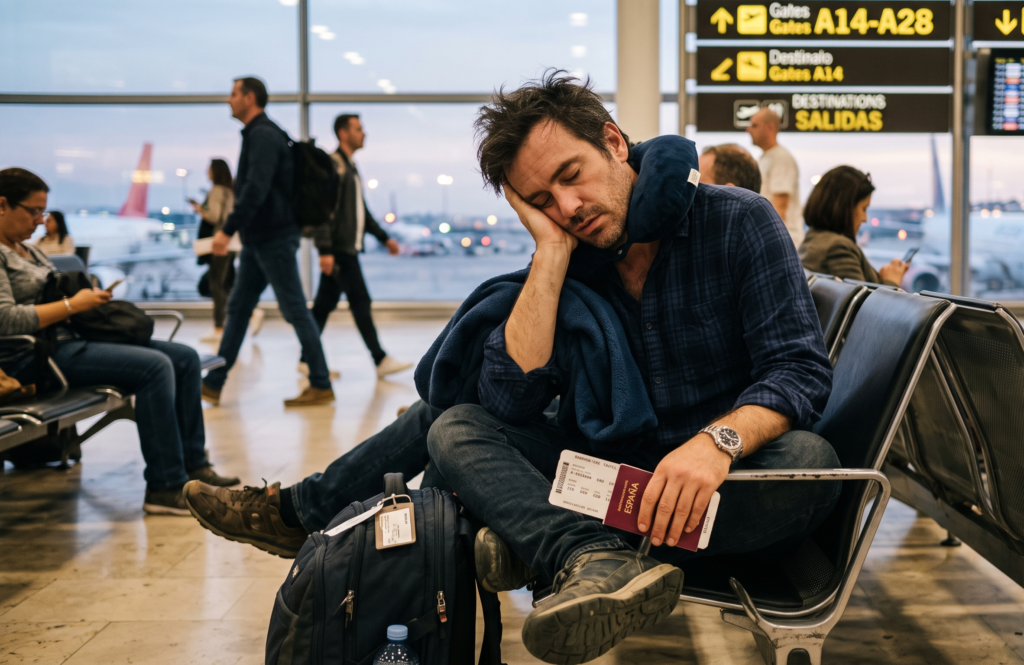
The Science of Travel Fatigue

Why Yacht Crew Often Experience Back Pain & Muscle Fatigue
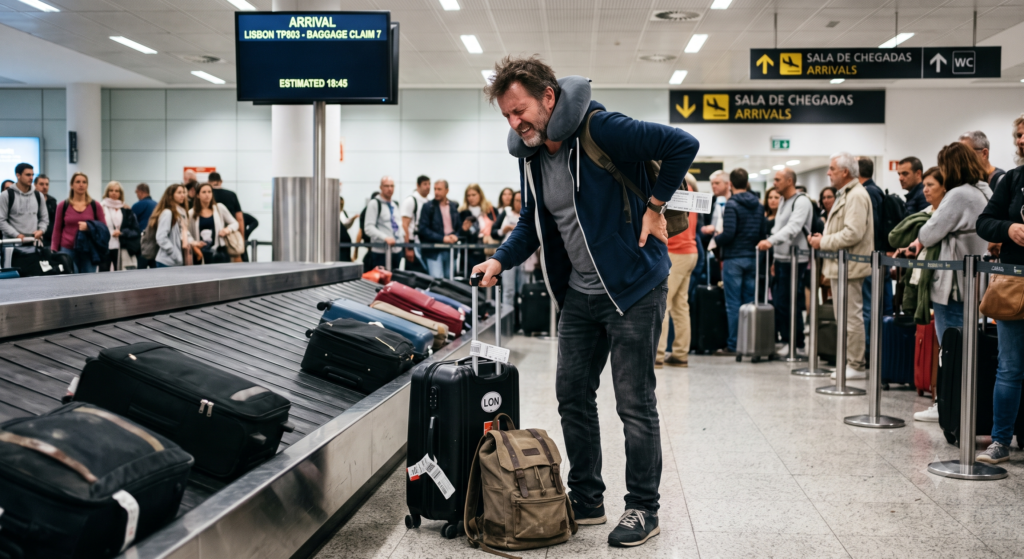
Why Your Lower Back Hurts After Flying to Barcelona (And How Massage Can Help)
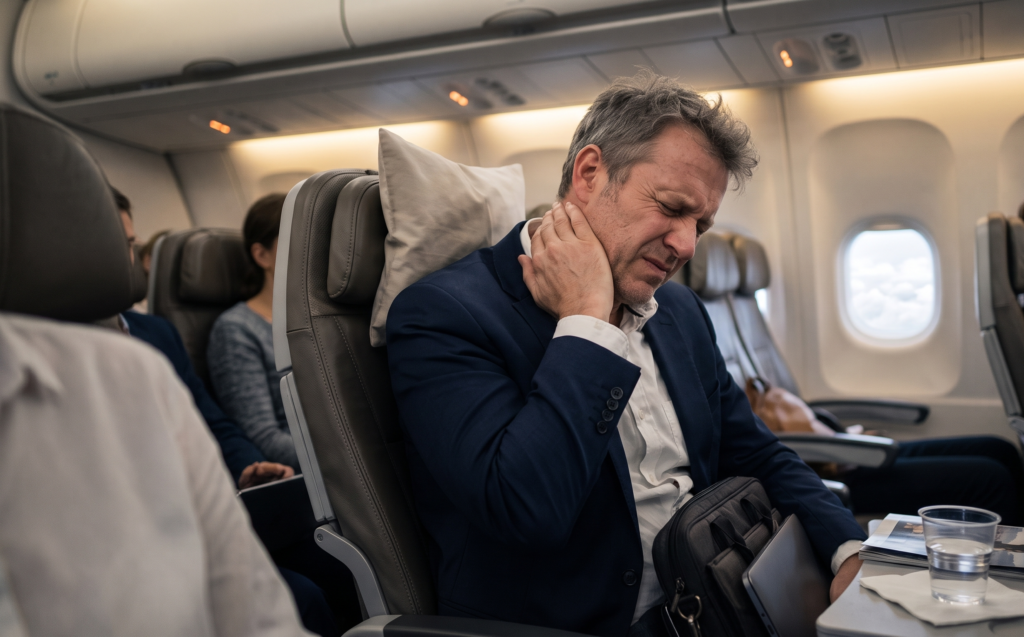
Why Your Neck Hurts After a Long Flight to Barcelona (And How Massage Can Help)
Why Do you Have Heavy Legs After Walking and Exploring Barcelona? (And How Massage Can Help)