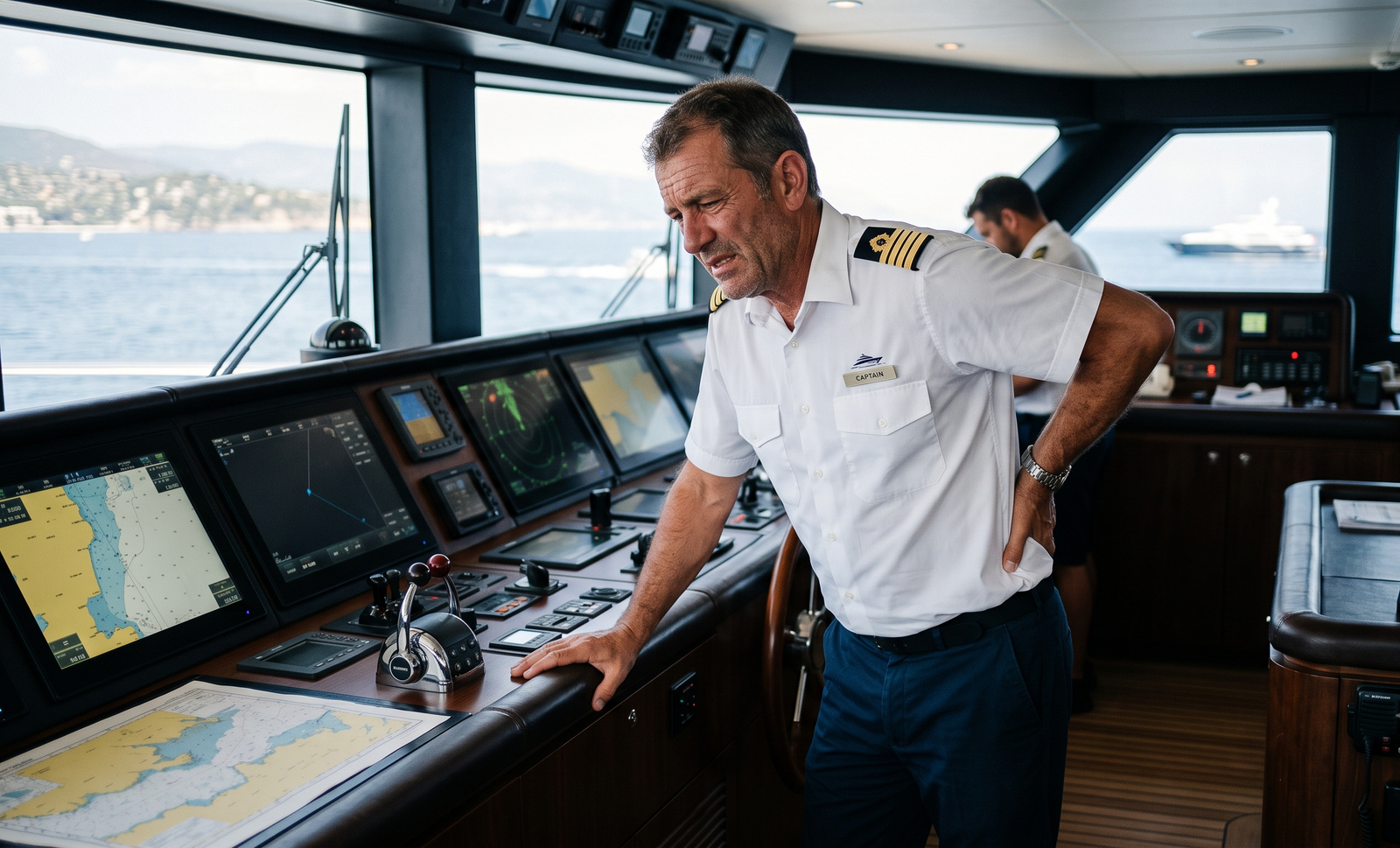
Why Yacht Crew Often Experience Back Pain & Muscle Fatigue
A Recovery Guide for Crew Members Visiting Barcelona
From the outside, life on board a yacht often looks glamorous.
Luxury destinations.
Crystal-clear water.
Beautiful marinas.
Exclusive guests.
What people rarely see are the long working days, physically demanding tasks and constant pressure behind every exceptional guest experience.
Working on a yacht places unique demands on the body.
Lifting supplies.
Cleaning.
Climbing stairs.
Working in confined spaces.
Remaining on your feet for hours.
Over time, these repetitive demands may contribute to persistent muscle tension, back pain and physical fatigue.
Understanding how these demands affect your body is the first step towards recovering more effectively.
In This Guide
- Why yacht crew often develop muscle tension.
- The hidden physical demands of life on board.
- Why back pain is so common.
- Which areas of the body work the hardest.
- How massage may support recovery.
- Why Barcelona is an ideal place to recharge between rotations.
To many people, working on a yacht seems like the ultimate dream job.
Travelling between beautiful destinations.
Visiting exclusive marinas.
Watching spectacular sunsets over the Mediterranean.
From the outside, it looks effortless.
The reality is often very different.
Behind every immaculate deck, perfectly prepared cabin and exceptional guest experience is a crew working long hours in a physically demanding environment.
Every day involves countless small tasks that place continuous demands on the body.
Carrying supplies.
Moving equipment.
Making beds.
Cleaning cabins.
Handling lines.
Climbing narrow staircases.
Standing for hours.
Responding quickly whenever guests need assistance.
None of these activities may seem particularly demanding on their own.
But together—and repeated day after day—they create a workload that many people never see.
Over time, muscular fatigue begins to accumulate.
The lower back becomes stiffer.
The shoulders feel heavier.
The neck gradually loses mobility.
The legs remain tired even after a night’s sleep.
One of the things I’ve noticed while working with professionals who spend much of their careers travelling is that recovery often receives far less attention than performance.
Yet both are equally important.
Whether you’re a deckhand, steward, stewardess, engineer, chef or captain, your body is one of the most important tools you use every day.
Looking after it isn’t simply about comfort.
It’s about helping yourself continue performing at your best throughout the season.
In this guide, I’ll explain why life on board places such unique physical demands on the body, why muscle tension is so common among yacht crew and how massage may become one valuable part of a broader recovery routine while you’re visiting Barcelona.
Life on Board Is More Physically Demanding Than Most People Realise
For many people, yachts are associated with luxury, relaxation and breathtaking destinations.
For the crew, however, life on board is very different.
Behind every perfectly prepared meal, spotless cabin and seamless guest experience is a team working tirelessly to keep everything running smoothly.
Unlike many office jobs, yacht crew rarely perform the same task for an entire day.
One moment you may be carrying heavy provisions.
The next you’re making beds, polishing surfaces, climbing stairs, handling mooring lines or preparing the yacht before guests arrive.
The work is varied, fast-paced and physically demanding.
Although no single task may seem particularly challenging, the constant repetition places continuous demands on the muscles and joints.
Over time, those small efforts begin to accumulate.
Why Back Pain Is So Common Among Yacht Crew
The lower back works almost constantly throughout the day.
Lifting.
Bending.
Twisting.
Reaching.
Carrying.
Standing.
These movements happen hundreds of times during a typical shift.
Often, they are performed in confined spaces where movement isn’t always as comfortable or efficient as it would be on land.
Unlike lifting weights in a gym, these movements are rarely planned.
They’re simply part of getting the job done.
As the days and weeks pass, the muscles responsible for supporting the spine may become increasingly fatigued.
For many crew members, this doesn’t begin as severe pain.
Instead, it develops gradually as stiffness, tightness or a persistent feeling that the back never quite gets the chance to recover.
The Challenge of Working in Constant Motion
One of the unique aspects of life at sea is that the body is continually making small adjustments to maintain balance.
Even when the yacht appears calm, your muscles are constantly working behind the scenes.
The ankles stabilise.
The hips adjust.
The core remains active.
The back responds to every subtle movement of the vessel.
Most of these adjustments happen without conscious thought.
Over hours and days, however, they increase muscular workload far more than many people realise.
It’s a form of effort that’s easy to overlook because it doesn’t always leave you feeling exhausted straight away.
Instead, it slowly builds into persistent muscle fatigue.
Why the Shoulders and Neck Become Tight
Working on a yacht often involves repetitive upper-body tasks.
Cleaning.
Polishing.
Making beds.
Reaching overhead.
Lifting equipment.
Preparing guest areas.
Combined with long working hours and the pressure to maintain exceptionally high standards, it’s easy for the shoulders to remain slightly elevated throughout the day.
Many crew members don’t notice this until the evening, when removing that constant muscular effort suddenly reveals how tired their shoulders actually feel.
The neck often follows the same pattern.
By the end of a busy charter, even simple movements such as turning the head may feel noticeably stiffer than usual.
Long Hours Mean Less Time to Recover
Recovery isn’t only about sleep.
It’s also about having enough opportunities throughout the day for your muscles to relax.
During busy charter periods, those opportunities can be surprisingly limited.
Early starts.
Late finishes.
Unexpected requests.
Quick turnarounds between guests.
The body simply keeps going.
Without enough recovery time, muscular tension gradually accumulates instead of disappearing.
This doesn’t necessarily mean something is wrong.
It simply reflects the reality of a profession where physical performance is required every day.
Why Fatigue Often Shows Up in the Legs
Although back pain usually receives the most attention, many yacht crew members say it’s actually their legs that feel the most tired.
Hours spent standing and walking around the yacht, frequently climbing stairs and responding quickly to guests can leave the calves and feet feeling heavy by the end of the day.
Unlike travellers who remain seated during a flight, yacht crew are constantly moving.
That continuous activity is rewarding—but it also places repeated demands on the lower body.
It’s one of the reasons many crew members describe feeling physically “drained” even after a successful charter.
Recovery Is Part of Professional Performance
One thing that often impresses me about yacht crew is their professionalism.
Guests see calm, smiling faces.
What they don’t see is the physical effort happening behind the scenes.
Looking after your body isn’t simply about feeling comfortable.
It’s about supporting the tool you rely on every single day.
Just as the yacht is carefully maintained to perform at its best, your body also benefits from regular care, recovery and attention.
Over time, those small recovery habits may make a meaningful difference to how you feel throughout the season.
Can Massage Help Yacht Crew Recover?
Massage isn’t a cure for every ache or pain.
Nor should it replace appropriate medical care when an injury or health condition requires assessment.
However, for many yacht crew members, massage can be a valuable way to support recovery from the muscular demands of life on board.
Long hours, repetitive movements and limited opportunities to rest may leave muscles feeling tight, tired and less comfortable than usual.
A personalised massage focuses on those areas of accumulated tension, helping the body relax and recover after periods of intense physical activity.
The goal isn’t simply to feel better for a few hours.
It’s to support your overall wellbeing so you’re better prepared for the next charter, the next crossing or the next busy week.
Areas That Often Need the Most Attention
Every crew member experiences different physical demands depending on their role.
A deckhand may spend much of the day handling equipment, moving supplies and working outdoors.
A steward or stewardess often performs repetitive upper-body movements while preparing cabins and attending to guests.
Chefs spend long hours standing in compact kitchens.
Engineers frequently work in awkward positions below deck.
Although every role is unique, certain areas of the body are commonly affected.
These often include:
- Neck and upper shoulders
- Lower back
- Hips
- Forearms and wrists
- Calves
- Soles of the feet
Rather than following the same routine for everyone, I always adapt each session to the individual, focusing on the areas that feel most overloaded.
Choosing the Right Massage
Not every type of massage is suitable for every person or every situation.
Someone recovering after an especially demanding charter may benefit from a personalised Therapeutic Massage, designed to release muscular tension while respecting the body’s current condition.
Others may prefer a Deep Tissue Massage if they experience long-standing tightness in specific muscle groups.
Sometimes, however, the body doesn’t need deeper pressure.
After weeks of physical and mental demands, a more relaxing treatment may simply help the nervous system slow down and encourage a greater sense of recovery.
The most appropriate treatment always depends on how you feel on the day of your appointment.
Recovery Goes Beyond the Massage Table
Massage is only one part of looking after your body.
Small daily habits can also make a meaningful difference during a busy season.
Whenever possible, try to:
- Stay well hydrated throughout the day.
- Stretch gently after long periods of physical work.
- Wear supportive footwear whenever appropriate.
- Prioritise quality sleep during time off.
- Give yourself moments to slow down between demanding schedules.
Recovery isn’t something that happens once the season ends.
It’s something you build little by little throughout it.
Why Barcelona Is an Ideal Place to Recharge
Barcelona has long been one of the Mediterranean’s busiest yachting destinations.
For many crew members, it’s a place to prepare for the next itinerary, welcome new guests or enjoy a short period ashore before returning to work.
That brief time on land can also become an opportunity to look after yourself.
Stepping away from the fast pace of life on board—even for an hour—can help create a welcome sense of balance before heading back to sea.
Whether you’re staying near Marina Port Vell, Marina Vela or another marina in the city, taking time for recovery can be just as valuable as preparing the yacht itself.
After all, the crew deserves care too.
Looking After the People Behind the Experience
Guests remember beautiful destinations and exceptional service.
What often goes unseen is the professionalism, resilience and physical effort required to create those experiences.
The polished deck.
Every perfectly presented meal.
Every smooth arrival into port.
Behind them is a crew whose body works hard every single day.
Looking after that body isn’t a luxury.
It’s an investment in your comfort, your wellbeing and your ability to continue doing the work you enjoy.
Recovery doesn’t make you less productive.
It helps you stay ready for whatever the next destination brings.
Taking Time to Recover While You’re in Barcelona
Working on a yacht means constantly looking after the comfort of others.
During your time ashore, it’s worth taking a little time to look after yourself too.
Whether you’re between charters, enjoying a few days in port or preparing for your next itinerary, recovery can help you return to work feeling more comfortable and physically refreshed.
If you’re looking for a personalised Therapeutic Massage in Barcelona, I’d be delighted to welcome you to my private massage in Eixample, one of Barcelona’s most central and easily accessible neighbourhoods.
Every session is tailored to how your body feels on the day.
Some crew members need focused work on the neck and shoulders after weeks of repetitive tasks.
Others benefit from releasing tension through the lower back, hips or legs after long hours on board.
Some simply want a quiet hour to slow down before returning to the marina.
Whatever brings you to Barcelona, my goal is always the same:
To help you leave feeling more comfortable, more relaxed and ready for whatever your next destination brings.
Frequently Asked Questions
Where is your massage studio located?
My private massage studio is located in Eixample, Barcelona, a central neighbourhood that’s easy to reach from Marina Port Vell, Marina Vela, Port Olímpic and many of the city’s hotels.
If you’re spending time ashore before your next charter, Eixample offers a convenient and peaceful location to enjoy a personalised massage.
Is your massage studio easy to reach from the marinas?
Yes.
My private massage studio in Eixample is conveniently located for yacht crew staying near Marina Port Vell, Marina Vela and other marinas around Barcelona.
Depending on your location, the journey is usually a short taxi or public transport ride, making it easy to fit a massage into your time ashore.
Which massage is best for yacht crew?
That depends on how your body feels.
Some crew members benefit from a personalised Therapeutic Massage, while others prefer a Deep Tissue Massage to address long-standing muscular tightness.
If your body simply feels physically and mentally exhausted after a busy charter, a more relaxing massage may be the most suitable option.
Every treatment is adapted to your individual needs.
Can I book a massage while I’m in port?
Yes.
Whenever availability allows, appointments can be booked while you’re in Barcelona between charters or during shore leave.
If you already know your schedule, booking in advance is recommended.
Can massage help with muscle fatigue after a charter?
Massage may help reduce muscular tension, improve relaxation and support recovery after physically demanding work.
While it isn’t a treatment for every medical condition, many yacht crew find it beneficial after long periods of repetitive physical activity.
How long is a massage session?
Most sessions last 60 minutes, providing enough time to assess your needs and focus on the areas of greatest muscular tension.
Longer sessions may also be available depending on availability.
Continue Reading
You may also enjoy these recovery guides:
- Why Pilots Often Experience Neck & Back Pain
- Best Massage During a Layover in Barcelona
- Why Your Neck Hurts After a Long Flight to Barcelona
- Why Your Lower Back Hurts After Flying
- Why Your Legs Feel Heavy After Exploring Barcelona
- Does Massage Really Help Back Pain?
- Deep Tissue vs Therapeutic Massage: Which One Is Right for You?
Together, these guides form part of my Travel Recovery series, created to help professionals and travellers better understand their bodies and recover more effectively while visiting Barcelona.
The Science of Travel Fatigue
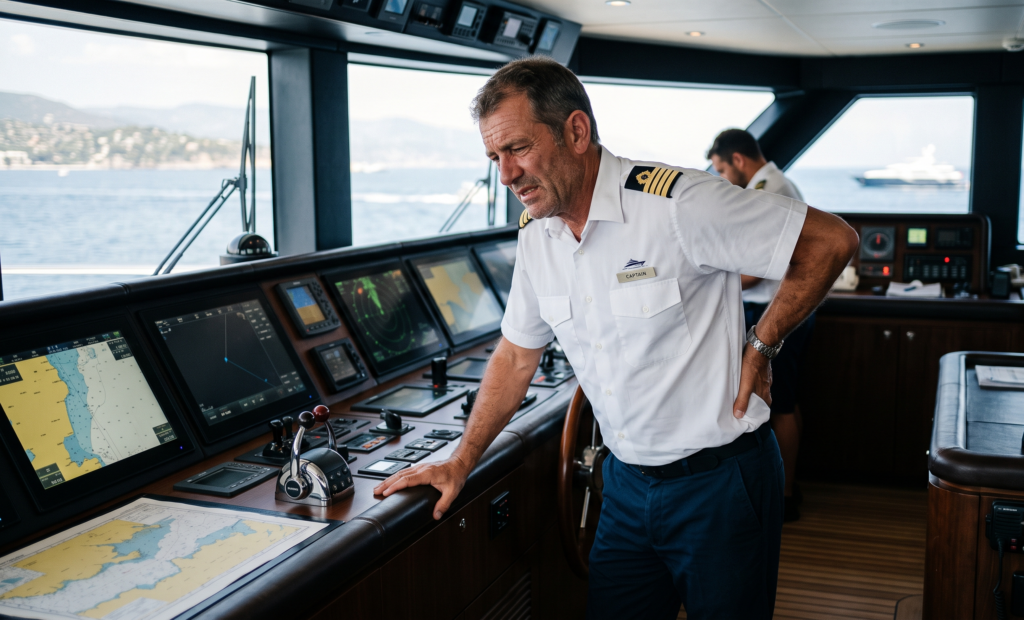
Why Yacht Crew Often Experience Back Pain & Muscle Fatigue
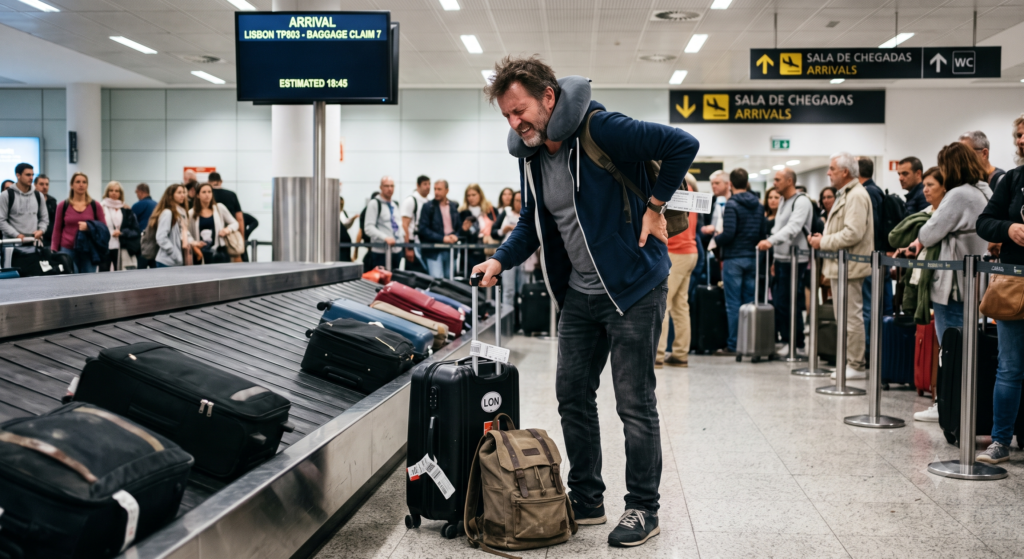
Why Your Lower Back Hurts After Flying to Barcelona (And How Massage Can Help)
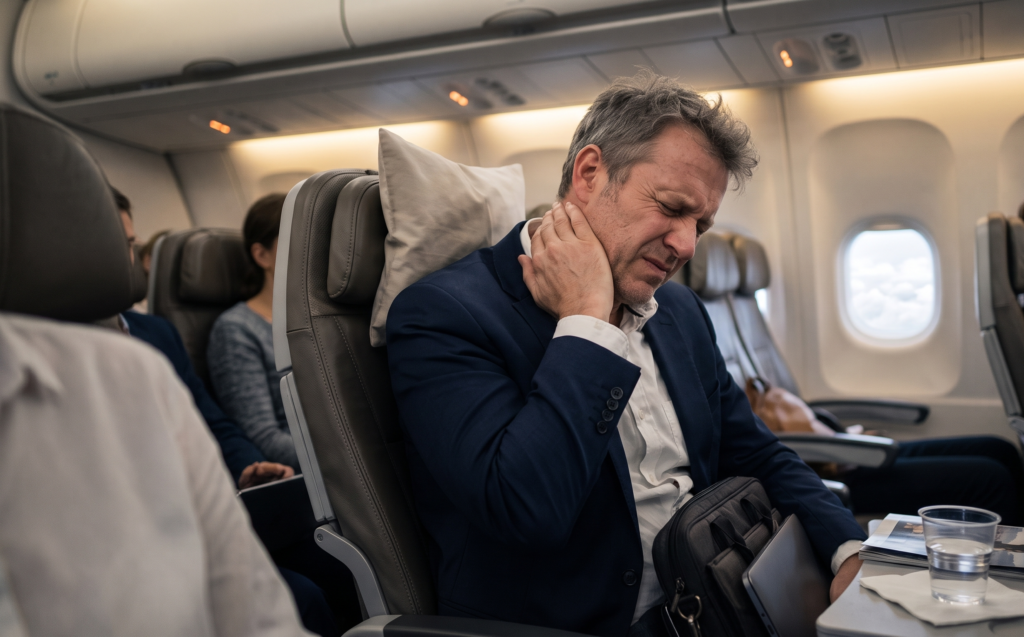
Why Your Neck Hurts After a Long Flight to Barcelona (And How Massage Can Help)
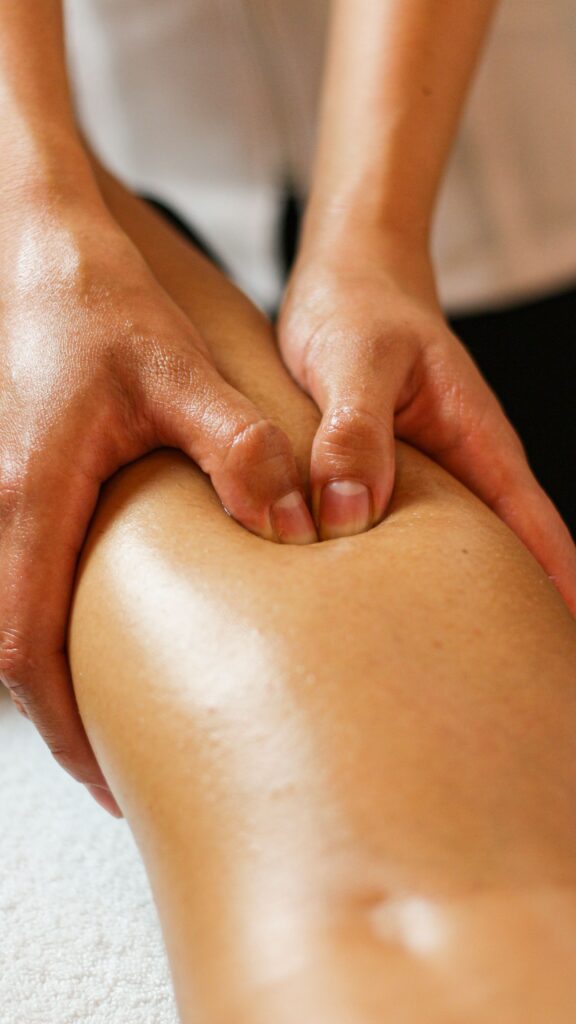
Why Do you Have Heavy Legs After Walking and Exploring Barcelona? (And How Massage Can Help)